
Stuck food is the worst. You spend twenty minutes cooking and another twenty scraping the pan. I used to think that was just part of using stainless steel. Then I learned the water trick and everything got easier.
You don’t need special coatings or oil if you don’t want it. Just water, heat, and a little patience. I’m going to walk you through exactly how I do it now, the same way I’d tell a friend standing in my kitchen.
Why Stuff Sticks So Bad
Food sticks when it gets a chance to bond with the metal. Cold pan, cold food, wrong heat — that’s the usual mess. Stainless steel has tiny pores. Heat makes them open up. Cold food hits them and they clamp down.
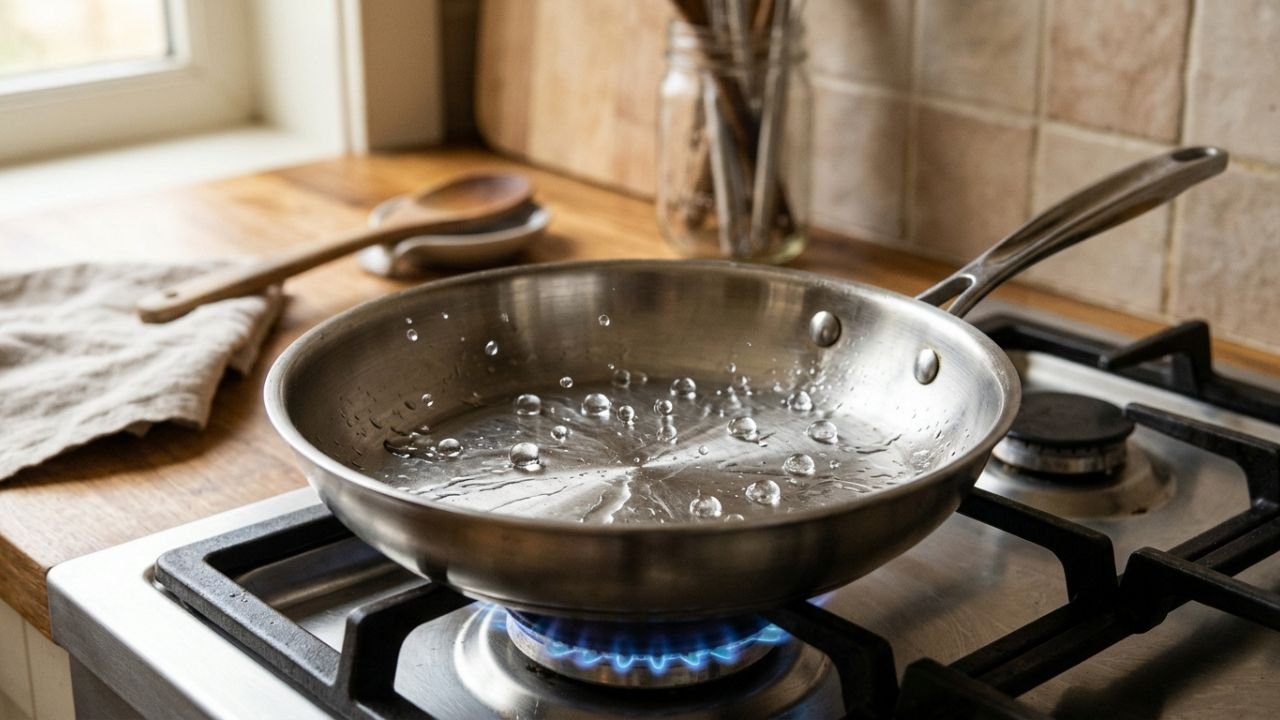
Water changes that. When the pan gets hot enough, a thin layer of steam forms under the food. That steam is basically a cushion. Scientists call it the Leidenfrost effect. All you need to know is that dancing water droplets mean you’re in the zone.
Ever flicked water into a hot pan and watched it skitter around like little silver balls? That’s the signal. Hit that point and the pan starts acting way more nonstick.
The Simple Water Test That Actually Works
This is the whole foundation. Heat the empty pan. Test with water. Then cook.
Here’s what I do every time:
- Start with a clean, dry pan. Old grease or stuck bits ruin the surface.
- Put it on medium heat. Don’t crank it high right away. Let it heat evenly for a couple minutes.
- Flick a few drops of water in.
- Watch closely.
- Water just sits there and slowly steams → still too cold.
- Water sizzles and vanishes right away → getting closer.
- Water forms tight beads that roll and bounce around → you’re there.
Once those beads dance, you’re good. For true no-oil cooking I add the food right then if it has enough moisture. Drier stuff might need a tiny splash of water later.
I ruined plenty of eggs learning this. Now it feels automatic.
How to Make a Pan Non Stick with Water
Getting Stainless Steel to Behave Without Oil
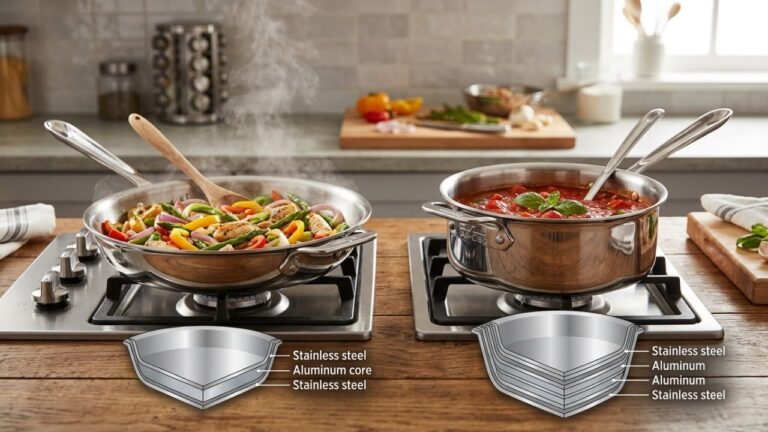
Stainless is perfect for this method. It holds heat well and responds clearly to the water test.
Preheat the same way. When the water dances, drop the heat a little. Stainless stays hot even after you turn the burner down.
Eggs are the real test. Crack them in gently and leave them alone. The white starts to set and the steam from the egg itself helps create that barrier. After a minute or so they usually release with a gentle push. Room-temperature eggs work better than fridge-cold ones. I pull mine out ten or fifteen minutes early now.
Fish works similarly. Pat it dry, lay it in the hot pan, and wait. Don’t poke it. When the protein sets, it lets go. Sometimes I add a teaspoon of water around the edges if the pan looks too dry.
Vegetables are the easiest win. Mushrooms, zucchini, onions, peppers — they all release their own water. Start them in the hot pan and add a splash when things start looking dry. You still get some browning and the pan stays cleaner.
I do most of my weeknight stir-fries this way now. Less oil, less mess, still tasty.
Water-Sautéing Vegetables the Easy Way
If you only try one thing, try this. Heat the pan, add a couple tablespoons of water, throw in your cut vegetables. Keep the heat medium. When the water disappears, add another splash. Stir every now and then.
The steam keeps things from sticking while the pan still browns them a bit. Broth works even better than plain water for flavor. A splash of soy sauce or vinegar at the end wakes everything up.
Broccoli, green beans, snap peas, cabbage — they all turn out great. I’ve even done kale this way and it wasn’t bad.
How Different Pans Handle the Method
Not every pan acts the same.
Cast iron and carbon steel already build their own nonstick surface with seasoning. The water test still tells you when the pan is hot enough. Once they’re well seasoned you can cook eggs with almost nothing. Just don’t scrub the seasoning off with soap every time.
Ceramic and regular nonstick already have a coating. You can still use the water test, but keep the heat lower so you don’t damage the surface. Rely more on the food’s own moisture or small amounts of water.
Aluminum and other metals work with the same water-bead approach. Watch for hot spots.
Whatever pan you’re using, keep it clean. Residue creates sticky spots every time. A quick baking soda paste (baking soda + a little water) fixes a lot of pans that feel hopeless.
My Exact Routine for Eggs with Zero Oil
Here’s what I do now:
- Take the eggs out early so they’re not ice cold.
- Heat the clean pan on medium until the water test works.
- Lower the heat a notch.
- Crack the eggs in and leave them alone.
- If the pan looks dry after a minute, add a tiny splash of water around the edges and cover for a few seconds.
- When the whites set and the eggs release easily, slide them out.
It won’t look exactly like a butter-fried restaurant egg, but it comes off clean and tastes fine. Once you get the timing down you’ll do it more than you expect.
Mistakes That Still Get Me Sometimes
Even when you know the method, a few things mess it up:
- Adding food too early. The water has to dance first.
- Leaving the heat too high the whole time. Once the pan is hot, dial it back.
- Crowding the pan. Food steams instead of searing and releases too much liquid.
- Dropping fridge-cold food straight in. The temperature drop makes proteins seize.
- Skipping the clean step. Old oil or stuck-on bits create failure points.
I’ve made every one of these more than once. The water test is pretty forgiving once you respect the timing.
Pros and Cons of Going Full Water
Pros
- No oil means fewer calories and less greasy cleanup.
- Works with pans you already own.
- Forces better temperature control.
- Steam helps cook some foods more evenly.
- Easy cleanup most nights.
Cons
- Takes a few tries to nail the temperature.
- Not perfect for every food. Very lean proteins or high-sugar items can still stick without some fat.
- Browning is milder without oil.
- Needs more attention. You can’t just walk away as easily.
- Doesn’t build the same long-term seasoning as oil methods on cast iron.
For vegetables, eggs, and fish the pros win for me. When I want a deep sear on a steak I still use a little oil. Different jobs need different approaches.
Water Nonstick Cooking Methods (Quick Comparison)
| Method | Oil Needed? | Best For | Ease | Cleanup | Notes |
|---|---|---|---|---|---|
| Water bead + no oil | No | Eggs, fish, veggies | Medium | Excellent | Relies on steam barrier |
| Water bead + light oil | Minimal | Most proteins | Easy | Very good | Most reliable overall |
| Traditional oil preheat | Yes | Searing, high-heat | Easy | Good | Classic approach |
| Water-sauté only | No | Vegetables | Easy | Excellent | Great for lighter cooking |
| Seasoned cast iron | Optional | Almost everything | Medium (after seasoning) | Good | Builds over time |
The pure water route shines when you want lighter results. Combining the water test with a tiny bit of fat gives the highest success rate if you’re just starting out.
Extra Stuff That Helps
Keep a small bowl of water near the stove. A quick flick tells you where the pan sits at any moment.
Room-temperature ingredients make a real difference. Even five extra minutes on the counter helps.
Don’t force the release. If the food is stuck, it probably needs more time for the proteins to set. Patience beats scraping.
For stubborn pans, sprinkle baking soda, add a little water, make a paste, and gently scrub. Rinse and dry. Then try the water test again. I’ve brought a few neglected stainless pans back this way.
FAQs
Does this work on every pan?
Best on stainless steel and well-seasoned carbon steel or cast iron. Coated nonstick already has a slick surface, so the water test mainly helps judge temperature.
Can I really cook eggs with zero oil?
Yes, especially once you get the temperature right. Room-temperature eggs help a lot.
What temperature is the Leidenfrost point?
Around 380–430°F depending on the pan. You don’t need a thermometer. The water beads tell you everything.
Is the water method safer than nonstick coatings?
You avoid any worries about coating breakdown at high heat. Stainless and seasoned pans are durable and don’t flake.
How long does the nonstick effect last?
Only for that cooking session. You rebuild it every time you preheat properly. That’s why the water test becomes a habit.
What if the water splits into many tiny droplets?
The pan is too hot. Pull it off the heat for a few seconds and test again.
Wrapping It Up
Learning the water method changed how I cook. I stopped treating stainless steel like the enemy and started treating temperature like the real tool. The water bead test is simple once you see it a few times. After that a lot of foods just slide off.
Try it with vegetables first if you’re nervous. Then move to eggs. You’ll mess up a couple times. That’s normal. Keep the water nearby, watch the beads, and give the food a minute to release on its own.
Next time your pan starts acting sticky, don’t reach for the spray. Reach for the faucet instead. A few drops of water and a little patience go further than most people realize. Give it a shot this week. Your pans (and your scrubbing arm) will thank you.