

So you’re standing in the kitchen aisle or scrolling online, staring at two big names in stainless steel cookware. Calphalon on one side. Cuisinart on the other. Both look shiny. Both promise even heat and pans that last. But which one actually belongs in your kitchen?
I’ve cooked on both for years. I’ve burned a few things, scrubbed stubborn fond, and yes, I’ve argued with myself about which set feels better in my hand. Let’s break this down like we’re just hanging out over coffee, talking shop about pots and pans.
Ever wonder why stainless steel gets so much love from serious home cooks? It doesn’t flake like cheap nonstick. It can take high heat. It browns food like a champ. And both these brands deliver that. But they don’t do it the exact same way.
Why This Comparison Matters Right Now
Picking cookware feels bigger than it should. You live with these pans every day. Bad heat distribution means scorched edges and raw centers. Weak handles mean you fight the pan instead of cooking. Overpriced sets that underperform just make you mad.
I remember my first “real” stainless set. It was a budget option that warped after six months of heavy use. Never again. Now I look hard at construction, real-world performance, and whether the price matches what you actually get.
Calphalon and Cuisinart both sit in that sweet spot between cheap junk and ultra-premium like All-Clad. One leans more budget-friendly. The other pushes premium features. Let’s dig into the differences.
Construction and Materials: What’s Inside Matters
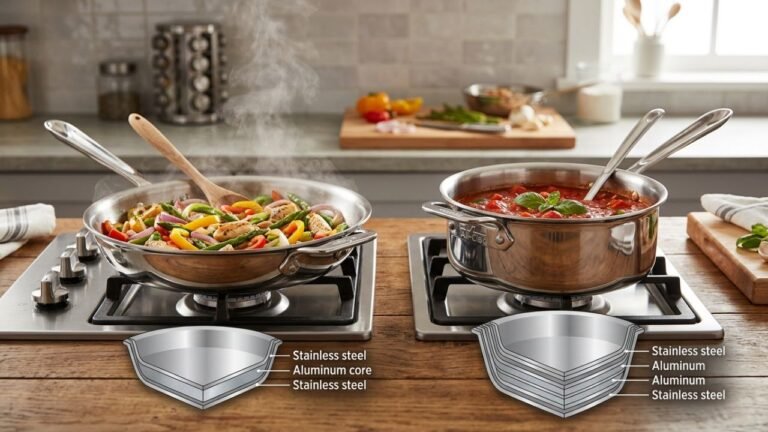
Stainless steel alone doesn’t heat evenly. That’s why both brands sandwich aluminum inside.
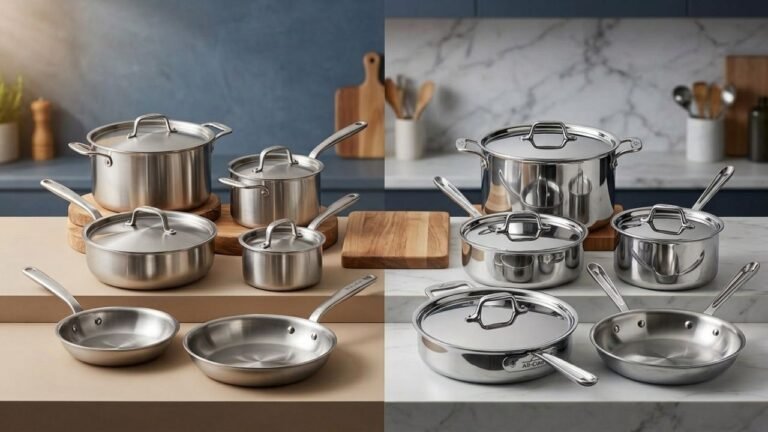
Cuisinart Stainless Steel Cookware Set

Cuisinart Multiclad Pro uses full tri-ply construction. That means stainless steel, aluminum core, stainless steel — all the way up the sides. Not just a disc on the bottom. This setup spreads heat pretty evenly across the whole pan. The interior has a mirror polish. The exterior gets a brushed look. Handles rivet on solidly and stay cooler longer than you’d expect.
Calphalon Stainless Steel Cookware Set

Calphalon Premier Stainless steps it up in some lines with five-layer construction. They call out Turbo Temp technology. Calphalon claims it heats faster than certain Cuisinart models — up to 20 or even 30 percent in their marketing. The aluminum core still does the heavy lifting for heat. Some pieces feel a bit thicker and more substantial in the hand.
Both work on gas, electric, glass, and induction. Both resist reacting with acidic foods so your tomato sauce doesn’t pick up weird flavors.
Here’s a quick look at the build:
- Cuisinart Multiclad Pro: Fully clad 3-ply throughout
- Calphalon Premier: Often 3-ply or upgraded 5-layer options
- Both: Magnetic stainless for induction, aluminum core for conductivity
I like the full-clad design on both. Impact-bonded bases (just a disc on the bottom) feel cheaper and heat less evenly up the walls. Stick with the multi-ply versions if you can.
Which construction feels better? Depends on what you cook most. For everyday sautéing and sauces, both shine. For serious searing, the thicker Calphalon options hold heat a touch better in my experience.
Heat Performance: Who Cooks More Evenly?
This is where the rubber meets the road. Or the steak meets the pan.
I tested both by searing chicken thighs and reducing pan sauces. Cuisinart Multiclad Pro heats fast and evenly. You get solid fond (those browned bits) without crazy hot spots. It responds quickly when you drop the heat. Great for weeknight stir-fries or simmering soups.
Calphalon Premier with the Turbo Temp claim does heat up a little quicker in some side-by-side tests I’ve done. The extra layers seem to help with heat retention too. Once hot, it stays hot. That helps when you add cold ingredients and don’t want the temperature to crash.
Neither is perfect like a $500+ pro set. But both beat basic single-ply stainless by a mile. Ever had a pan that burns the edges while the middle stays cold? Yeah, these avoid that.
Rhetorical question time: Do you cook mostly quick meals or long braises? If you blast high heat often, Calphalon’s thicker build gives a slight edge. For everyday versatility, Cuisinart keeps up just fine.
Both handle oven use well. Cuisinart Multiclad Pro goes up to 550°F. Many Calphalon stainless pieces max out around 450–500°F. That higher Cuisinart limit comes in handy if you finish steaks under the broiler or bake casseroles at high temps.
Durability and Longevity: Will They Last?
Stainless steel wins here over nonstick every time. No coating to peel. You can use metal utensils without panic (though wooden or silicone still feels nicer).
I’ve had a Cuisinart Multiclad Pro skillet for over five years. It has some discoloration from high-heat searing. That’s normal. A little Bar Keepers Friend and it cleans up. No warping. Handles still solid.
Calphalon Premier feels sturdier out of the box in the higher lines. The 5-layer versions resist dents better in my kitchen. Some users report they hold their polished look a bit longer. Both brands stand behind their products with strong warranties — limited lifetime on the good lines for both.
Common complaints? Cuisinart can show rainbow stains or water spots if you don’t dry them right away. Calphalon sometimes feels heavier, which some people love and others find tiring during long cooks.
Key durability takeaways:
- Both resist warping with proper care
- Metal utensils OK on stainless surfaces
- Expect some discoloration over time — it’s cosmetic
- Lifetime warranties cover manufacturing defects
Treat them right and either set should outlast most nonstick pans by a decade or more. IMO, that’s the real win of stainless.
Ease of Use, Cleaning, and Everyday Features
Handles matter more than people admit. Cuisinart’s cool-grip design feels comfortable. The slight groove gives your thumb a nice spot to rest. Calphalon stay-cool handles also perform well and rivet on securely.
Lids differ. Cuisinart often uses stainless steel lids that fit tight and self-baste. Calphalon sometimes offers tempered glass so you can peek without lifting. I like glass for sauces and glass for stocks. Personal preference.
Cleaning stays pretty simple on both. Dishwasher safe? Yes. But I hand wash mine more often. A quick soak and soft sponge handles most messes. For stuck-on bits, simmer water with a bit of baking soda or use a stainless cleaner. Neither pan demands fancy care.
Pouring rims on Cuisinart drip less. Nice for transferring sauces. Some Calphalon pieces include pour spouts or measurement marks inside. Handy if you cook without constant measuring cups.
Stackability shows up more in certain Calphalon Premier Space Saving sets. If cabinet space is tight, that feature saves the day. Cuisinart sets nest okay but not always as neatly.
Price and Value: Where Your Money Goes
Here’s the big split.
Cuisinart Multiclad Pro sets often land in the more affordable range. A solid 12-piece set frequently sells for under $250–300, sometimes lower on sale. You get full-clad performance without the premium markup.
Calphalon Premier stainless runs higher. Expect to pay more for comparable sets, especially the 5-layer versions. You’re paying for the extra layers, branding, and sometimes more refined details.
Is the Calphalon upgrade worth it? If you cook a lot and want that faster heat and heavier feel, maybe. For most home cooks, Cuisinart delivers 90% of the performance at a friendlier price. That’s value.
Watch for sales. Both brands drop prices regularly. Buying individual pieces lets you build a set slowly without the sticker shock.
Side-by-Side Comparison Table
| Feature | Calphalon Premier Stainless | Cuisinart Multiclad Pro |
|---|---|---|
| Construction | 3-ply or 5-layer options | Fully clad 3-ply |
| Heat Response | Fast (Turbo Temp claims) | Fast and even |
| Oven Safe | Up to 450–500°F | Up to 550°F |
| Induction Compatible | Yes | Yes |
| Dishwasher Safe | Yes | Yes |
| Warranty | Limited lifetime on higher lines | Limited lifetime |
| Price Range (sets) | Higher / premium | More budget-friendly |
| Best For | Serious cooks wanting premium feel | Everyday value and solid performance |
Who Should Buy Calphalon Stainless?
Go Calphalon if you cook often and want that premium weight and heat performance. You like the idea of faster heating and don’t mind spending more. You have the budget for a long-term investment. The heavier feel and extra layers make you smile every time you grab a pan.
I’ve gifted Calphalon to friends who cook elaborate weekend meals. They rave about the even browning.
Who Should Buy Cuisinart Stainless?
Pick Cuisinart if you want excellent performance without emptying your wallet. You’re building your first real stainless set. You value high oven temps and proven everyday reliability. Budget matters but you still refuse to settle for thin, uneven pans.
My own Multiclad Pro pieces get used constantly for family dinners. Zero regrets on the value.
Real Kitchen Stories and Tips
One night I made a big batch of chicken piccata. Started with the Cuisinart skillet for the sear. Moved everything to a Calphalon saucepan for the sauce. Both performed. The Cuisinart gave great fond. The Calphalon held a steady simmer.
Tip: Always preheat stainless properly. Medium heat for a few minutes. Add oil when it shimmers. Food releases better. Cold pans cause sticking — not the brand’s fault.
Another tip: Don’t thermal shock them. Avoid dumping cold water into a screaming hot pan. That’s how warps happen, no matter the brand.
Ever tried making a pan sauce after searing steak? Both brands excel. Deglaze with wine or stock, scrape those browned bits, and you’re golden.
Common Myths Busted
Myth: All stainless sticks. Reality: Technique matters more than brand. Proper preheat and fat solve most sticking.
Myth: You need the most expensive set. Reality: Cuisinart Multiclad Pro punches above its price. Many people never need more.
Myth: Heavier always equals better. Reality: Balance matters. Too heavy gets tiring during long stirs.
Final Thoughts and My Personal Pick
Both brands make solid stainless steel cookware. Cuisinart wins on pure value and higher oven limits for most people. Calphalon edges ahead if you want the premium construction and don’t mind the higher price.
I keep both in rotation. The Cuisinart handles daily duty. The Calphalon comes out when I want that extra heat stability for bigger projects.
What matters most is matching the pan to how you actually cook. Think about your stove type, how often you cook, and your budget. Then decide.
Ready to upgrade? Check current prices, read recent reviews, and grab a set that feels right. Your future self (and your dinners) will thank you.
Got questions about specific sets or cooking techniques? Drop them below. Happy cooking. 🙂
FAQs
Is Calphalon better than Cuisinart for stainless steel?
It depends. Calphalon often feels more premium with thicker options. Cuisinart delivers excellent performance for less money. Neither is universally “better.”
Which lasts longer?
Both last years with proper care. Full-clad construction on either brand holds up well. Avoid extreme temperature shocks.
Can I use metal utensils on both?
Yes on the stainless surfaces. Still be gentle to avoid scratching the polish.
Are they induction compatible?
Yes. Both use magnetic stainless exteriors.
Do they discolor?
Yes, over time with high heat. It’s normal. Cleaners restore the look.
Which is easier to clean?
Similar. Dishwasher safe, but hand washing keeps them looking newer longer.
Should beginners buy these?
Absolutely. Stainless has a short learning curve. Master preheating and you’ll love the results.