

You stand in the kitchen aisle or scroll Amazon at midnight, right? Two brands keep popping up. Calphalon and Tramontina. One feels a little fancier. The other looks like a steal. Both promise even heat, easy cleanup, and pans that won’t quit on you after six months. So which one actually deserves your cash?
I’ve cooked on both for years. I’ve burned eggs in cheap pans, cursed warped bottoms, and yes, I’ve spent money I later regretted. This isn’t some polished review written by a robot. It’s me talking to you like we’re standing at the stove together, coffee in hand, trying to figure out what’s worth it.
Discounted Offers for Calphalon & Tramontina
>> Check Calphalon 11-Piece Cookware Set: 20% OFF!
>> Check Tramontina 15-Piece Cookware Set: Below 60$!
Quick Brand Background (Without the Boring History Lesson)
Calphalon Brand
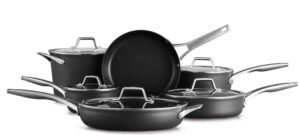
Calphalon started in the 1960s and basically made hard-anodized aluminum a household thing. They’re the brand that pushed thick, tough nonstick pans into American kitchens. Today they still lean hard into that premium-feeling hard-anodized look, though they make stainless too.
Tramontina Brand
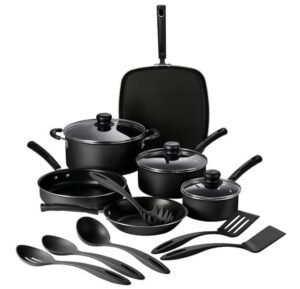
Tramontina is older. The company began in Brazil way back in 1911. They make a ton of different stuff — tools, cutlery, outdoor gear — and their cookware is known for solid performance without the big price tag. You’ll find their pans in restaurant kitchens and home ones alike.
One feels like the reliable mid-to-upper option. The other feels like the smart everyday workhorse. That’s the vibe difference right there.
Construction and Materials: What Are You Actually Buying?
This is where the real difference shows up.
Calphalon builds most of its popular lines with thick hard-anodized aluminum. That process makes the metal harder and more durable. Their higher-end nonstick pans (think Premier and Signature) use multi-layer coatings. Some even claim metal-utensil safety, though I still treat that claim with a side-eye. Their stainless lines use clad construction with an aluminum core.
Tramontina offers more variety. You’ll find:
- Heavy-gauge aluminum nonstick (the famous Pro Series)
- Hard-anodized options
- Tri-ply clad stainless steel
- Some ceramic-coated pieces
- Even enameled cast iron
Their stainless is fully clad in many lines — aluminum core sandwiched between stainless layers that run all the way up the sides. That’s the good stuff. Heat spreads better than the cheap “disk bottom” pans you see everywhere.
Here’s the practical takeaway. Calphalon pans often feel heavier and thicker in the hand. Tramontina pans feel lighter and more agile. Which one you prefer depends on how you cook.
Ever try flipping a big batch of vegetables with a heavy pan? Your wrist will tell you which brand you like better.
Heat Performance: Who Cooks More Evenly?
I care about this more than fancy marketing claims.
In real kitchen use, both brands heat pretty evenly. Calphalon’s thicker hard-anodized construction holds heat well once it gets going. You get solid searing and fewer hot spots on medium heat. The downside? It can take a bit longer to come up to temperature compared to lighter pans.
Tramontina (especially the Pro Series nonstick and the tri-ply stainless) heats faster. You feel the response quicker when you adjust the burner. That makes it great for quick weeknight cooking. The stainless versions hold heat surprisingly well for the price.
I ran a simple test at home once. Same burner, same amount of oil, same thickness of chicken breast. The Calphalon gave a more consistent brown. The Tramontina got there faster but needed a little more attention so nothing scorched.
Neither is bad. Calphalon feels more “set it and forget it.” Tramontina feels more responsive.
Nonstick Durability: The Part That Actually Frustrates People
Let’s be honest. Nonstick coatings don’t last forever. Anyone who tells you otherwise is selling something.
Calphalon’s multi-layer coatings on the Premier and Signature lines hold up better than average in my experience. Food still slides after a couple years if you treat the pan right. Avoid high heat, skip metal utensils even if the box says it’s okay, and hand-wash when you can.
Tramontina’s Pro Series uses a reinforced coating (often Whitford Eclipse) that performs really well for the money. Wirecutter and other testers have praised it for years. It stays slick. But once it starts showing wear, it goes downhill faster than the thicker Calphalon coatings.
I’ve owned both. My Calphalon nonstick still looks decent after more daily use. My Tramontina nonstick was a champ for the first 18–24 months, then started needing more oil. That’s pretty normal for the category.
Pro tip: If you cook eggs almost every morning, buy the cheaper nonstick and plan to replace it every few years. Don’t drop $150 on a single pan just for scrambled eggs.
Handles, Lids, and Everyday Feel
Small details matter more than people admit.
Calphalon usually gives you sturdy stainless handles that stay cooler longer. Many of their lids fit well and some sets have nice pouring features. The pans feel solid and balanced, though some of the bigger ones get heavy.
Tramontina often uses longer handles. A lot of people love that extra reach. Some lines have silicone grips that stay comfortable. The rivets can be a pain to clean around, though. Glass lids are common and usually fit fine.
I prefer Calphalon’s handle feel for heavy pans. For lighter daily frying pans, Tramontina’s longer handle wins for me.
Price and Value: Where Your Money Actually Goes
This is the part that decides it for most people.
Tramontina wins on pure value almost every time. You can get a solid 10- or 12-piece set for a fraction of what comparable Calphalon sets cost. Their tri-ply stainless sets punch way above their price. The Pro Series nonstick pans often land under $40–50 for a good 10-inch skillet.
Calphalon costs more. A good Premier or Signature set can run several hundred dollars. Individual pans sit in that mid-to-premium range. You’re paying for thicker construction, better heat retention, and a more “premium” feel.
Is the extra money worth it? Sometimes. If you cook a lot and want pans that feel substantial and last longer before the nonstick dies, Calphalon makes sense. If you want reliable performance without spending a fortune, Tramontina is hard to beat.
I’ve bought both. The Tramontina stainless set in my kitchen gets used constantly and still looks good. The Calphalon nonstick is my go-to for eggs and fish because the coating just holds up better over time.
Warranty and Real-World Support
Both brands offer limited lifetime warranties on many lines. That sounds great until you actually need it.
Calphalon covers manufacturing defects. Same with Tramontina. Neither covers normal wear on nonstick coatings, which is the thing that fails most often.
In practice, warranties help more with warped bottoms or broken handles than with a coating that lost its slickness. Keep your receipts and don’t expect miracles.
Which Brand Wins for Different Types of Cooks?
Here’s the no-nonsense breakdown:
Choose Calphalon if:
- You cook most days and want pans that feel more substantial
- You care about longer-lasting nonstick coatings
- You like the heavier, more premium feel
- You’re okay spending more upfront
Choose Tramontina if:
- You want the best performance for the money
- You need a full set without emptying your wallet
- You like lighter pans that heat up fast
- You cook a mix of everyday meals and don’t mind replacing nonstick every few years
My personal setup right now?
I keep Tramontina stainless for searing, sauces, and bigger jobs. I keep a couple of Calphalon hard-anodized nonstick pans for eggs, pancakes, and delicate fish. Best of both worlds, honestly.
Side-by-Side Comparison Table
| Feature | Calphalon | Tramontina |
|---|---|---|
| Best Known For | Hard-anodized nonstick | Value + variety (stainless + nonstick) |
| Typical Feel | Heavier, thicker | Lighter, more responsive |
| Heat Behavior | Excellent retention, slower to heat | Faster response, solid evenness |
| Nonstick Durability | Better than average on higher lines | Good for the price, wears sooner |
| Stainless Quality | Solid clad options | Excellent tri-ply value |
| Oven Safe Range | Often 450–500°F | 350–500°F depending on line |
| Price Level | Mid to premium | Budget to mid-range |
| Best For | Frequent cooks who want longevity | Everyday cooks who want smart value |
| Biggest Strength | Build quality and coating life | Performance per dollar |
| Biggest Weakness | Higher price | Some lines feel less premium |
Final Thoughts: What’s Actually Worth Your Money?
If I had to pick only one brand for someone starting fresh, I’d lean Tramontina for most people. You get strong performance, good materials, and you don’t have to spend a fortune. Their stainless especially punches above its weight.
If you already know you cook a lot and you specifically want better nonstick longevity and a more substantial feel, Calphalon earns the extra money.
Neither brand is perfect. Both will serve you well if you buy the right line for how you actually cook. The worst thing you can do is overspend on a fancy set you’ll barely use or cheap out so hard that you hate cooking.
Buy what matches your real kitchen life. Not the Instagram version.
Now go make something good. And maybe stop standing in the cookware aisle at midnight. We’ve all been there. 🙂
Frequently Asked Questions
Is Calphalon better than Tramontina?
It depends. Calphalon usually feels more premium and its higher-end nonstick lasts longer. Tramontina gives you better value and strong everyday performance. “Better” is personal.
Which is better for nonstick pans?
Calphalon edges it out on durability for most of their mid-to-upper lines. Tramontina’s Pro Series is excellent for the price and still one of the best budget nonstick options out there.
Are Tramontina pans good quality?
Yes. Especially their tri-ply stainless and Pro Series nonstick. They perform better than a lot of more expensive brands in real cooking tests.
Do Calphalon pans last longer?
The hard-anodized construction and thicker builds often do. Nonstick coatings still wear out eventually on both brands.
Can I use metal utensils with either brand?
Some Calphalon lines claim metal-utensil safety. I still recommend silicone or wood on both brands if you want the nonstick to last.
Which brand is better for induction cooktops?
Tramontina’s stainless and some other magnetic lines work well. Calphalon’s stainless works. Most of their hard-anodized aluminum does not.
Should I buy a full set or individual pieces?
Start with individual pieces if you’re unsure. A good 10- or 12-inch skillet and a couple saucepans cover most cooking. Full sets make sense when you need everything at once and find a good deal.
That’s the real talk. Now you know more than most people standing in that aisle.