
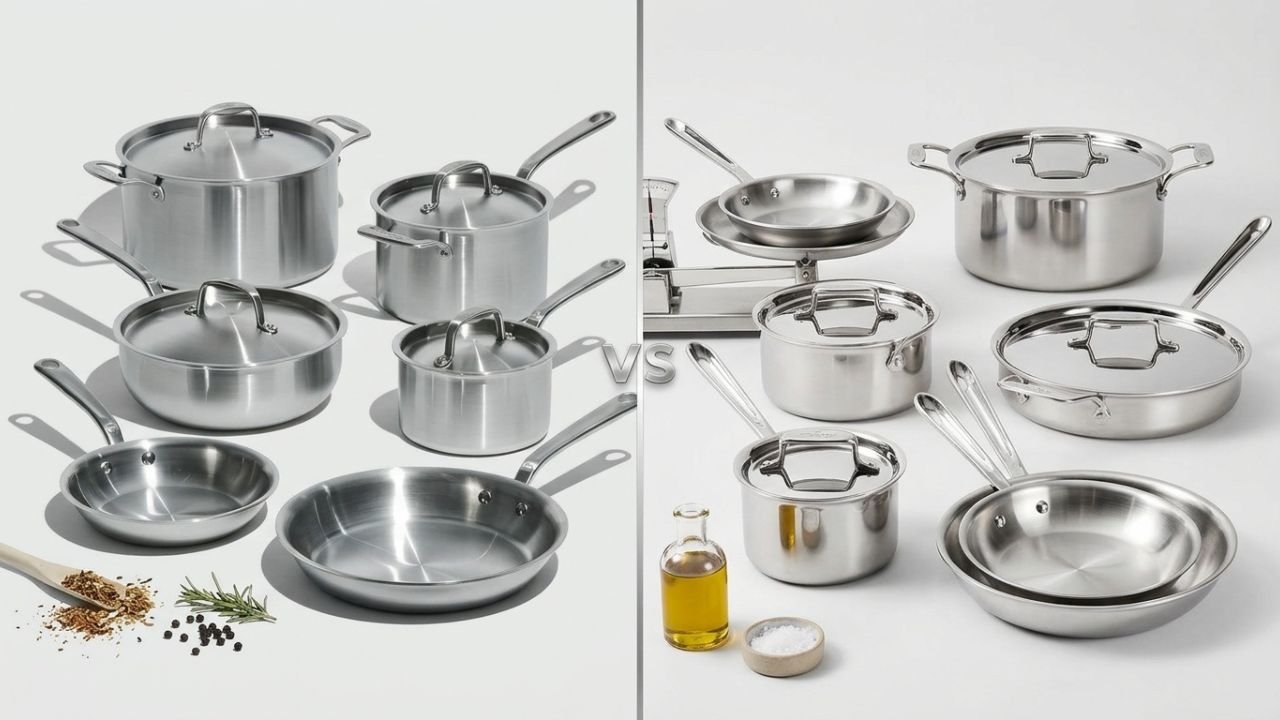
You’re standing in your kitchen staring at two shiny stainless steel options and wondering which one actually deserves your hard-earned cash. All-Clad D5 or Made In? Both claim professional performance. Both look the part. Both cost real money. So which one makes sense for the way you actually cook?
I’ve cooked on both. I’ve burned stuff in both. I’ve scrubbed stuck-on bits from both. And after a lot of weeknight dinners, seared steaks, and the occasional “oops I walked away” moment, I’ve got some strong opinions. Let’s talk through it like we’re hanging out over coffee.
Discounted Offers for All Clad D5 vs Made In (up-to 20% OFF)
All-Clad D5® Stainless Steel 10-Piece Cooking Set: 20% OFF!
Made In Cookware – 10 Piece Stainless Steel: 15% OFF!
Quick Reality Check Before We Get Going
Neither of these is cheap. You’re not grabbing a random set from the big-box store. You’re looking at cookware that should last decades if you treat it right. The real question is whether you’re paying for performance, brand history, or both.
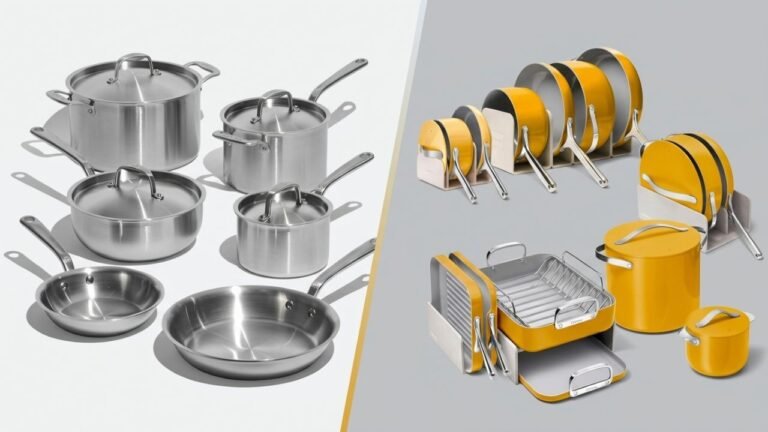
All Clad D5 Cookware Set
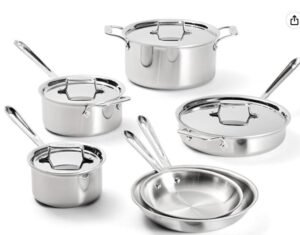
All-Clad D5 is the heritage pick. Made in the USA. Five layers of metal with a special steel core that slows heat down and spreads it more evenly. It feels substantial. It looks classic. And it costs more.
Made In Stainless Steel Cookware Set
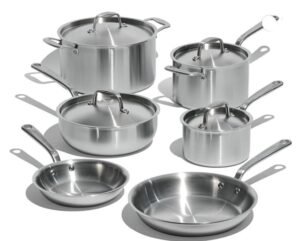
Made In is the direct-to-consumer upstart that punched above its weight. Also five layers. Faster heat response in a lot of tests. Modern brushed look. Stay-cool handles that feel better in most hands. And noticeably lower prices because they skip the traditional retail markup.
Ready to dig in?
Construction: What’s Actually Inside These Pans?
Both brands use fully clad 5-ply construction. That means the layers go all the way up the sides, not just a disc on the bottom. This is the big difference between good stainless and the cheap stuff that develops hot spots.
Here’s how they stack up.
All-Clad D5 uses a patented setup. You get stainless on the cooking surface, then aluminum, then a thin stainless steel core, another aluminum layer, and magnetic stainless on the outside. That steel core is the key. It slows heat transfer just enough to make the pan more forgiving. You can walk away for a second without as much risk of scorching.
Made In Stainless Clad also runs five layers. 18/10 stainless on the inside, aluminum and aluminum alloy in the middle for conductivity, and magnetic stainless outside for induction. No special steel core slowing things down. The aluminum does the heavy lifting, so the pan heats faster and responds quicker when you turn the burner up or down.
In real cooking, both deliver even heat. The D5 feels steadier once it gets hot. Made In gets there faster and reacts more like a classic tri-ply pan. Most home cooks won’t notice a huge difference on everyday tasks. Serious sauce-makers or people who get distracted might prefer the D5’s forgiveness.
Thickness is similar. Both sit in that solid 2.5–3 mm range. Neither feels flimsy.
Heat Performance: Who Actually Cooks Better?
I care about this more than almost anything else. Pretty pans that cook unevenly annoy me.
In side-by-side tests from people who actually measure these things, Made In often reaches boiling temperature faster. All-Clad D5 takes a bit longer to come up to heat but holds it more steadily and shows fewer hot spots once it’s going. The steel core does its job.
For searing a steak or getting a hard sear on chicken thighs, both work great. You get that nice fond on the bottom for pan sauces either way. Made In’s quicker response makes it feel a little more lively when you’re adjusting heat mid-cook. D5 feels calmer and more consistent.
Oven safety is a clear win for Made In. Their stainless clad goes up to 800°F. All-Clad D5 tops out at 600°F. If you like finishing things under a hot broiler or doing high-heat roasting, that extra headroom matters.
Both work on every cooktop including induction. No drama there.
Weight, Handles, and Everyday Feel
This is where personal preference kicks in hard.
All-Clad D5 pans feel heavier. That extra metal adds mass. Some people love the solid, professional feel. Others find larger pieces (especially the stockpot or big sauté) a little much after a long day.
Made In tends to balance better for most people. Their stay-cool handles have a hollow section that keeps heat from traveling up as fast, and the overall shape sits nicer in the hand. I’ve never burned myself grabbing a Made In handle the way I occasionally have with older All-Clad styles.
The brushed finish on Made In hides fingerprints and water spots better than polished All-Clad. If your kitchen light shows every mark, that matters more than you’d think.
Flared rims on both help with pouring. Neither is perfect, but both beat straight-sided cheap pans.
Price and Value: The Real Conversation Starter
This is where Made In pulls ahead for a lot of people.
A 12-inch All-Clad D5 fry pan usually sits around $200. The same size Made In stainless clad is often $149 or less, especially when they run sales. Sets show even bigger gaps. You can put together a solid Made In collection for noticeably less than a comparable All-Clad D5 set.
All-Clad’s higher price covers the brand name, the long history, the USA manufacturing, and the retail distribution system. You’re paying for decades of reputation. Made In cuts out the middleman and passes some of those savings on.
Is All-Clad twice as good? No. Is it better in some measurable ways? Yes, mainly heat forgiveness and pure durability track record. Is that difference worth the extra money for most home cooks? That’s the question you have to answer for yourself.
I’ve seen plenty of people buy All-Clad and never regret it. I’ve also seen people buy Made In, use it hard for years, and feel like they got the smarter deal.
Durability and Longevity
Both come with lifetime warranties against manufacturing defects. Both should last a very long time with normal care.
All-Clad has the longer real-world track record. Some pans from the 80s and 90s are still going strong in kitchens today. Made In is newer (founded in the mid-2010s), so we don’t have 40-year data yet. The construction is solid, though, and independent tests show it holds up well.
Warping resistance is excellent on both because of the full cladding and thickness. You still need to avoid extreme temperature shocks (don’t take a screaming hot pan and dump it in cold water), but everyday use is fine.
Cleaning is similar. Stainless is stainless. Burned-on bits need a little Bar Keepers Friend or similar. Neither is nonstick, so technique matters if you want easy release. Preheat properly, use enough oil or fat, and don’t mess with the food too early.
Looks and Kitchen Presence
All-Clad has that classic pro kitchen shine. Polished versions look almost formal. The brushed D5 versions tone it down a bit.
Made In’s brushed finish looks more modern and casual. It doesn’t scream “expensive cookware” the same way, which some people prefer. It just looks like good tools.
Both photograph well. Both look nice hanging on a rack or sitting on the stove.
Who Should Buy All-Clad D5?
Choose All-Clad D5 if:
- You want the brand with the longest proven history
- You prefer the more forgiving, steady heat of the steel core
- You like the classic look and feel
- Budget is not the deciding factor
- You specifically want USA-made
It makes sense for serious home cooks who cook a lot and value that extra bit of consistency.
Who Should Buy Made In?
Choose Made In if:
- You want excellent performance without the full premium price
- You like faster heat response
- You prefer more comfortable handles and a modern brushed look
- You value the higher oven temperature rating
- You’re okay with a brand that sells direct instead of through traditional retailers
For most people cooking at home, Made In delivers nearly the same results for less money. That’s hard to ignore.
Pros and Cons at a Glance
All-Clad D5 Pros
- Excellent even heating and heat retention
- More forgiving steel core
- Proven decades-long durability
- Made in the USA
- Classic professional look
- Lifetime warranty
All-Clad D5 Cons
- Higher price
- Heavier feel
- Handles can get hot and some find them less comfortable
- Oven limit of 600°F
- Shows fingerprints more on polished versions
Made In Pros
- Strong performance at a better price
- Faster heat response
- Comfortable stay-cool handles
- Higher oven safety (800°F)
- Modern brushed finish that hides marks
- Lifetime warranty
- Good variety across materials
Made In Cons
- Newer brand with less long-term history
- Can feel less forgiving if you get distracted
- Some people still prefer the All-Clad name and feel
- Direct-to-consumer model means you usually buy online
All Clad D5 vs Made In Comparison Table
| Feature | All-Clad D5 | Made In Stainless Clad |
|---|---|---|
| Construction | 5-ply with steel core | 5-ply with aluminum core |
| Heat Response | Slower, more even and forgiving | Faster and more responsive |
| Oven Safe | Up to 600°F | Up to 800°F |
| Weight | Heavier | Lighter / better balanced for many |
| Handles | Traditional, can get hot | Stay-cool hollow design |
| Finish | Polished or brushed | Brushed |
| Made In | USA | Italy (and some USA) |
| Typical 12″ Fry Pan Price | Around $200 | Around $149 |
| Warranty | Lifetime | Lifetime |
| Best For | Heritage seekers, steady heat fans | Value seekers, responsive cooking |
FAQs
Is Made In as good as All-Clad D5?
For most home cooking, yes. Performance is very close. All-Clad edges it on heat forgiveness and long-term brand proof. Made In wins on price, handle comfort, and oven temperature.
Which one lasts longer?
Both should last decades with proper care. All-Clad has more years of real-world evidence behind it.
Can I put them in the dishwasher?
Both say dishwasher safe, but hand washing keeps them looking better longer. I hand wash mine.
Do they work on induction?
Yes. Both are fully compatible.
Should I buy a full set or individual pieces?
Start with a good 10- or 12-inch fry pan and a saucepan. Add more as you need them. Sets can be good deals, but only if you’ll actually use every piece.
Is the price difference worth it for All-Clad?
Only if the brand, the USA manufacturing, and the slightly more forgiving heat matter enough to you to pay extra. For pure cooking performance relative to cost, Made In usually makes more sense.
Final Thoughts
Here’s my honest take after living with both.
If money is no object and you want the classic American pro cookware with that extra bit of heat stability, go All-Clad D5. You’ll own something with serious history and it will perform beautifully for years.
If you want nearly the same everyday results, better handles, higher oven limits, and you keep more money in your pocket, Made In is the smarter buy for most people. The performance gap is smaller than the price gap.
I’ve recommended Made In more often lately because the value is hard to beat. But I still respect the All-Clad D5 and wouldn’t hesitate to cook on it any night of the week.
Think about how you cook, how much you want to spend, and whether the brand name matters to you. Then pick the one that fits your kitchen and your budget. Either way, you’re getting solid stainless steel that will raise the level of your cooking.
Now go make something good. And try not to burn it. 🙂