
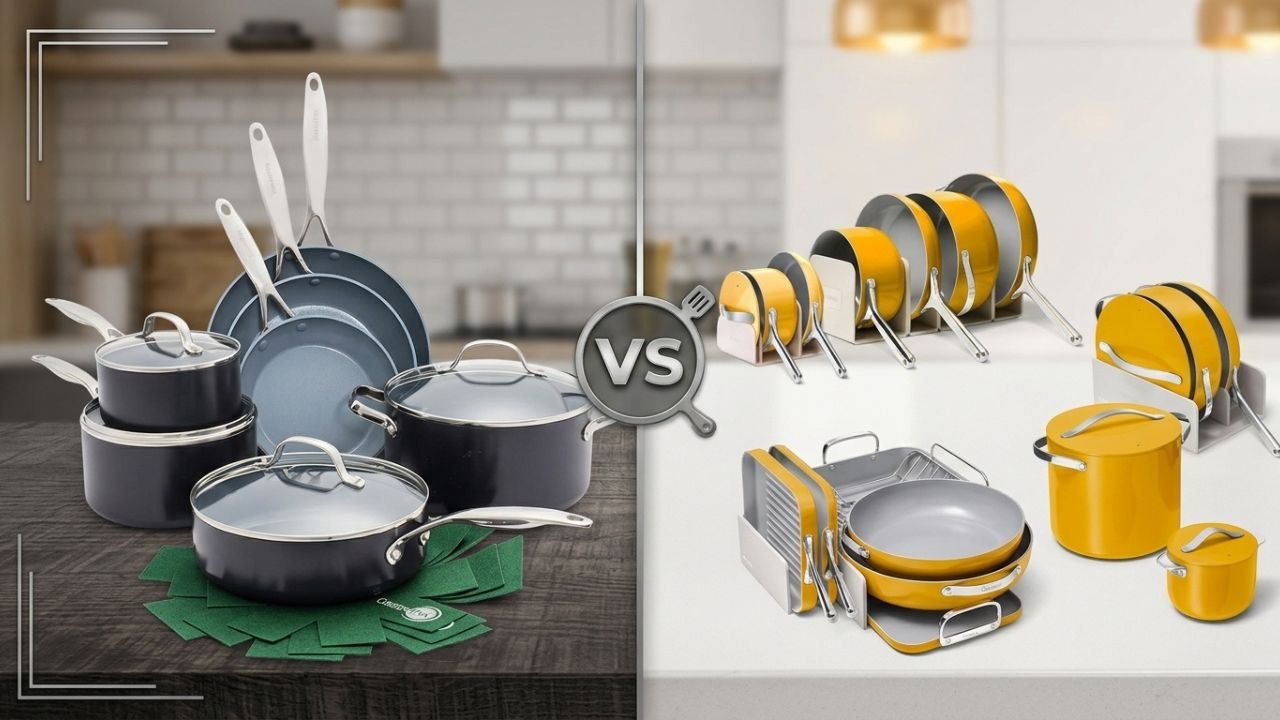
You’re standing in your kitchen, staring at that old nonstick pan that’s starting to look sketchy. The coating’s scratched, eggs stick no matter what you do, and you’ve heard enough about forever chemicals to make you side-eye every frying pan you own. Sound familiar?
I’ve been there. A few years back I ditched my old Teflon-style pans and went hunting for ceramic options that wouldn’t make me nervous every time I cooked eggs. Two names kept popping up everywhere: GreenPan and Caraway. Both promise PFAS-free ceramic nonstick. Both look good on Instagram. Both claim to make cleanup a breeze.
But which one actually deserves your hard-earned cash?
I dug into both, cooked with them, compared the real differences, and talked to a bunch of people who own them. Here’s the no-BS breakdown so you can decide without wasting money.
Discounted Deals for GreenPan and Caraway Cookware Sets
GreenPan 11 Piece Cookware Set: 20% OFF (Limited Time Deal)
Caraway 31-Piece Non-Stick Ceramic Cookware Bundle: 15% OFF (Limited Time Deal)
Why Ceramic Cookware Matters Right Now
Traditional nonstick often uses PTFE (the stuff in Teflon). When it gets too hot or starts breaking down, questions come up about fumes and long-term safety. Ceramic coatings skip that chemistry. Brands apply a silica-based layer that creates a slick surface without the same concerns.
Both GreenPan and Caraway lean hard into this. They market themselves as healthier, easier-to-clean alternatives. The real question isn’t “are they safer?” (both score well on that). It’s which one performs better in a real kitchen and lasts long enough to justify the price.
Quick Look at the Two Brands
GreenPan Cookware
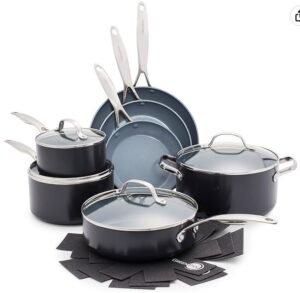
GreenPan has been around since 2007. They basically helped create the ceramic nonstick category in the U.S. They offer a ton of different lines—some budget-friendly, some higher-end like Valencia Pro. Their Thermolon coating (sometimes diamond-infused) is the big selling point. Many of their sets work on induction and go into the oven up to 600°F.
Caraway Cookware
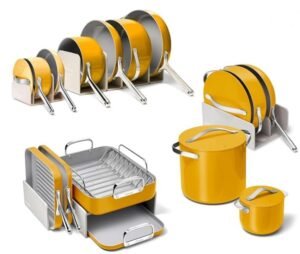
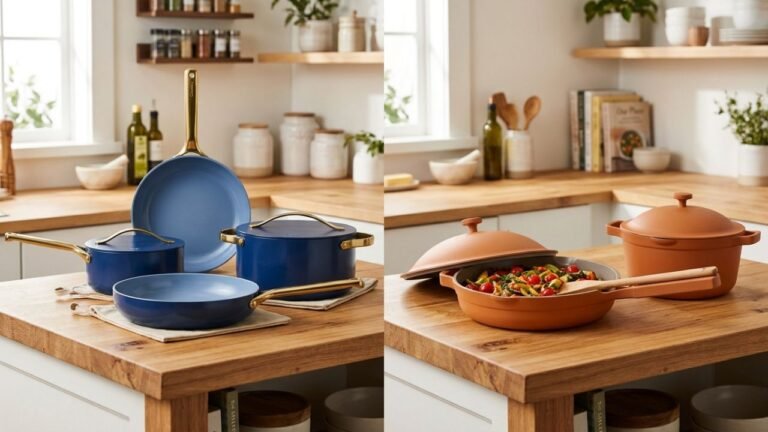
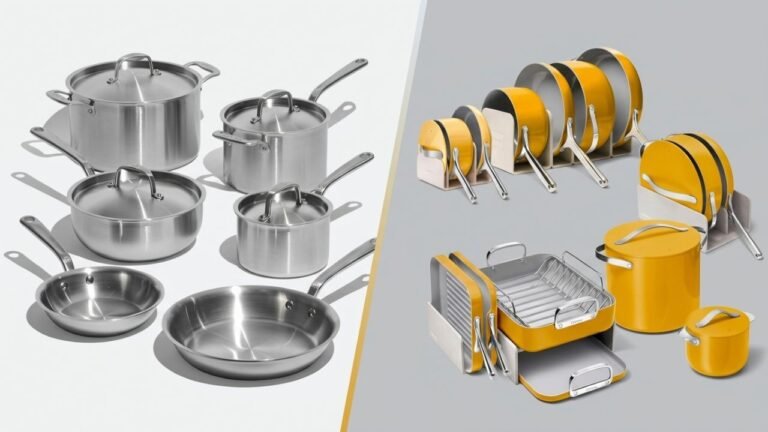
Caraway launched later and went straight for the design crowd. Their pans come in pretty colors (sage, cream, navy, marigold, you name it) and include a magnetic storage rack plus a lid organizer with every full set. The coating is also ceramic and free of PTFE, PFOA, and PFAS. They keep things simpler: one main collection with different color options.
Both make solid everyday cookware. The differences show up in price, durability claims, convenience, and how the pans feel day to day.
Materials and Construction: What’s Under the Coating?
GreenPan uses aluminum bodies, and their better lines (Valencia Pro especially) go hard-anodized. That process makes the surface denser and tougher. Some of their higher collections even add diamond particles to the ceramic coating for extra hardness. Handles are usually stainless steel and stay relatively cool.
Caraway uses heavy-gauge aluminum with a stainless steel induction plate on the bottom. The ceramic coating covers both the inside and outside on many pieces, which looks nice but can show wear differently. Handles are stainless steel too. The pans feel a bit heavier in the hand for some people.
I prefer the hard-anodized feel of better GreenPan pieces when I’m moving a full pan of food around. Caraway’s exterior coating looks more finished and matches the Instagram aesthetic, no question.
Key takeaway: GreenPan’s higher-end construction often feels more rugged. Caraway prioritizes the polished look.
Nonstick Performance: How Slick Are They Really?
Both start out excellent. Eggs slide around with almost no oil. Pancakes release clean. Cleanup takes seconds if you rinse while the pan is still warm.
Caraway edges out slightly when brand-new for delicate stuff like eggs or crepes. The surface feels a little smoother right out of the box. GreenPan (especially diamond-infused lines) holds its own and seems to tolerate a bit more heat without immediate stickiness.
Here’s the catch both share: ceramic nonstick doesn’t last forever like some people hope. High heat, metal utensils, and the dishwasher all shorten the honeymoon period. Keep the heat at medium or medium-low, use wood or silicone tools, and hand-wash when you can. Do that and both perform well for a good while.
I’ve cooked everything from scrambled eggs to chicken thighs to tomato sauce in both. Neither disappointed when I followed the rules. Break the rules and the coating suffers on either brand.
Heat Distribution and Oven Use
Both heat pretty evenly. Caraway sometimes feels a touch slower to respond but holds heat nicely once it’s hot. GreenPan (Valencia Pro especially) heats up a bit faster and handles higher oven temperatures.
Oven ratings matter if you like finishing steaks or roasting vegetables in the same pan:
- Caraway: up to 550°F
- GreenPan: up to 600°F on many lines (lids usually lower)
GreenPan wins if you regularly go from stovetop to oven. Neither loves screaming-hot searing the way cast iron or carbon steel does. Ceramic prefers medium heat. Push it too hard and the nonstick starts fading faster.
Induction users: both work. GreenPan has more variation by collection, so double-check the specific line. Caraway is consistent across the board.
Cleaning and Care: The Real Daily Difference
This is where opinions get strong.
GreenPan rates many of its pans as dishwasher safe. In practice, hand-washing still protects the coating longer. You can toss them in the machine when you’re exhausted after a long day.
Caraway is clear: hand-wash only. The coating and exterior finish don’t love dishwashers. Good news is the nonstick makes hand-washing fast. A soft sponge and warm soapy water usually do the job in under a minute.
I hand-wash both out of habit. When life gets busy, the GreenPan dishwasher option feels like a small win. Caraway’s storage system, though, makes putting everything away way nicer. The magnetic rack and lid holder actually work and keep cabinets from turning into a jumbled mess.
Durability and Longevity: How Long Do They Last?
Ceramic coatings wear. That’s the honest truth for both brands.
Owner reports and long-term tests vary. Some people get 3–5 years of solid nonstick performance with careful use. Others notice decline after a year or two if they cook hot or use metal tools. GreenPan’s Valencia Pro often gets praised for holding up better thanks to the harder body and reinforced coating. Caraway’s exterior coating can chip or show marks over time, though the cooking surface itself holds up similarly when treated well.
Warranties reflect the reality:
- GreenPan: typically 2 years on the coating + lifetime on manufacturing defects
- Caraway: usually 1 year
Neither covers normal wear of the nonstick surface the way some people wish they would. Treat them gently and both last longer. Treat them like regular Teflon and you’ll replace them sooner.
Design, Colors, and Storage
Caraway wins this category hands-down. The colors look intentional and modern. The included storage system is legitimately useful. If your kitchen aesthetic matters and you hate digging through stacked pans, Caraway feels special.
GreenPan looks clean and professional, especially the Valencia Pro in gray or other neutral tones. Some lines come in more colors now, but they don’t match Caraway’s design-forward vibe. GreenPan usually doesn’t include fancy storage racks.
If you leave pans on the stovetop or open shelving, Caraway photographs better. If function comes first, GreenPan still looks perfectly fine.
Price and Value
This is the big one for most people.
Caraway full sets typically land around $395–$450 (sometimes on sale closer to $300–$350). You’re paying for the design, the colors, and the storage system.
GreenPan offers way more range. You can find solid sets for $150–$300. Their Valencia Pro sits higher but still often costs less than a comparable Caraway set while giving you more pieces in some cases.
IMO, GreenPan delivers better pure value for most home cooks. You get strong performance without the premium design tax. Caraway makes sense if the look and organization matter enough that you’re happy paying extra.
Pros and Cons Side by Side
GreenPan Pros
- Better price range and overall value
- Higher oven temperatures on many lines
- Dishwasher-safe options
- Hard-anodized construction on premium lines
- More product variety and individual piece options
- Solid warranty
GreenPan Cons
- Less Instagram-pretty than Caraway
- No included storage system
- Coating still wears with heavy use or high heat
- Some budget lines feel less premium
Caraway Pros
- Beautiful colors and modern design
- Includes magnetic pan rack and lid organizer
- Excellent initial nonstick feel
- Consistent induction compatibility
- Exterior coating looks finished
Caraway Cons
- Higher price
- Hand-wash only
- Lower oven rating
- Coating and exterior can show wear
- Shorter warranty
Who Should Buy GreenPan?
Choose GreenPan if you want solid everyday performance without overspending. It works especially well if you cook a lot, use the oven often, or like the option of the dishwasher. The Valencia Pro line is the sweet spot for most people who want durability and versatility.
It’s the practical pick. You get good nonstick, good heat, and more flexibility for the money.
Who Should Buy Caraway?
Go Caraway if design and organization matter to you. The storage system actually solves a real kitchen problem. The colors make cooking feel a little more fun. If you treat your pans gently and prefer the look of a coordinated set, the extra cost can feel worth it.
It’s the aesthetic and organization pick.
My Personal Take After Living With Both
I’ve cooked plenty of meals in both. For pure function and value, I reach for GreenPan more often. The higher heat tolerance and easier care fit how I actually cook. When I want the kitchen to look put-together or I’m gifting a set, Caraway feels more special.
Neither is perfect. Ceramic nonstick still requires more care than people sometimes admit. Keep the heat moderate, skip the metal utensils, and hand-wash when possible. Do that and both will serve you well.
If I had to buy one set today for most people, I’d lean GreenPan—specifically something in the Valencia Pro range. It simply gives more performance and flexibility per dollar. If the storage system and colors make you smile every time you open the cabinet, Caraway earns its keep.
GreenPan vs Caraway Comparison Table
| Feature | GreenPan (Valencia Pro & similar) | Caraway |
|---|---|---|
| Coating | Thermolon ceramic (often diamond-infused) | Proprietary ceramic |
| Body | Hard-anodized aluminum | Heavy-gauge aluminum + induction plate |
| Oven Safe | Up to 600°F | Up to 550°F |
| Dishwasher Safe | Yes (hand-wash recommended) | No |
| Induction Compatible | Most lines | Yes |
| Storage Included | Usually no | Yes (rack + lid holder) |
| Warranty | 2 years coating + lifetime defects | Typically 1 year |
| Price Range (full sets) | $150–$350+ | $395–$450+ |
| Best For | Value, heat, everyday durability | Design, organization, aesthetics |
FAQs
Is GreenPan or Caraway safer?
Both are free of PTFE, PFOA, and PFAS according to the brands. They use ceramic coatings that avoid the traditional nonstick chemistry concerns. Use them as directed and both are solid non-toxic choices.
Which lasts longer?
It depends on how you treat them. With careful medium-heat cooking and proper utensils, both can deliver several years of good performance. GreenPan’s harder construction on premium lines often holds up a bit better under real kitchen stress.
Can I use metal utensils?
Neither brand recommends it. Stick to wood, silicone, or nylon. Metal will scratch the ceramic surface faster on both.
Do I need oil with these pans?
A little helps, especially as the coating ages. Fresh out of the box, many people cook eggs with almost none. A light film of oil or butter improves results and protects the surface.
Are they worth the money compared to regular nonstick?
If you want to avoid traditional PTFE coatings and like the easy cleanup of ceramic, yes. Just go in knowing the coating has a finite lifespan and needs more care than old-school nonstick.
Which is better for induction?
Both work. Caraway is consistent. Check the specific GreenPan collection if induction is a must.
Final Thought
You’re not choosing between a good pan and a bad pan. You’re choosing between two solid ceramic options with different strengths. GreenPan gives you more performance and flexibility for less money. Caraway gives you the prettier set and better organization.
Think about how you actually cook and what bugs you most in your current kitchen. That answer usually points you in the right direction.
Whichever you pick, treat the pans kindly and they’ll return the favor with easier cooking and less scrubbing. Now go make something good. 🙂