
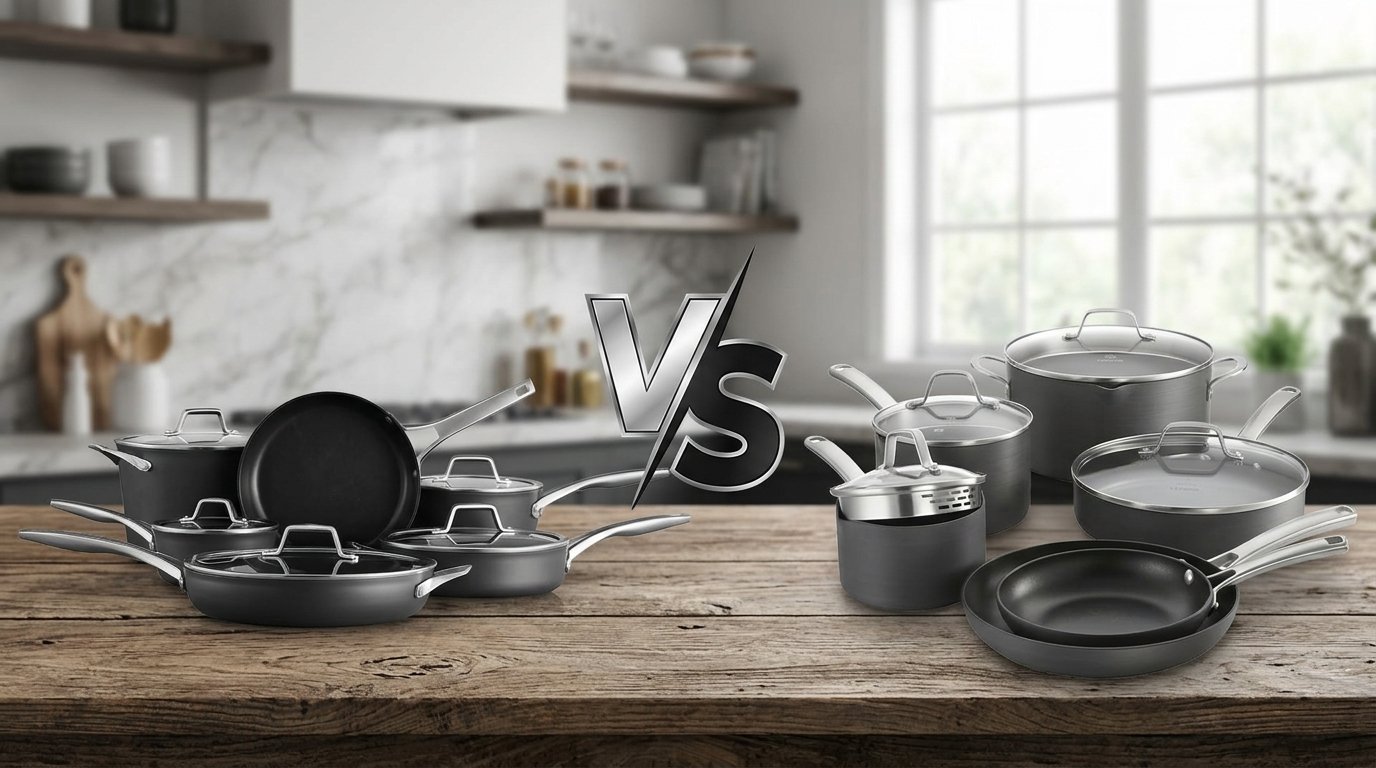
You’re standing in the kitchen aisle or scrolling Amazon at midnight. Two Calphalon sets stare back at you. One costs more. One looks practical. You just want pots and pans that work without drama. Sound familiar?
I’ve been there. I bought the cheaper option first, used it hard, then upgraded later. That experience taught me a lot. Today I’m breaking down Calphalon Premier vs Classic so you can skip the trial-and-error phase.
Both lines come from the same brand. Both promise nonstick cooking that feels easy. But they sit at different price points and deliver different results. Let’s figure out which one actually makes sense for your kitchen and your wallet.
Discounted Deals for Calphalon Premier & Classic
Here’s the Premier set I’ve been looking at: Calphalon Premier Hard-Anodized Nonstick 11-Piece. (20% OFF)
And here’s the Classic: Calphalon Classic Nonstick 10-Piece. (15% OFF)
What Makes These Two Lines Different Right Away?
Calphalon Classic aims for everyday cooks who want solid performance without spending a fortune. It gives you useful extras like measuring marks inside the pans and pour spouts. Some sets even throw in no-boil-over inserts. Those little helpers stop pasta water from flooding your stove. Nice touch.
Calphalon Premier sits higher on the ladder. It uses thicker material and a tougher nonstick coating. The brand pushes the idea that this stuff lasts longer and handles more abuse. Metal utensils? Premier says yes. Classic prefers you stick to wood or silicone.
I notice the weight difference the second I pick them up. Premier feels more substantial. Classic feels lighter and easier to toss around when you’re making weeknight dinners for the kids.
Which one matches how you cook? That’s the real question.
Construction and Materials: The Stuff You Can’t See but Definitely Feel
Both lines start with hard-anodized aluminum. That process makes the metal tougher and more resistant to scratches and corrosion. It also helps the pans heat up pretty evenly.
Here’s where they split.
Classic uses a medium-gauge body. It heats reasonably well for the money. The nonstick coating has two layers. That works fine for gentle cooking. Eggs slide. Pancakes release. But you need to treat it with a bit of care.
Premier steps up to a heavier gauge. The walls feel thicker. The nonstick system jumps to three layers with something Calphalon calls MineralShield technology. The brand claims this coating lasts significantly longer than the Classic version. Some materials say 40 percent longer. Newer claims even push 5x more durable than older Classic generations.
I cooked eggs in both side by side one Saturday. The Premier pan released them cleaner with almost no oil. The Classic needed a light spray. Small difference, but it adds up over hundreds of meals.
Premier also stays flatter longer in my experience. Classic pans can develop a slight warp if you run them under cold water while they’re still hot. Don’t do that with any nonstick, by the way. Bad habit.
Key takeaway: Premier builds for longevity. Classic builds for accessibility.
Nonstick Performance and Real-World Durability
This is the make-or-break section for most people.
Nonstick coatings wear out. That’s just life. How fast they wear depends on heat, utensils, cleaning, and how often you use the pans.
Classic’s two-layer coating does a good job at the start. Eggs, fish, and sticky sauces release without much fight. After a year or two of regular use, you start noticing spots where food hangs on a little more. That’s normal.
Premier’s three-layer MineralShield coating holds up better. I used metal spatulas on mine for months just to test the claim. The surface still looked solid. I’m not saying go crazy with metal every day, but the extra layer gives real forgiveness.
Ever left a pan on the burner a little too long? Premier seems more forgiving of those “oops” moments. Classic shows wear faster when heat gets aggressive.
Both lines recommend staying under high heat for best results. Nonstick hates screaming-hot temperatures. Medium heat is your friend with either set.
Dishwasher safety is another win for Premier. Most Premier pieces handle the dishwasher without drama. Classic nonstick often prefers hand washing to protect the coating longer. I still hand wash both because I’m particular, but the option matters on busy nights.
Heat Distribution and Everyday Cooking Performance
Good cookware spreads heat evenly. Hot spots burn food. Cold spots leave it undercooked. Nobody wants that.
Classic does a solid job for the price. The hard-anodized aluminum moves heat quickly. Sauces simmer without scorching if you stir. Pancakes brown pretty evenly across the surface.
Premier takes it further. The heavier gauge holds heat better once it gets there. When I sear chicken thighs, the Premier pan keeps a more consistent temperature after I add the meat. Classic drops a bit more and needs a moment to recover.
I notice this most with bigger pieces like the stock pot. Premier keeps a steady simmer with less fiddling with the burner. Classic works fine, but I adjust the flame more often.
Neither line matches full tri-ply stainless for heat control. If you cook a lot of sauces or do serious searing, you might still want a stainless piece in the mix. But for everyday nonstick cooking, both deliver.
Quick reality check: If your stovetop runs hot and uneven, Premier’s extra mass helps smooth things out.
Features That Actually Matter in Daily Life
Classic wins on convenience features in many sets. Measuring marks inside the saucepans save you from grabbing extra cups. Pour spouts make transferring sauces cleaner. Some Classic sets include those no-boil-over inserts. Those are legit useful for pasta or rice nights.
Premier focuses more on the cooking surface and durability. Handles stay cooler longer in my tests. Tempered glass lids let you peek without lifting. Some Premier sets offer space-saving designs that nest better in cabinets. If your kitchen storage is tight, that can matter more than measuring marks.
Both give you stay-cool handles and lids that fit well. Nothing fancy. Just functional.
I like the Classic pour spouts when I’m making gravy. I like the Premier’s solid feel when I’m flipping omelets. Different strengths.
Cleaning and Care: The Unsexy Part That Decides Longevity
Nobody buys cookware for the cleaning experience. But bad cleaning habits kill nonstick fast.
Both lines clean easily when the coating is fresh. A soft sponge and mild soap handle most messes. For stuck-on bits, I soak them briefly. Never use steel wool or abrasive scrubbers. That ends the nonstick party early.
Premier’s thicker coating and dishwasher-safe claim make maintenance simpler. I toss mine in the dishwasher after big holiday meals. The coating still looks good months later.
Classic benefits from more hand washing. The two-layer surface appreciates gentler treatment. I still get solid performance from mine, but I’m careful.
Pro tip I learned the hard way: Let pans cool before washing. Thermal shock is real. And avoid cooking sprays with propellants. They leave a sticky film that builds up over time. A little oil or butter works better.
Price and Value: Where the Rubber Meets the Road
Classic costs less up front. You get a usable set without stretching the budget. For someone setting up a first kitchen or replacing old pans on a budget, that makes sense.
Premier asks for more money. In return you get thicker construction, a more durable coating, and metal-utensil tolerance. Over several years, the cost-per-use can actually look better if the pans last longer.
I bought Classic first. After two years of solid use the nonstick started showing age. I switched to Premier and the difference felt immediate. The pans still look and perform closer to new after similar time.
Is the upgrade worth it? Depends on how hard you cook and how long you keep things. If you replace pans every few years anyway, Classic saves cash. If you want sets that stay in rotation longer, Premier pays off.
Check current prices on the links above. Sales change the math a lot.
Who Should Buy Calphalon Classic?
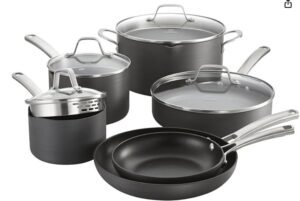
Get the Classic if:
- You cook mostly simple meals a few times a week
- Budget is the top priority right now
- You like helpful features like pour spouts and measuring marks
- You’re careful with utensils and heat
- You’re okay replacing the set in a few years
It works great for eggs, stir-fries, pasta, and everyday family cooking. Plenty of people love their Classic sets and never feel the need to upgrade.
Who Should Buy Calphalon Premier?
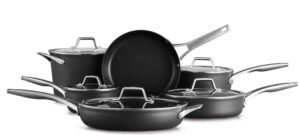
Go Premier if:
- You cook often and want the pans to last
- You sometimes reach for metal tools without thinking
- You value even heating and a more solid feel
- Dishwasher convenience matters to you
- You’re willing to spend more now to avoid buying again soon
I fall into this group. Once I tasted the difference in durability, going back felt like a step down.
My Honest Recommendation After Living With Both
I keep both in the house for different reasons. The Classic set handles weekend breakfasts and quick weeknight meals. The Premier set gets the heavier lifting — bigger batches, more ambitious recipes, and anything that needs reliable nonstick under pressure.
If I could only keep one, I’d choose the Premier. The extra durability and better heat retention make daily cooking less frustrating. That peace of mind is worth the higher price for me.
Your mileage may vary. Think about how often you cook, how roughly you treat pans, and how long you want them to last. Then pick the line that matches your real life, not the ideal version of it.
Side-by-Side Comparison Table
| Feature | Calphalon Classic | Calphalon Premier |
|---|---|---|
| Nonstick Layers | 2 layers | 3 layers (MineralShield) |
| Gauge / Thickness | Medium | Heavy |
| Metal Utensil Safe | No | Yes |
| Oven Safe | Up to 450°F | Up to 450°F |
| Dishwasher Safe | Limited / better hand washed | Yes |
| Heat Distribution | Good | Better |
| Convenient Extras | Measuring marks, pour spouts, inserts | Focus on durability and solid feel |
| Relative Price | More affordable | Higher |
| Best For | Budget-conscious everyday cooking | Longer-lasting performance |
Frequently Asked Questions
Is Calphalon Premier really better than Classic?
In construction and coating durability, yes. Classic still cooks well for the money.
Can I use metal utensils on Classic?
I wouldn’t. Stick to wood, silicone, or nylon to protect the two-layer coating.
Do both lines work on induction?
These hard-anodized nonstick versions generally do not. Look at Calphalon’s stainless options if you need induction.
How long does the nonstick last?
Classic often gives solid performance for 2–4 years with good care. Premier stretches that further for many users.
Are they PFOA-free?
Yes. Both use modern PTFE-based coatings that meet current standards.
Should I buy a full set or individual pieces?
Start with a set if you’re replacing everything. Add single pans later as needs change.
What’s the warranty like?
Both usually carry limited lifetime warranties against defects. Normal wear and tear on the nonstick isn’t covered. Read the fine print.
Final Thoughts
Choosing between Calphalon Premier and Classic comes down to what you value more: lower upfront cost or longer-term performance. Classic gets the job done without breaking the bank. Premier feels like an investment that pays you back every time you cook without fighting stuck food or worn coating.
I’ve cooked enough meals in both to know neither is perfect. But both beat cheap no-name pans by a mile. Pick the one that fits your cooking style and budget, treat it reasonably well, and you’ll get years of solid service.
Still on the fence? Look at how often you reach for nonstick versus stainless. Think about your storage space and cleaning habits. Then check the current prices on those Amazon links and decide.
Your kitchen. Your rules. Just make the choice that keeps you happy when you’re standing over the stove at 6:30 on a Tuesday night. That’s what actually matters.