
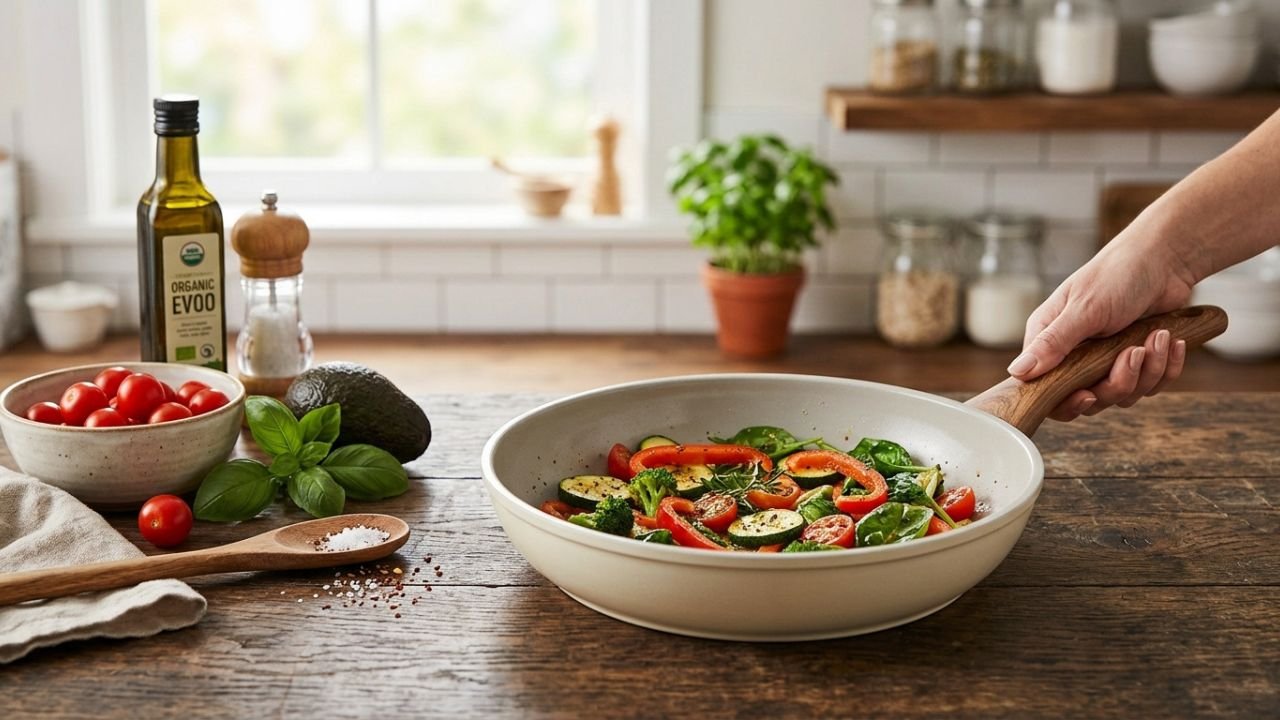
Are Non-Stick Ceramic Pans Safe? A question asked on many social sites and forums. Let’s explore it. You stare at that shiny new ceramic pan and wonder, “Is this thing actually safe, or did I just buy fancy marketing?” I get it. I’ve stood in the kitchen aisle holding one of those boxes, reading “PFAS-free” and “non-toxic” like it was gospel, while my old Teflon pan sat at home looking guilty.
I switched to ceramic non-stick a few years back after one too many late-night internet rabbit holes about forever chemicals. Spoiler: the answer isn’t a simple yes or no. But let’s talk it through like we’re hanging out in my kitchen, coffee in hand.
What Even Are Non-Stick Ceramic Pans?
First things first. Most “ceramic” pans aren’t pure ceramic like your grandma’s casserole dish. They’re usually aluminum or stainless steel with a thin silica-based coating on top. That coating comes from a process called sol-gel. Think sand-derived minerals mixed into a liquid, sprayed on, then baked hard.
The result feels smooth and lets eggs slide around without a fight. Brands love calling it ceramic because it sounds natural and clean. And honestly, compared to the old stuff, it often is.
True solid ceramic pans exist too. Brands like Xtrema make those. They’re heavy, fully ceramic through and through, and completely different animals. Today we’re mostly talking about the popular coated ones you see everywhere.
Ever notice how the nonstick magic starts strong and then fades? Yeah. That’s the coating doing its thing—and eventually giving up.
Ceramic vs Traditional Nonstick: The Big Difference
Traditional nonstick relies on PTFE, better known as Teflon. PTFE belongs to the big family of PFAS, those forever chemicals that stick around in the environment and our bodies for ages.
Ceramic coatings skip the fluorine chemistry entirely. They’re silica-based. No PTFE. No PFOA. And when reputable brands do it right, no PFAS either.
Here’s the practical side. Overheat a PTFE pan past about 500°F and it can release fumes that cause polymer fume fever—basically a temporary flu that hits birds harder than people. Ceramic doesn’t pull that stunt. It handles higher heat without spewing those specific toxins.
I once left an empty PTFE pan on the stove too long. The smell alone made me open every window. Never happened with my ceramic ones.
But ceramic isn’t perfect. The nonstick surface wears out faster. Some pans lose their slickness in under a year if you treat them rough. PTFE usually lasts longer before it gets sticky.
Are Ceramic Non-Stick Pans Really Free of Forever Chemicals?
This is the question that keeps people up at night. Short answer from the testing I’ve seen: good ones are.
Consumer Reports checked a couple of popular ceramic pans—the Our Place Always Pan and a Red Copper model. They looked for 96 different PFAS compounds. Zero showed up. Experts told them ceramic coatings don’t need those chemicals to work, so the results made sense.
Plenty of brands now slap “PFAS-free,” “PTFE-free,” and “PFOA-free” on the box. That last one is almost meaningless these days because manufacturers phased out PFOA years ago. Look for the full PFAS-free claim and, even better, third-party lab reports.
Some cheaper no-name pans might cut corners. I’ve heard stories of coatings that still sneak in problematic stuff. Stick with known names that publish their test results. GreenPan, Caraway, Made In, and a few others do this pretty consistently.
IMO, if a brand won’t show the receipts, walk away. 🙂
The Real Concerns Worth Knowing About
Nothing is risk-free. Ceramic pans have a couple of potential issues.
Some coatings include titanium dioxide nanoparticles. These help with hardness and color. The International Agency for Research on Cancer lists titanium dioxide as a possible carcinogen when inhaled in certain forms. Studies show tiny amounts can migrate into food, especially if the pan gets scratched or cranked to extreme heat.
Is that a huge daily danger? Most experts say the levels stay very low under normal cooking. Still, it’s not zero. I prefer brands that test for this and keep levels minimal.
Durability is the bigger everyday headache. The coating is thinner and more brittle than PTFE. High heat, metal utensils, dishwashers, and thermal shock (cold water on a hot pan) speed up the wear. Once it chips or flakes, you’re cooking on the metal underneath—usually aluminum.
Aluminum can leach into acidic foods like tomato sauce or lemony dishes. Not ideal in big amounts over time. That’s why I replace any pan the second I see damage. No exceptions.
Lead and cadmium sometimes pop up in testing of cheaper or poorly made pieces, especially the handles or decorative parts. Reputable brands test below FDA and Prop 65 limits. Always check.
How to Use Ceramic Non-Stick Pans Safely
Treat them right and they stay safer longer. Here’s what works for me:
- Keep the heat medium or medium-high. Skip screaming-hot sears. Save those for cast iron or carbon steel.
- Use wood, silicone, or nylon utensils only. Metal scratches the surface fast.
- Hand wash with a soft sponge. Dishwashers are harsh on the coating.
- Avoid cooking sprays. They leave a sticky residue that builds up and ruins the nonstick.
- Never heat an empty pan for long. Oil or food should go in pretty quick.
- Store them carefully. Stacking without protection scratches the surface.
- Retire the pan as soon as the coating looks worn, flaky, or food starts sticking badly.
I keep one ceramic pan just for eggs and delicate fish. Everything else goes in stainless or cast iron. That system keeps the ceramic lasting longer and reduces any worry.
How to Pick a Decent Ceramic Pan
Not all ceramic pans are equal. Here’s my quick checklist:
- Explicit PFAS-free, PTFE-free, and PFOA-free claims
- Third-party testing for heavy metals and chemicals (look for published reports)
- Solid brand reputation with real customer feedback on durability
- Induction compatibility if you need it
- Comfortable handle and good weight distribution
GreenPan’s Thermolon coating shows up a lot in positive tests. Caraway and Our Place get mixed reviews on how long the nonstick lasts, but the safety side checks out for many buyers. Made In’s CeramiClad sits on stainless steel, which feels sturdier to me.
Price doesn’t always equal quality. I’ve seen mid-range pans outperform expensive ones simply because the owners treated them better.
My Personal Take After Years of Cooking with Them
I like ceramic non-stick for specific jobs. Eggs slide out clean. Cleanup takes seconds. No weird chemical smell when things get a little hot. That peace of mind matters when you’re cooking for family.
At the same time, I don’t trust any coated pan forever. They all wear out. Ceramic just does it faster in my experience. I’ve gone through a few. Each time the nonstick faded, I switched to stainless for most cooking and kept a fresh ceramic for the sticky stuff.
Would I call them the ultimate safe pan? No. Cast iron, carbon steel, and good stainless still feel like the long-term winners for everyday use. But for convenience without the PTFE baggage, ceramic does the job well enough when you buy smart and cook carefully.
Sarcasm moment: the marketing makes them sound like they descended from the heavens pure and eternal. Reality is more like a helpful tool with an expiration date.
Better Alternatives If You’re Still Nervous
If ceramic still feels iffy, plenty of solid options exist:
- Well-seasoned cast iron
- Carbon steel
- Multi-ply stainless steel
- Fully ceramic (no metal core) from brands that test clean
- Enameled cast iron for some tasks
These skip coatings altogether. They need a bit more technique and elbow grease, but they last decades and raise fewer chemical questions.
The Bottom Line
Are non-stick ceramic pans safe? For most people using quality ones the right way, yes. They avoid the PFAS and PTFE issues that worry so many of us. They don’t release those specific toxic fumes at high heat. Independent tests back up the cleaner chemistry for reputable brands.
The trade-offs are real: shorter lifespan, possible nanoparticle traces, and the need to replace them when the coating fails. Treat them gently, stay at moderate heat, and swap them out when they look tired. Do that and they work as a solid everyday option.
I still reach for mine when I want easy eggs on a busy morning. Just don’t expect them to be magic forever. Cook smart, stay curious, and maybe keep a trusty cast iron nearby for the heavy lifting.
What do you cook most often? That might decide if ceramic fits your kitchen or if something else makes more sense.
FAQs
Are ceramic non-stick pans completely toxin-free?
No pan is 100% risk-free, but quality ceramic ones skip PTFE, PFOA, and PFAS. Trace nanoparticles or metals can appear if the coating fails, so replace damaged pans.
Can I use ceramic pans on high heat?
They handle higher temperatures than PTFE without the same fume risk, but high heat shortens the coating’s life. Stick to medium for best results.
How long do ceramic non-stick pans last?
With good care, often 1 to 3 years of regular use. Some last longer, some less. Proper technique makes a big difference.
Is the aluminum under the coating dangerous?
Only if the coating chips and you cook acidic food often. Intact coating keeps food away from the metal.
Should I avoid ceramic pans if I have birds?
Ceramic is much safer for pet birds than PTFE because it doesn’t release those specific toxic fumes. Still ventilate any kitchen.
Do all ceramic pans test free of PFAS? Reputable ones do in independent checks.
Cheap or poorly labeled ones might not. Always verify claims.