
You ever stare at a pan and wonder if it’s quietly ruining your dinner? Yeah, me too. I bought a HexClad skillet a while back because the ads looked sharp and Gordon Ramsay kept waving one around. Then the questions started. Is this thing safe? What’s actually in the coating? Am I cooking with something I shouldn’t?
Let’s just talk about it straight.
What HexClad really is
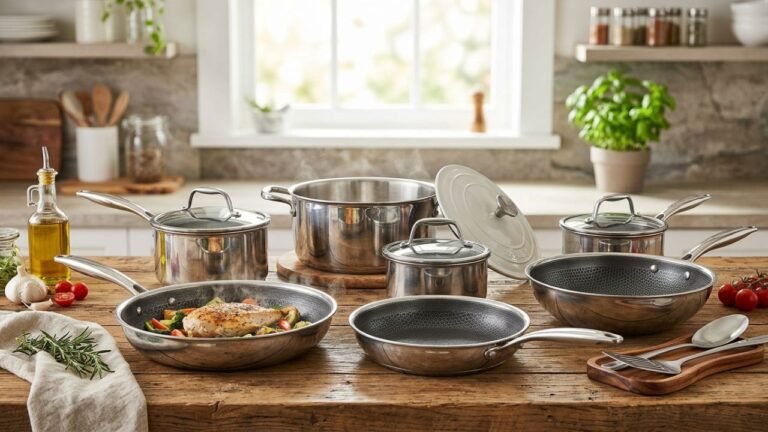
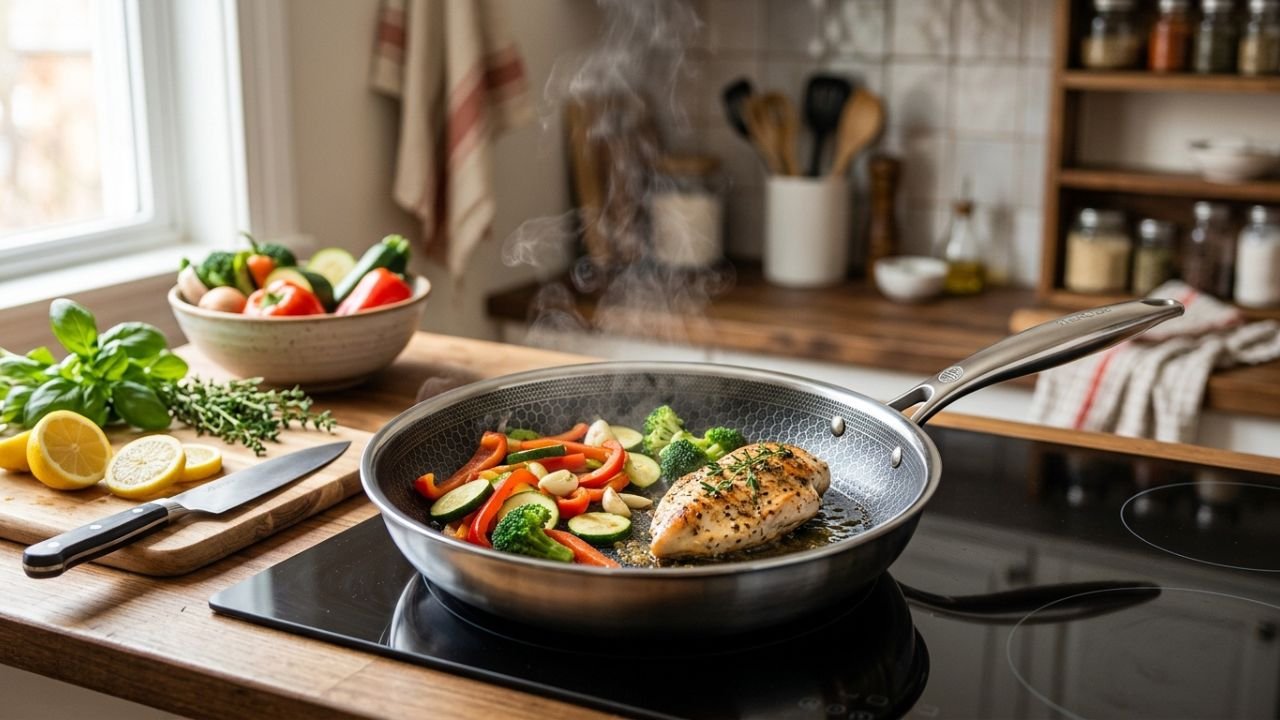
HexClad pans have this laser-etched hexagon pattern. Raised stainless steel peaks sit up high. The lower parts—the valleys—hold the nonstick coating. Aluminum core in the middle for even heat. Stainless on the outside so it works on induction.
The idea is simple. The steel protects the nonstick so you can use metal utensils without destroying the surface overnight. Pretty smart design on paper. But the real question is always the same: what sits in those valleys?
The old pans vs the new ones
This part matters a lot.
Older HexClad pans (the ones from around 2022 into early 2024) used PTFE in the valleys. That’s the same family as traditional Teflon. The company called those pans non-toxic and PFAS-free. A class-action lawsuit said that wasn’t accurate. PTFE counts as a PFAS under some rules. HexClad settled for $2.5 million without admitting they did anything wrong. Claim window closed last year.
Current HexClad pans use something called TerraBond. The brand says it’s a proprietary ceramic nonstick. They claim it’s PTFE-free and free from forever chemicals. Their product pages and science page push that hard. Some lab tests (the ones the company paid for) came back with no detectable PTFE or the common PFAS compounds.
So the answer depends on when you bought the pan. Older ones had PTFE. Newer ones claim they don’t.
Is PTFE even a big deal?
A lot of people still own the older version, so let’s cover it.
PTFE stays stable at normal cooking temperatures. Most of us cook between 300 and 450 degrees. At those temps an intact coating doesn’t dump chemicals into your food. The problem shows up when the pan gets too hot—around 500 degrees and higher. Then it can start breaking down and release fumes. Those fumes can make people feel flu-ish (polymer fume fever) and they can kill pet birds.
HexClad has always said stick to medium heat and don’t preheat an empty pan on high. That advice is still solid for any coated pan.
PFOA is a different chemical. Manufacturers stopped using it in U.S. cookware years ago. Newer PTFE is PFOA-free. That removes one of the older worries.
Still, if you want zero fluoropolymers in your kitchen, the older HexClad pans don’t clear that bar.
Related Post: 7 Best Hybrid Cookware Sets: Our Top Picks for Nonstick Performance Without the Coating
What about TerraBond?
TerraBond is the current coating. HexClad calls it ceramic and PTFE-free. They point to lab results showing the listed PFAS compounds under detection limits.
Here’s the honest part some careful people notice: the full formula is proprietary. Independent testing that anyone can pull up and read is still limited. A few review sites have checked current pans and found nothing concerning, but the sample sizes aren’t huge and some of the testing is manufacturer-backed.
I’m not saying TerraBond is dangerous. I’m saying the transparency isn’t as complete as brands that publish full third-party reports from multiple labs. If that level of proof matters to you, you might want more data before you spend the money.
My own kitchen experience
I bought a 12-inch HexClad skillet when the PTFE version was still the main one. I liked how evenly it heated. Metal spatulas didn’t ruin it right away. Eggs still needed a little butter or oil though. Those raised steel peaks aren’t pure nonstick. High-heat searing worked okay, but I never cranked the burner the way I do with my carbon-steel pan.
After the lawsuit news came out I started watching the temperature closer. Kept it medium. Never left an empty pan on a hot burner. The pan performed fine. No weird smells. No flaking. No drama.
Later I tried a newer TerraBond pan at a friend’s place. Felt about the same. Cleanup was easy. Still needed a bit of fat for delicate stuff. It did the job.
Would I replace every pan in my kitchen with HexClad? No. I still grab cast iron when I want serious heat and zero coating questions. But for regular weeknight cooking the hybrid design works.
How safe is it in real life?
Most sources land in the same place:
- Under normal home cooking (medium heat, food in the pan, no empty high-heat preheating), both older and current HexClad pans don’t release meaningful toxins into food.
- The stainless peaks protect the coating better than flat nonstick surfaces.
- The aluminum core is sealed, so it doesn’t touch food.
- Oven use is fine up to the stated limits (usually 500°F for the pans).
The real risks are the same ones that apply to almost every nonstick pan:
- Overheating an empty pan
- Using a damaged or heavily scratched coating
- Cooking at temperatures that would break down any nonstick surface
If your pans look worn or the valleys are flaking, replace them. That advice goes for every brand.
Relate Post: 7 Best Hybrid Pans for Searing, Sautéing, and Everything In Between
HexClad vs pans with no coating at all
Want zero debate? Look at these:
- Bare stainless steel (All-Clad, Made In, and similar) – Needs technique and oil, but nothing wears out.
- Cast iron – Season it right and it becomes naturally nonstick. Heavy, but it lasts forever.
- Carbon steel – My personal favorite for high heat. Lighter than cast iron and develops a great seasoning.
- True ceramic nonstick (certain GreenPan lines, Caraway, etc.) – These use sol-gel ceramic with no PTFE. Not as tough as hybrid or stainless, but they score high on the “no fluoropolymers” checklist.
HexClad sits in the middle. It tries to give stainless durability plus nonstick convenience. For a lot of home cooks that trade-off works. For people who want absolute material simplicity, it may not.
Questions people keep asking
Does HexClad have lead or cadmium?
Current TerraBond claims and the available lab results say no. Older pans were also sold as free of those metals.
Is it safe if I have birds?
Any PTFE pan carries risk if overheated. Even current ceramic coatings are best kept away from extreme empty-pan heat if you have pet birds. Good ventilation helps.
Can I use metal utensils?
Yes. That’s one of the main selling points of the hexagon design. Still, aggressive scraping can wear the valleys over time.
How long do they last?
Reviews are mixed. Some people get years of good performance. Others notice sticking after several months of regular use. Nonstick coatings of any kind wear eventually. Treat them gently and they last longer.
The marketing vs what actually happened
HexClad’s early marketing leaned hard into “non-toxic” language. That language got them into legal trouble. After the settlement the company cleaned up the claims and switched to TerraBond.
I respect the design. The hybrid surface is clever. The celebrity push helped a lot of people discover the brand. But clever design doesn’t automatically equal perfect chemical transparency.
If a brand tells you something is free of forever chemicals, look for independent lab data you can actually read. Manufacturer testing is a start. It’s not the finish line.
Practical tips if you already own HexClad
- Cook on medium heat most of the time.
- Never preheat an empty pan on high.
- Use a little oil or butter for eggs and delicate proteins.
- Avoid aerosol cooking sprays if they leave residue that’s hard to clean.
- Hand-wash when you can, even if the pans are dishwasher-safe.
- Replace the pan if the coating looks damaged.
Those habits keep almost any nonstick pan safer and longer-lasting.
Who should buy HexClad right now?
Buy current TerraBond HexClad if you:
- Want metal-utensil durability with decent nonstick performance
- Cook mostly at medium temperatures
- Like the look and the induction compatibility
- Are okay with a proprietary ceramic coating that the brand says is PTFE-free
Skip it (or at least wait for more independent data) if you:
- Want zero synthetic coatings of any kind
- Prefer fully transparent material lists
- Do a lot of high-heat searing and want a pan that can take abuse without concern
- Already have good stainless or carbon steel and just need better nonstick for eggs
Final thoughts from my kitchen
I still use my older HexClad pan for certain jobs. I keep the heat reasonable and pay attention. The newer TerraBond version looks like a step in a better direction on paper.
Is HexClad cookware toxic? Under normal use, no—not in the dramatic way some internet headlines suggest. The older PTFE versions carried the usual nonstick risks if you overheated them. The current ceramic version removes the PTFE concern according to the brand and its testing.
The real question is simpler: Does this pan fit the way you actually cook, and does the level of available testing make you comfortable?
For me, HexClad is a solid hybrid option—not the purest material choice, not the worst, and definitely not magic. Use it smart, keep the heat in check, and it will do the job without drama.
And if you ever feel that late-night Google spiral coming on again, just remember: most of the fear around modern cookware comes from extreme conditions, not everyday scrambled eggs. Cook with a little common sense and you’ll be fine.
Now go make dinner. Your pan is waiting.
FAQs About HexClad
Is HexClad cookware toxic?
Under normal cooking? No.
Keep the heat medium, don’t preheat an empty pan on high, and the coating stays stable. Older pans had PTFE. Newer ones use TerraBond, which the brand says is free of PTFE and PFAS. Real risk only shows up if you cook way too hot.
Does HexClad still have PTFE or PFAS?
Depends when you bought it.
Pans from 2022 to early 2024 had PTFE in the valleys. That’s why the lawsuit happened. Current TerraBond versions claim to be PTFE-free and PFAS-free. HexClad points to lab tests that found nothing detectable. The full formula stays proprietary though, so some people still want more independent proof.
What exactly is TerraBond?
It’s HexClad’s current nonstick coating. They call it a proprietary ceramic. It sits in the lower valleys between the raised stainless-steel peaks. The brand says it’s free of PTFE, PFAS, lead, and cadmium. That’s the big change from the older version.
Can I cook on high heat with HexClad?
Not a great idea.
HexClad performs best on low to medium. High heat can burn oil, create buildup, and stress any nonstick surface. Stick to medium and you’ll get better results and longer life out of the pan.
Is HexClad safe if I have pet birds?
Be careful.
Any PTFE pan can release fumes if overheated, and those fumes are dangerous for birds. Even with the newer ceramic coating, don’t leave an empty pan on a hot burner. Good ventilation helps too.
Does HexClad contain lead or cadmium?
According to the brand and the lab results they share, no. Current TerraBond pans test free of both.
Can I use metal utensils on HexClad?
Yes. That’s one of the main reasons people buy it. The raised stainless peaks protect the nonstick valleys. Still, don’t scrape like you’re trying to dig a hole. Gentle metal use is fine. Aggressive scraping will wear it down over time.
How long do HexClad pans actually last?
Mixed results.
Some people get years of solid performance. Others notice food starting to stick after several months of regular use. Nonstick coatings wear out eventually, no matter the brand. Treat them kindly and they last longer.
What was the HexClad lawsuit about?
A class-action case claimed HexClad marketed older pans as non-toxic and PFAS-free while the coating still contained PTFE. The company settled for $2.5 million without admitting wrongdoing. After that they switched to TerraBond and cleaned up the marketing language.
Should I buy HexClad or something else?
If you want metal-utensil durability plus decent nonstick and mostly cook on medium heat, current TerraBond HexClad works fine for a lot of people.
If you want zero coatings and maximum simplicity, grab bare stainless, cast iron, or carbon steel instead