
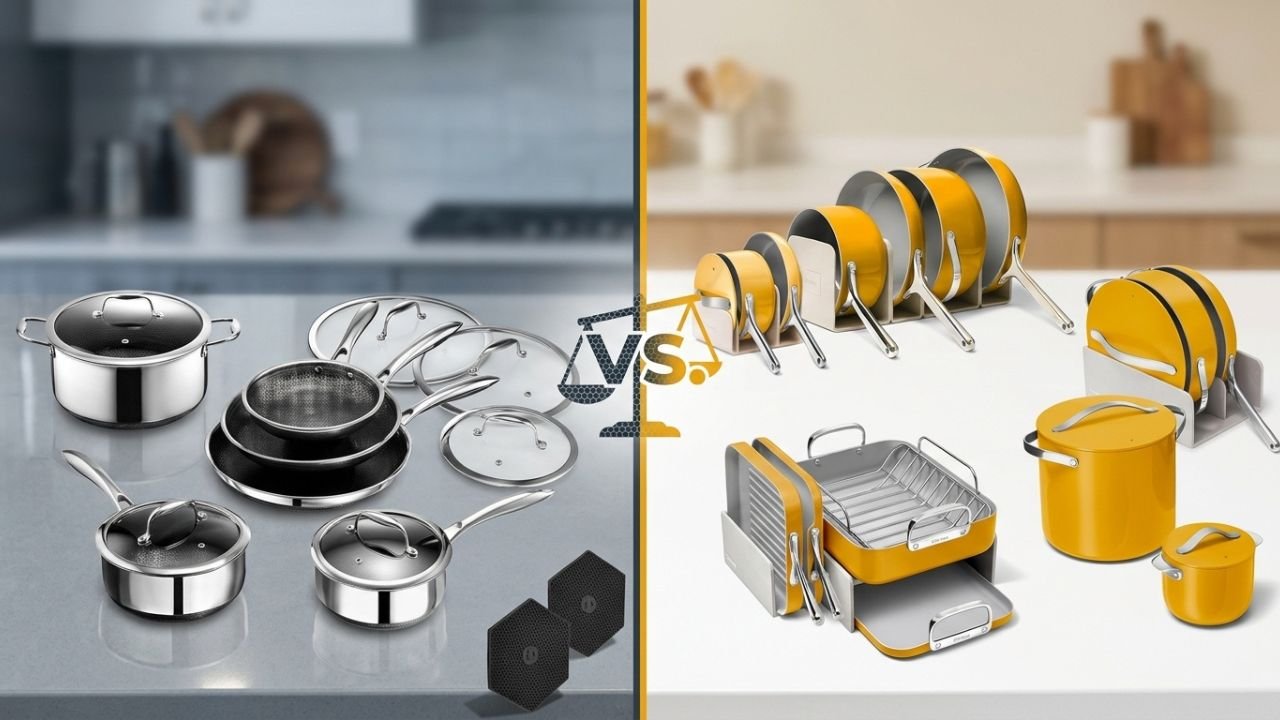
You’re standing in your kitchen, staring at two sets of fancy pots and pans that both claim to fix every cooking headache you’ve ever had. One looks like it belongs in a Gordon Ramsay kitchen. The other looks like it belongs on an Instagram feed full of pastel counters and perfect eggs. Both cost real money. So which one actually deserves a spot in your cabinet?
I’ve cooked with both. I’ve burned eggs on one, seared steak on the other, and spent way too many nights scrubbing or smiling at how little I had to scrub. This isn’t some polished lab test. It’s just me, a regular home cook who likes good food and hates wasted cash, telling you what actually happens when these pans hit a real stove.
Deep Discounted Offer: HexClad vs Caraway (25% OFF)
HexClad Hybrid Cookware Set (25% OFF)
Caraway Nonstick Cookware Set (15% OFF)
What Makes HexClad Different from Caraway?
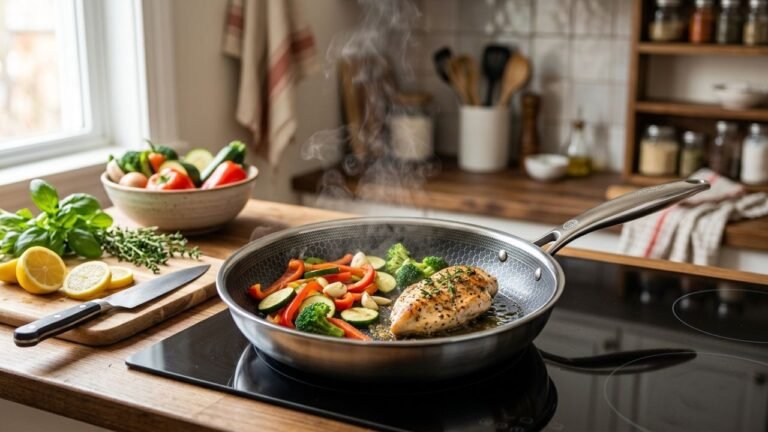
HexClad calls itself hybrid cookware. The surface has raised stainless steel hexagons laser-etched into a ceramic nonstick layer. Think of it as stainless steel peaks with nonstick valleys. The body is tri-ply—stainless steel outside, aluminum core in the middle, magnetic stainless on the bottom so it works on induction.
Caraway takes a simpler route. It uses an aluminum body with a full ceramic nonstick coating across the entire cooking surface. Stainless steel base plate for induction and stainless handles. No peaks. No valleys. Just smooth ceramic that food slides off of.
That difference drives almost everything else. HexClad wants to give you searing power and durability. Caraway wants pure nonstick ease and good looks.
How They Actually Cook Food
I started with eggs. Classic test, right?
Caraway wins this one almost every time. Crack an egg into a preheated Caraway pan with almost no oil and it slides around like it’s on ice. Flip it, and the yolk stays perfect. Scrambled eggs leave almost nothing behind. Pancakes behave the same way. The slick surface makes cleanup feel like cheating.
HexClad needs a little fat. A teaspoon of oil or butter and it performs fine, but pure nonstick it is not. Eggs can stick to those steel ridges if you skip the oil or don’t preheat properly. Once you get the hang of it, though, the food releases cleanly enough.
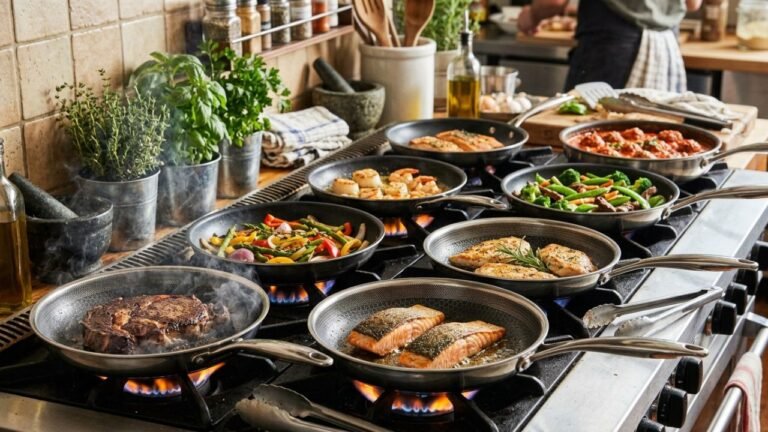
Now throw a steak in the mix. HexClad takes the lead. Those stainless peaks create real browning and fond. You get that restaurant-style crust. Caraway can brown food, but it never quite hits the same level of Maillard reaction. High heat also stresses the ceramic coating faster, so most people keep Caraway on medium.
Vegetables, chicken thighs, stir-fries? Both handle them. HexClad feels more versatile for mixed cooking styles. Caraway shines when you want low-oil, easy-release everyday meals.
Durability and How Long These Things Last
Here’s the part nobody likes to talk about at the cash register.
Ceramic nonstick coatings wear out. That’s just physics. Heat cycles create tiny fractures. Over time the slickness fades. Caraway’s full ceramic surface shows this eventually. Users who keep heat moderate, skip metal utensils, and hand-wash carefully report years of good performance. Push it hard and the coating starts sticking or looking scratched sooner.
HexClad’s hybrid design protects the coating better. The steel ridges take the abuse from metal spatulas and forks. Many people run them through the dishwasher without immediate disaster (though hand-washing still helps longevity). The ceramic in the valleys still degrades eventually, but the overall pan stays usable longer for searing and everyday cooking.
I’ve had a HexClad 12-inch skillet for a while now. It still sears steak nicely and releases food after cooking with a bit of oil. My Caraway fry pan still looks pretty, but I treat it like a delicate friend—medium heat only, silicone tools only, gentle wash only.
HexClad generally holds up better under rough use. Caraway rewards careful owners with excellent nonstick performance while it lasts.
Cleaning and Daily Hassle
Caraway is the clear winner if you hate scrubbing. Food rarely sticks hard. A soft sponge and warm soapy water usually finish the job in under a minute. The brand says hand-wash only. Dishwasher detergent can dull the coating faster.
HexClad cleans well too, especially after you get used to cooking with a little fat. Stuck-on bits sometimes need a bit more elbow grease because of the textured surface. The good news? You can toss it in the dishwasher if you’re feeling lazy. I still hand-wash most of the time because I want these pans to last.
Handles on both stay reasonably cool. HexClad’s feel solid and balanced. Caraway’s look sleek and match the rest of the set.
Design and Kitchen Vibes
Caraway owns the aesthetics game. You can pick cream, navy, sage, marigold, black, and more. The sets come with magnetic pan organizers and a canvas lid holder. Your cabinets suddenly look organized instead of chaotic. These pans look good enough to leave on the stove or hang on a rail.
HexClad comes in one serious dark finish with the signature hex pattern. It looks professional and modern, but it won’t match your pastel kitchen vibe. No storage system included. You buy the pans and figure out the rest yourself.
If your kitchen is part of your personality, Caraway wins. If you just want tools that work hard, HexClad doesn’t care how it looks.
Price and What’s Actually in the Box
This is where the “worth your money” question gets real.
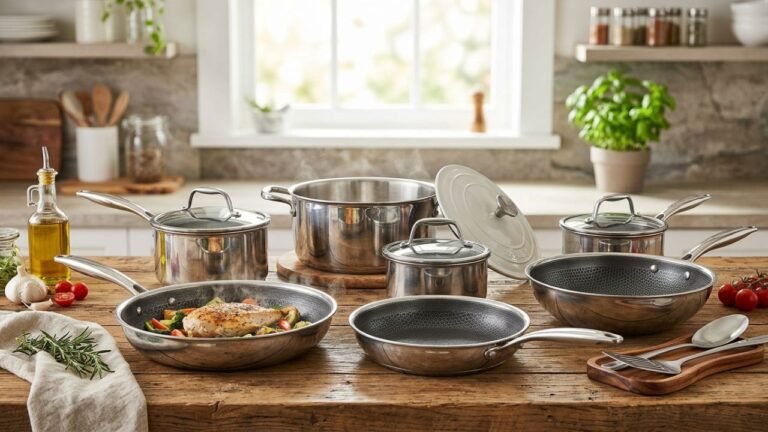
A typical Caraway 12-piece set (fry pan, saucepan, sauté pan, Dutch oven, lids, plus the organizers) often lands around $445 on sale. List price sits higher. You’re getting fewer actual cooking pieces than some competitors, but the storage system adds value if cabinet space is tight.
HexClad’s comparable 12-piece set usually runs closer to $699. You get more variety of pans and pots in many configurations. Individual pieces cost more too—a 12-inch fry pan sits in the $150–$180 range.
Both brands go on sale regularly. Neither is cheap. You’re paying for marketing, design, and the premium materials story.
Is the extra cost of HexClad justified? Only if you cook with higher heat, use metal tools, or want one set that handles searing and everyday cooking without babying it. Caraway costs less and delivers better pure nonstick for lower-heat cooking plus the pretty factor and storage.
Safety and Materials Claims
Both brands market themselves as better than old-school Teflon. Caraway has been vocal about being PTFE-, PFOA-, and PFAS-free from the start. They share third-party testing. That matters to a lot of people who want to avoid forever chemicals.
HexClad used PTFE in earlier versions. Newer pans switched to their TerraBond ceramic coating that the company says is free of PTFE, PFAS, lead, and cadmium. They faced a class-action settlement over earlier “non-toxic” marketing claims. The current coating is an improvement, but the brand’s history makes some buyers cautious.
Neither pan is pure ceramic through and through. Both have metal bodies with coatings. If zero chemicals is your top priority, dig into the latest testing reports for whichever set you’re considering.
Who Should Buy HexClad?
Buy HexClad if:
- You sear steaks, chicken, or burgers regularly
- You like using metal utensils without stress
- You want something closer to stainless steel performance with easier release
- You don’t mind spending more for longer-lasting hybrid durability
- Your kitchen style leans professional rather than colorful
These pans reward people who cook a mix of techniques and don’t want to own separate stainless and nonstick sets.
Who Should Buy Caraway?
Buy Caraway if:
- Eggs, fish, pancakes, and delicate foods are daily business
- You want the slickest nonstick surface possible
- Color and storage matter to you
- You cook mostly on medium heat and are willing to hand-wash
- You prefer a lower entry price for a complete organized set
These pans make weeknight cooking feel effortless while looking good doing it.
My Personal Take After Living with Both
I keep both in rotation. The HexClad 12-inch is my go-to for anything that needs browning. The Caraway fry pan is the one I reach for when I’m making breakfast for the family or anything that sticks easily. I treat the Caraway more carefully. The HexClad can take a beating.
Neither is perfect. Both cost more than basic nonstick that lasts two years and gets tossed. You’re paying for better materials, better looks, and better marketing. The real question is which set matches how you actually cook most days.
If I had to pick only one set for a friend who cooks a lot and likes variety, I’d lean HexClad for the durability and searing ability. If that friend cares more about easy eggs, pretty colors, and organized cabinets, Caraway gets the nod.
Your money is worth more when the pan matches your habits instead of fighting them.
HexClad vs Caraway (Quick Comparison Table)
| Feature | HexClad | Caraway |
|---|---|---|
| Cooking Surface | Hybrid stainless + ceramic | Full ceramic nonstick |
| Best For | Searing, versatility, durability | Pure nonstick, everyday ease |
| Metal Utensils | Yes | No |
| Dishwasher | Yes (hand-wash preferred) | No |
| Oven Safe | Higher temps (check model) | Up to 550°F |
| Induction Compatible | Yes | Yes |
| Colors | One dark finish | Multiple options |
| Storage Included | No | Yes (racks + lid holder) |
| Typical 12-pc Set Price | Around $699 | Around $445 |
| Warranty | Limited lifetime | Usually 1 year |
| Nonstick Level | Good with oil | Excellent even with little oil |
Frequently Asked Questions
Does HexClad really last longer than Caraway?
In most real kitchens, yes. The hybrid design protects the coating better against metal tools and higher heat. Both coatings eventually wear, but HexClad stays functional longer for mixed cooking styles.
Is Caraway truly non-toxic?
Caraway’s ceramic coating is free of PTFE, PFOA, and PFAS according to the brand and third-party tests. That gives many buyers peace of mind compared to traditional nonstick.
Can I use high heat on either set?
Neither loves high heat the way pure stainless or cast iron does. High heat shortens the life of any ceramic coating. HexClad tolerates it better for searing because of the steel ridges.
Which one is better for induction cooktops?
Both work. Both have magnetic bases designed for induction.
Should I season HexClad pans?
HexClad recommends an initial seasoning with oil. Many users find that cooking with a little fat regularly keeps the surface happier.
Are these pans worth the money compared to cheaper nonstick?
They cost more upfront. You get better heat distribution, better looks, and (especially with HexClad) better durability than cheap big-box nonstick. Whether that extra cost is worth it depends on how often you cook and how carefully you treat your pans.
Can I put Caraway in the dishwasher once in a while?
The brand says no. Occasional trips might not destroy it immediately, but repeated dishwasher use speeds up coating wear. Hand-washing is the smarter play.
At the end of the day, neither brand is magic. Both make solid pots and pans that outperform basic nonstick for people who care. Match the set to your cooking style, treat it with a little respect, and you’ll get years of better meals out of it. Now go decide which one belongs in your kitchen—and maybe make some eggs while you’re at it. You’ve earned it.