
You know that moment when you pull a non-stick pot out of the cupboard and it looks like it’s been dusted with chalk? Those cloudy white spots just sit there staring at you. Hard water stains. They drive me nuts.
I had one pot last winter that got so bad I almost tossed it. The bottom looked permanently foggy. I stood there with a scrubber in my hand thinking, “Maybe if I just go a little harder…” Then I stopped myself. I’d already ruined one pan that way years ago. The coating started peeling within a month. Never again.
So I figured out how to get those stains off without wrecking the non-stick surface. I’ve tested this stuff on my own pots for a couple years now. Some methods work better than others. Some are basically free. And none of them need you to scrub like you’re mad at the pan.
Here’s everything that actually worked for me.
Why These Stains Show Up in the First Place
Hard water is loaded with minerals. Calcium and magnesium mostly. When the water dries, the minerals stay behind as that white film. Non-stick coatings make it worse because they’re so smooth. Nothing soaks in. The stuff just sits on top looking gross.
I noticed it got way worse after I moved to a place with harder water. Suddenly every pot I owned looked tired. Boiling water for pasta? Instant cloudy ring. Leaving a wet pot to air dry? Even worse.
Ever leave a pot in the sink overnight with a little water still in it? That’s basically an invitation for the minerals to throw a party.
The good part is these stains aren’t permanent. They just need the right approach.
Stuff You Should Never Do
Let’s get the bad ideas out of the way first so you don’t make the same mistakes I did.
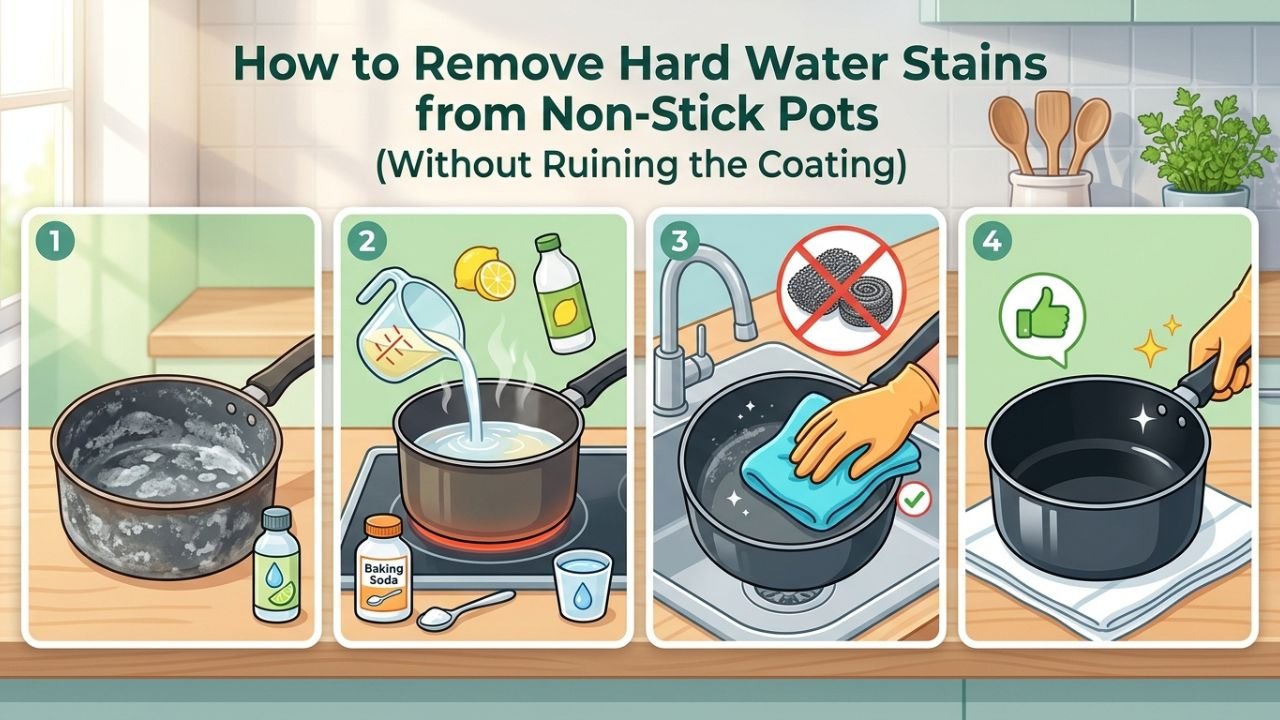
Don’t reach for steel wool or those green abrasive pads. They scratch the coating. Once that happens, food starts sticking and the pan is basically done.
Skip the heavy-duty cleaners made for stainless steel or glass cooktops. A lot of them have chemicals that slowly break down non-stick surfaces.
And please don’t throw a stained non-stick pot in the dishwasher if the label says hand wash only. The high heat and strong detergent can bake the minerals in deeper and weaken the coating at the same time.
I watched my brother do exactly that with a nice ceramic non-stick pan. Two months later the surface looked patchy and everything stuck. He still complains about it.
The Methods That Actually Work
I’ve tried a bunch of things. These are the ones that got the stains off without damaging the coating.
White Vinegar Soak – The One I Use Most
This is my default. Cheap, simple, and it works.
Grab some white vinegar and warm water. Mix them half and half. Pour enough into the pot to cover the stained areas. If the stains are on the outside, just wipe the mixture on with a soft cloth.
Let it sit. Fifteen minutes for light stains. Thirty to forty-five for the stubborn ones. Sometimes I walk away and forget about it for a full hour. No big deal.
Then take a soft sponge or microfiber cloth and wipe. Most of the white stuff comes right off. Rinse well with warm water and dry it completely.
I do this every couple weeks on my main cooking pots. The vinegar smell is strong at first, but it disappears once you rinse. Honestly, it’s the least amount of effort for the best results.
Baking Soda Paste – For the Thick Spots
Baking soda is great when the vinegar alone doesn’t quite finish the job.
Mix three parts baking soda with one part water until you get a thick paste. Spread it over the remaining stains. Let it sit ten or twenty minutes.
Wipe gently in small circles with a soft cloth. Don’t press hard. The paste does the work.
Rinse and dry.
I usually do vinegar first, then hit any leftover spots with the baking soda paste. That combo has rescued more than one pot that looked hopeless.
Lemon Juice – When You Want It to Smell Better
Lemons work because of the acid. Plus your kitchen smells nicer afterward.
Squeeze a couple of lemons into the pot or use bottled lemon juice. Add a little warm water so it covers the stains. Let it sit twenty to thirty minutes.
Wipe with a soft sponge, rinse, and dry.
I like this one when I already have lemons on the counter. Citric acid powder works the same way if you have some in the cupboard. Just dissolve a spoonful in warm water.
Don’t leave it sitting for hours though. Acid is still acid.
Cream of Tartar – The Quiet Overachiever
A lot of people forget about cream of tartar. It’s mild and it targets mineral deposits really well.
Make a paste with a little water. Spread it on. Wait fifteen to thirty minutes. Wipe and rinse.
I keep a small jar just for cleaning pots. It’s one of those things that sits in the back of the spice cabinet until you need it, then it surprises you.
Store-Bought Cleaners Made for Non-Stick
There are a few cleaners that say they’re safe for non-stick. I’ve tried a couple.
They work okay on light stains. But vinegar and baking soda usually get the same result for way less money. If you prefer something ready-made, just make sure the bottle specifically says it’s non-abrasive and safe for non-stick coatings.
When the Stains Are Really Stubborn
Sometimes the buildup has been sitting there for months. Here’s the full routine I use on those pots.
Start with a longer vinegar soak – thirty to forty-five minutes. Empty it. Put on a baking soda paste and let that sit another fifteen minutes. Wipe gently. If anything is still hanging on, do one more short vinegar soak.
Rinse really well. Dry with a clean towel. Sometimes I finish by wiping a tiny bit of oil on a paper towel and giving the inside a light coat. It helps the surface feel slick again.
This whole process takes maybe an hour, and most of that is waiting. I’ve brought pots back from looking permanently cloudy with this exact sequence.
Don’t Forget the Outside
Hard water stains love the exterior too, especially around the bottom where the burner sits.
Same solutions work. Wipe vinegar or lemon juice on with a soft cloth. Let it sit ten or fifteen minutes. Wipe clean. For thicker spots, use the baking soda paste.
Just don’t soak the whole exterior if your pot has handles or rivets that can trap water. Focus on the stained areas and dry everything thoroughly.
How to Stop the Stains from Coming Back
Cleaning is only half the battle. Preventing new ones saves a lot of time.
Dry your pots right after you wash them. This is the single biggest thing. Water left sitting is what creates new mineral deposits. I keep a towel next to the sink now just for this.
If your tap water is really hard, filtered water helps. Even a basic pitcher filter cuts down on the minerals.
Try not to leave pots sitting with water in them after boiling. Empty them and dry them.
Some manufacturers say you can wipe a little oil on the surface after cleaning. Check your care instructions. It can help maintain the non-stick feel.
And store them dry. Stacking damp pots is asking for more stains.
Once I started drying everything immediately, the hard water problem dropped way down. Simple habit, huge difference.
A Few Notes on Different Coatings
Not every non-stick surface is identical. Regular PTFE (the classic Teflon-style), ceramic, and the newer reinforced ones all handle cleaning a little differently.
Vinegar and baking soda stay pretty safe across most of them as long as you don’t leave the acid sitting forever and you never use anything abrasive. Still, glance at the care guide that came with your pot. Some ceramic coatings prefer milder treatment.
If the coating is already scratched or peeling, be extra careful. You’re mostly just slowing down the inevitable at that point.
Mistakes I See People Make
The biggest one is scrubbing too hard. People get frustrated when the stains don’t come off instantly and they start applying pressure. Stop. Soft cloth only. Time and the right solution do the work, not muscle.
Another one is mixing cleaners that don’t belong together. Vinegar and bleach make nasty fumes. Stick to one method at a time.
Leaving acidic stuff on overnight can dull some coatings. I did that once with lemon juice. The pot got clean, but the finish looked a little less shiny afterward. Not the end of the world, but not ideal either.
How Often Do You Need to Deep Clean?
For pots I use almost every day, I do a quick vinegar wipe every couple of weeks if I see any cloudiness starting. Full soak and paste treatment once a month is plenty if the water is hard.
Pots that sit in the cupboard longer can go further between cleanings. Just don’t let the stains build for half a year. They get tougher the longer they sit.
When It’s Time to Replace the Pot
Even with perfect care, non-stick coatings don’t last forever. If food starts sticking no matter what you do, or the surface is peeling or heavily scratched, cleaning won’t bring it back.
A decent non-stick pot should give you several good years. When the coating fails, it’s done. Recycle it if you can and get a new one. No amount of vinegar will fix a coating that’s already broken down.
What My Actual Routine Looks Like
After I cook, I wash the pot with warm soapy water and a soft sponge. I dry it right away. Once a week I check for any early cloudiness and do a quick vinegar wipe if needed. Once a month the heavy-use pots get the full vinegar-plus-baking-soda treatment.
It takes almost no extra time once it becomes habit. Consistency beats those big cleaning marathons every time.
Extra Tricks for Mixed Stains
Sometimes hard water stains mix with burnt food or leftover oil. In that case I wash with regular dish soap first to get the organic stuff off, then switch to vinegar or baking soda for the minerals.
If the stain has a weird rainbow or oily look, a few drops of dish soap in the vinegar solution helps cut through both problems.
The bottom of pots that sit on electric burners can get especially baked-on. Those spots usually need two rounds.
Quick Safety Stuff
If you’re doing a long vinegar soak, open a window. The smell gets strong. Keep the solutions away from your eyes. Rinse your hands when you’re done.
Never put a pot with vinegar or lemon solution in it on a hot burner. Just don’t. Clean with the pot off the heat.
Why I Still Bother with Non-Stick
People ask me why I deal with this when stainless steel is easier to scrub. Simple. Non-stick needs less oil, makes eggs and pancakes stupidly easy, and cleans up faster on regular days. Taking a few extra minutes to protect the coating keeps those benefits around longer.
I’ve gone back and forth between stainless and non-stick over the years. I still keep several non-stick pots because nothing else handles certain foods as well. Looking after the coating is just part of owning them.
Wrapping This Up
Hard water stains look permanent. They’re not. Gentle acid from vinegar or lemon, a little baking soda, and a soft touch get them off without destroying the non-stick surface. Dry the pots right away and you’ll deal with the problem a lot less.
Grab one of these methods and try it on your worst pot today. You’ll probably be surprised how much better it looks after one round. Then keep the simple prevention habits going.
Your pots will last longer. And cooking will feel a little less annoying.
FAQs
Can I use apple cider vinegar instead of white?
Yes. It works. White vinegar is just cheaper and doesn’t leave any color.
Do these methods work on ceramic non-stick?
Most of them do if you keep the soak times reasonable and stay away from anything rough. Check the care instructions for your specific brand.
How can I tell if the coating is already damaged?
Peeling, flaking, deep scratches, or food that sticks no matter how much oil you use. Once that starts, cleaning won’t restore the non-stick performance.
Is it okay if my pot has metal handles or rivets?
Yes. Just dry everything really well so moisture doesn’t sit in the joints.
Should I boil vinegar in the pot?
I don’t. Heat plus acid can stress some coatings. Stick to warm soaks.
What about stains on the outside near the burner?
Same methods. Apply with a cloth instead of soaking the whole exterior. Wipe and dry carefully.
Do I need special sponges?
Nope. Soft sponges or microfiber cloths are fine. Avoid anything that feels rough, even if it claims to be “scratch-free.”