
You just cooked a killer omelet or seared some chicken, and now that Teflon frying pan looks like a crime scene. Grease, stuck-on bits, maybe even a weird film. Your first instinct? Scrub the heck out of it. Stop right there.
I’ve ruined more nonstick pans than I care to admit. One time I attacked a brand-new one with a metal spatula and steel wool because “it’ll be fine.” Spoiler: it wasn’t. The coating peeled like old paint, and suddenly eggs stuck worse than they did in my grandma’s cast iron. Sound familiar?
If you’ve ever stared at a scratched or sticky Teflon pan and wondered how the heck to clean it without killing the nonstick magic, you’re in the right place. This isn’t some stuffy guide. We’re talking real talk—what works, what wrecks it, and how to keep that pan sliding eggs around for years.
Why Teflon Pans Need Special Care
Teflon (or PTFE, if you want the fancy name) creates that slick surface we all love. Food slides off. Cleanup feels easy… until it isn’t.
The coating is tough but not invincible. High heat, metal tools, and harsh scrubbing destroy it over time. Once the surface scratches or wears thin, food starts sticking and the pan becomes a pain.
Ever notice how a new nonstick pan works like a dream for six months, then suddenly everything sticks? That’s usually from rough cleaning or cooking on too high a heat.
I learned this the hard way after killing two pans in one year. Now I treat them gently, and my current one still looks almost new after three years of weekly use. The difference comes down to how you clean it.
What You Should Never Do to Your Teflon Pan
Let’s get the disasters out of the way first. These mistakes turn a good pan into trash fast.
- Never use metal spatulas, forks, or knives in the pan. They dig right into the coating.
- Skip the steel wool, scouring pads, and abrasive cleaners. Those scratch the surface and create spots where food sticks forever.
- Don’t crank the heat to max while empty. Teflon can break down above certain temperatures and release fumes. Not fun.
- Avoid dishwasher detergent if your pan isn’t labeled dishwasher-safe. Many older ones aren’t, and the harsh chemicals speed up wear.
- Never put a hot pan under cold water. Thermal shock can warp the base or stress the coating.
I once tossed a pan in the dishwasher “just this once.” The nonstick started flaking after a few cycles. Lesson learned the expensive way.
Daily Cleaning: The Easy Way
Most days you don’t need anything fancy. Quick cleaning keeps the pan happy and ready for the next meal.
First, let the pan cool down. Hot pans and cold water don’t mix well, remember?
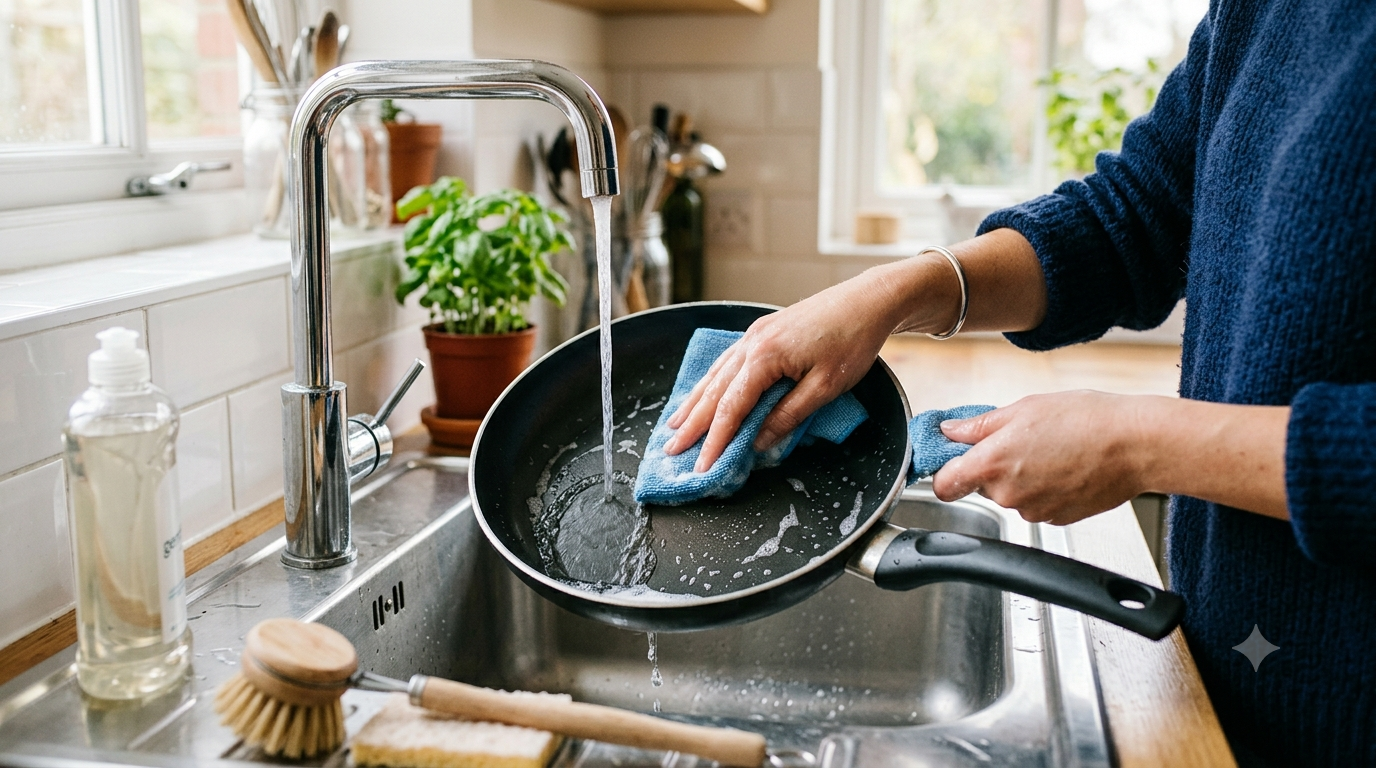
Rinse it under warm water. Wipe out loose food with a soft sponge or paper towel. For light grease, a drop of mild dish soap on a soft sponge does the job.
Wash gently in circular motions. Rinse thoroughly. Dry it right away with a soft towel. Leaving water spots can lead to weird residue over time.
That’s it for everyday messes. Takes two minutes. No drama.
Pro tip: If you cooked something oily, wipe the pan with a paper towel while it’s still a little warm (not hot). Most of the grease comes right off before you even hit the sink.
How to Remove Stuck-On Food Without Scratching
Stuck-on eggs or cheese can test your patience. Don’t reach for the metal scrubber. There’s a better way.
Fill the pan with warm water and a squirt of mild dish soap. Let it soak for 10–15 minutes. The food softens and lifts easier.
Use a soft silicone spatula or a wooden spoon to gently loosen the bits. A soft sponge finishes the job.
Still stuck? Make a paste with baking soda and a little water. Spread it on the problem spots and let it sit for a few minutes. Wipe with a soft cloth. Baking soda is mild enough that it won’t wreck the coating if you don’t scrub like a maniac.
I’ve used this method on burnt-on sauce more times than I can count. It works without leaving scratches.
Deep Cleaning for Stubborn Residue and Discoloration
Sometimes the pan looks dull or has a sticky film even after regular washing. That’s usually leftover oil that polymerized (fancy word for cooked-on grease that hardened).
Here’s my go-to deep clean:
- Sprinkle a generous amount of baking soda across the bottom.
- Add just enough water to make a thin paste.
- Let it sit for 15–20 minutes.
- Wipe with a soft sponge using light pressure.
- Rinse well and dry.
For tougher cases, mix equal parts water and white vinegar. Heat the mixture gently in the pan for a few minutes (don’t boil hard). Let it cool, then wipe clean. The vinegar helps cut through the film.
I do this maybe once a month if the pan starts looking cloudy. It brings back that slick feel.
Important: Never use oven cleaner, bleach, or anything with harsh chemicals. Those can damage the coating permanently.
Best Tools and Products for Teflon Pans
Keep it simple. You don’t need a cabinet full of special cleaners.
Soft tools only:
- Soft sponges (the non-scratch side)
- Silicone or wooden utensils
- Microfiber cloths for drying
- Soft nylon scrubbers if you need a little more grip (still gentle)
Safe cleaners:
- Mild dish soap (Dawn or similar)
- Baking soda
- White vinegar
- Warm water (obviously)
I keep a dedicated soft sponge just for nonstick pans so it doesn’t pick up grit from other dishes. Sounds obsessive? Maybe. But my pans last longer.
How Heat Affects Cleaning and Longevity
High heat is the silent killer of Teflon. Most manufacturers say stay under medium or medium-high.
Cooking on max heat for long periods can break down the coating. It also makes food stick more, which leads to harder scrubbing later—a bad cycle.
I switched to medium heat for almost everything. Eggs, pancakes, stir-fries—all work fine. The pan stays cleaner and lasts longer. Bonus: less chance of burning your food.
After cooking, let the pan cool completely before washing. Residual heat can make residual oils harder to remove if you jump straight to water.
Preventing Future Messes
Cleaning gets easier when you prevent the mess in the first place.
- Use a little oil or butter even on nonstick. It helps food release and protects the surface.
- Don’t overcrowd the pan. Crowding lowers the temperature and causes sticking.
- Preheat properly on medium. Drop a drop of water—if it dances, you’re ready.
- Avoid aerosol cooking sprays. They leave a sticky residue that’s tough to clean and builds up over time. I switched to a pump oil mister years ago and never looked back.
These small habits cut cleaning time in half for me.
What About Those Dark Spots or Stains?
Discoloration happens. Sometimes the coating darkens from heat or certain foods.
Most of the time it’s cosmetic. As long as the surface still feels smooth and food doesn’t stick, you’re fine.
Baking soda paste helps lighten some stains. For others, you just live with them. I have one pan with a few dark spots from years of use. Still works great.
If the coating is flaking or peeling, stop using it. Ingesting bits of the coating isn’t ideal, and the nonstick is basically gone anyway.
When It’s Time to Replace Your Teflon Pan
No pan lasts forever. Watch for these signs:
- Food sticks even with oil and proper heat
- Visible scratches that go through the coating
- Flaking or peeling surface
- Warped bottom that doesn’t sit flat on the burner
I replace mine every 3–5 years depending on how hard I use them. Cheaper pans die faster. Spending a bit more on a quality one with a thicker coating pays off.
Common Myths About Cleaning Nonstick Pans
Myth 1: “You can throw them in the dishwasher if they’re labeled safe.” Reality: Even dishwasher-safe ones wear faster from the harsh detergent and heat cycles. Hand washing is always gentler.
Myth 2: “A little metal spatula won’t hurt.” Reality: It will. Tiny scratches add up fast.
Myth 3: “Nonstick means zero oil needed.” Reality: A light coating of oil protects the surface and improves cooking.
I’ve tested most of these the hard way so you don’t have to.
My Personal Routine That Actually Works
Here’s exactly what I do after almost every use:
- Let the pan cool 5–10 minutes.
- Wipe out excess oil and food with a paper towel.
- Wash with warm water, mild soap, and a soft sponge.
- Rinse and dry completely.
- Once a month or when it looks dull, do the baking soda treatment.
That’s it. Simple. Consistent. My pans thank me by lasting longer.
Extra Tips for Different Types of Cooking
Eggs and delicate foods: Lowest heat and a bit of butter or oil. Clean immediately after so proteins don’t set hard.
Sticky sauces or caramelized bits: Soak first. Never scrape hard while hot.
Cast-iron alternatives: Some people switch to ceramic or carbon steel when their Teflon dies. I still keep a couple nonstick pans for eggs and fish because nothing beats them for that.
Storage Matters Too
Don’t stack heavy pans on top of your Teflon ones without protection. The weight and edges can scratch the coating.
I hang mine or put a soft cloth between stacked pans. Small step, big difference.
Final Thoughts on Keeping Your Pan Alive
Cleaning a Teflon frying pan the right way isn’t complicated. Soft tools, mild cleaners, no high heat drama, and a little patience go a long way.
Treat the coating with respect and it rewards you with easy cooking and quick cleanup for years. Treat it like a regular metal pan and you’ll be shopping for a new one sooner than you want.
Next time that pan looks messy after dinner, remember: soak, soft sponge, mild soap. You’ll save the nonstick surface and save money in the long run.
Got a favorite cleaning trick that works for you? Or a horror story about a ruined pan? Either way, take care of the ones you have. Your future self (and your wallet) will thank you. 🙂
FAQs
Can I use baking soda on Teflon every time?
No need. Save it for stubborn residue. Daily mild soap is enough.
Is vinegar safe for nonstick pans?
Yes, diluted and used occasionally. Don’t leave it sitting for hours.
Why does my pan still stick after cleaning?
Usually microscopic scratches or worn coating. Time for a new one if soft cleaning doesn’t help.
Can I put my Teflon pan in the oven?
Check the handle. Many are oven-safe to certain temperatures, but the coating still hates extreme heat.
What’s the safest way to dry it?
Soft towel right after washing. Air drying can leave water spots.
How often should I deep clean?
Only when needed—maybe once a month or when food starts sticking more than usual.
Follow these steps and your Teflon frying pan should stay useful way longer than most people’s do. Happy cooking.