
You just cooked eggs or maybe some chicken, the pan looks mostly clean, and you’re standing there staring at the dishwasher like it’s calling your name. I’ve done it. More than once. You think, “It’s non-stick, how bad can it be?”
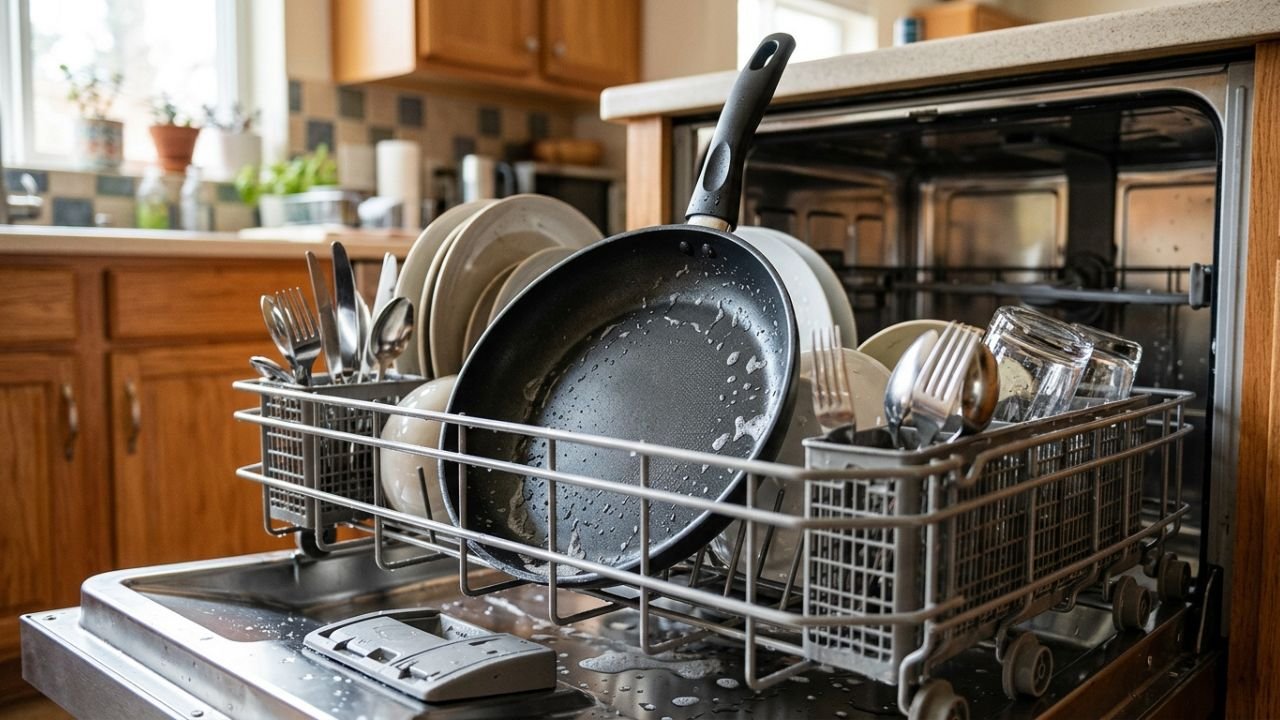
So can you wash non-stick pans in the dishwasher? The honest answer is mostly no. You can get away with it sometimes, but you probably shouldn’t make it a habit. It wears the coating down faster than you’d expect.
I learned this the hard way. Used to toss mine in without thinking. Then one day the eggs started sticking like crazy and the surface looked kind of sad. Lesson learned.
Why the Dishwasher Is Rough on These Pans
Non-stick coatings are pretty thin and kind of fragile. They’re great at what they do until you start treating them like regular plates.
Dishwashers hit them with hot water, strong detergent, and those powerful jets. The heat alone is a lot. Then the detergent has all these enzymes and chemicals that are way harsher than regular dish soap. And the water pressure? It can knock the pan around against forks and other stuff.
I’ve watched a pan go from slick to sticky after just a handful of dishwasher runs. Not overnight, but faster than it should have. The coating starts to lose that smooth feel. Sometimes it even peels a little at the edges. Not great when you’re cooking.
Ever pull a pan out and notice it looks dull or a bit scratched? Yeah. That’s usually the dishwasher working against it.
What “Dishwasher Safe” Actually Means
This one trips people up. Some pans say dishwasher safe right on the bottom or the box. That label means the pan can survive a cycle without falling apart immediately. It doesn’t mean the dishwasher is the smartest long-term choice.
It’s like washing a nice sweater on the gentle cycle. You can do it, but most people still hand-wash if they want it to last. Same deal here.
Even the brands that make dishwasher-safe non-stick pans often quietly suggest hand-washing if you want the coating to hold up longer. Some of the newer ceramic or hybrid ones handle the machine better than the older Teflon-style coatings. Still, I treat the dishwasher as a backup, not the everyday plan.
What Actually Happens to the Coating
Here’s the slow damage that adds up:
The detergents slowly break down the surface. High heat speeds that up. Over time the pan just doesn’t release food like it used to. You start needing more oil. Food sticks in spots.
Sometimes the coating starts lifting near the rim. I’ve seen it happen. Tiny flakes aren’t something you want in your food.
Aluminum bases can warp a little from the temperature swings. A warped pan sits weird on the burner and cooks uneven.
The outside can discolor too. Looks older faster. And if the pan is bouncing around with knives and other cookware, those little scratches add up quick.
One load won’t destroy it. Doing it regularly will shorten the life for sure. Non-stick pans already don’t last forever. No need to rush the process.
When It’s Probably Fine to Use the Dishwasher
Look, some nights you just don’t have it in you. I get it.
If the pan is clearly marked dishwasher safe and it’s a newer model from a brand that designed it for that, an occasional cycle is usually okay. Use a shorter or lower-heat setting if your machine has one. Keep it away from sharp utensils so nothing scrapes it.
Certain ceramic non-stick and some hybrid stainless ones seem to handle it better. Always check what the maker actually says. Even then, I still hand-wash most of the time. The extra minute is worth keeping the pan working longer.
The Easy Way to Hand-Wash Them
Honestly, these pans clean up so fast by hand that the dishwasher feels like overkill most days.
Let the pan cool first. Don’t shock it with cold water while it’s still hot. That can warp things.
Wipe out the loose bits with a paper towel. Then warm water, a little mild soap, and a soft sponge. That’s usually all it takes. Most food slides right off.
Rinse it, dry it with a towel right away, and you’re done. Whole thing takes under a minute if you do it soon after cooking.
For the stubborn spots, a little baking soda mixed with water into a paste works well. Or simmer some water with a splash of vinegar for a couple minutes, then wash as normal. Just stay away from anything rough or abrasive.
Mistakes That Kill These Pans Faster
I’ve made most of these, so no judgment.
Putting them in the dishwasher all the time is the big one. Using metal utensils or knives in the pan is right up there. High heat all the time doesn’t help either. Medium is usually plenty.
Those aerosol cooking sprays leave a sticky film that builds up and messes with the surface. Stacking pans without something soft between them scratches the coating. Soaking them for hours isn’t great either. And using the rough side of a sponge “just once” still counts.
Each little thing chips away at the coating. Do a few of them regularly and the pan dies young.
How Long These Pans Should Last
With decent care, a good non-stick pan usually gives you two to five years of regular use. Some nicer ones go longer. Cheap ones can fail in under a year if you treat them rough.
Hand-washing, sticking to medium heat, and skipping metal tools stretch that out. Dishwasher use shortens it. Pretty straightforward.
When food starts sticking no matter what, or you see peeling and deep scratches, it’s time to replace it. Don’t keep cooking on a damaged surface.
If You Really Don’t Want to Hand-Wash
If the idea of hand-washing drives you nuts, switch some of your pans.
Stainless steel handles the dishwasher fine and lasts forever if you treat it right. Takes a bit more technique, but it won’t quit on you.
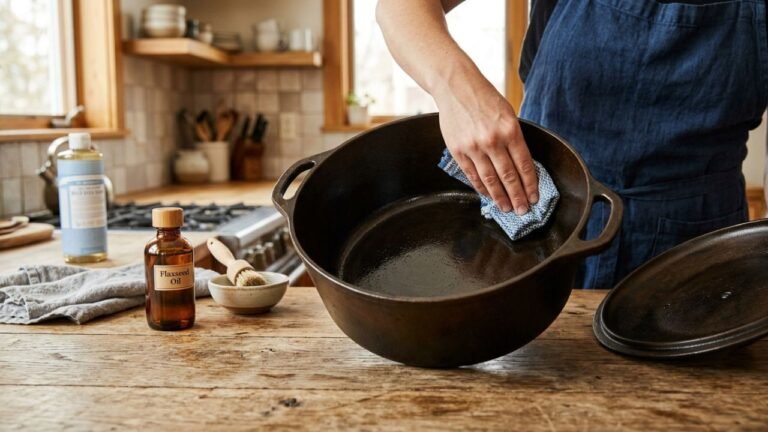
Cast iron and carbon steel get better with time when you season them properly. Just never put those in the dishwasher.
Some hybrid pans mix stainless with a non-stick coating and claim better toughness. A few ceramic lines market themselves as more machine-friendly.
I keep a couple non-stick pans just for eggs and delicate stuff, and those get the hand-wash treatment. Everything else goes in the machine without guilt.
What I’ve Learned From Wrecking a Few Pans
Years ago I treated non-stick like regular dishes. Straight into the dishwasher after dinner. Looked fine at first. Then the eggs stuck. Then the surface got rough. I was replacing pans more often than I wanted to admit.
Once I switched to hand-washing and dropped the metal spatulas, the difference was obvious. Same pans stayed slick longer. Stopped buying replacements every year.
Now I actually check the bottom of a new pan for the care instructions. If it says hand-wash only, I listen. If it claims dishwasher-safe, I still mostly wash by hand. The extra thirty seconds is worth it.
Honestly, the convenience of the dishwasher isn’t worth killing a pan that cost real money.
Simple Habits That Help Them Last
Cool the pan before you wash it. Soft tools only. Medium or medium-low heat most of the time. Skip the aerosol sprays. Put a soft cloth or pan protector between them when you stack. Dry them thoroughly. And save the dishwasher for the rare night when you just can’t.
Do those things and the pans last a lot longer than they otherwise would.
Final Thoughts
Can you wash non-stick pans in the dishwasher? Sometimes yes. Should you do it regularly? Probably not.
The heat, the detergent, and the water pressure wear the coating down faster than gentle hand-washing does. Even the ones labeled dishwasher-safe hold up better when you wash them by hand most of the time.
These pans are already temporary compared to stainless or cast iron. Give them a little care and they’ll stick around for years instead of months.
Next time you’re tempted to toss one in the machine, just ask yourself if those thirty seconds at the sink are worth keeping the surface alive. Most days the answer is yes. Your future eggs will thank you.
FAQs
Can any non-stick pans go in the dishwasher?
Some newer ones are labeled safe and can handle the occasional load. Hand-washing still keeps them working longer.
Will one cycle ruin the pan?
Usually not completely, but it starts the wear. Do it often and you’ll notice.
What’s the best way to clean them?
Let it cool, then warm water, mild soap, soft sponge. Dry it right away.
Why does food start sticking after dishwasher use?
The coating gets damaged by the heat and harsh detergents. It loses that slick surface over time.
Are ceramic non-stick pans better for the dishwasher?
Some hold up better than the older coatings, but most still last longer with hand-washing.
When should I replace a non-stick pan?
When food sticks badly even with oil, or you see peeling, deep scratches, or flaking. Time for a new one.
Hand-wash when you can. The pans (and your wallet) last longer that way.