
You stand in the cookware aisle or scroll through endless product pages, right? Two options keep popping up: hard anodized aluminum and titanium. One promises even heat and everyday ease. The other waves the flag for toughness and pure metal safety. Which one actually belongs in your kitchen?
I’ve cooked on both for years. My first hard anodized set handled weeknight dinners like a champ until the surface started showing its age. Then I tried titanium pieces and learned a few hard lessons about what the marketing leaves out. Today I’m walking you through the real differences so you can pick without regret.
Let’s get into it.
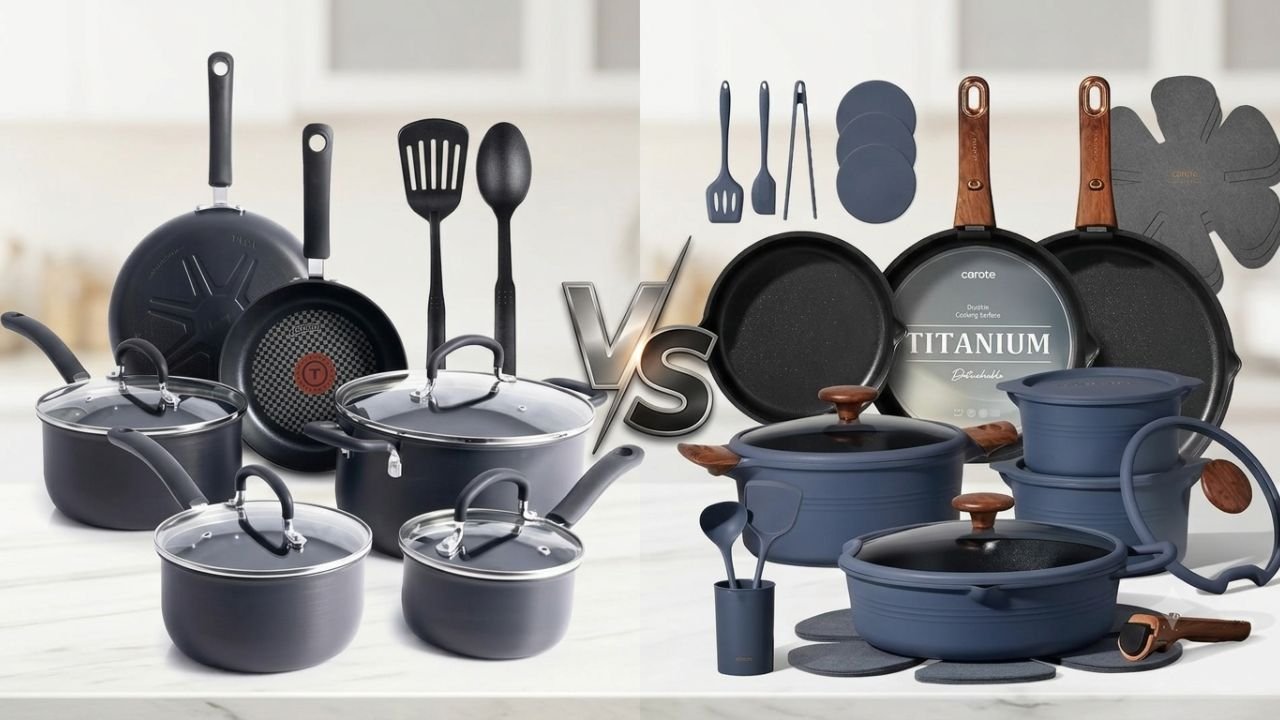
Low Price Deals for Hard Anodized Aluminum & Titanium Cookware
T-Fal Hard Anodized Aluminum Cookware Set: Check Now! 25% Off
Carote Titanium Cookware Set: Buy Now! 40% Off
Hard Anodized Aluminum vs Titanium Cookware Comparison
| Feature | Hard Anodized Aluminum | Titanium (Pure or Quality Clad) | Winner |
|---|---|---|---|
| Heat Conductivity | Excellent – heats fast and evenly | Fair to good (needs aluminum core for even heat) | Hard Anodized |
| Durability | Good – tough surface but can wear over time | Excellent – highly corrosion and scratch resistant | Titanium |
| Weight | Light to medium | Light (especially pure titanium) | Tie (both light) |
| Non-Stick Performance | Very good when new (especially with coating) | Moderate – needs oil and proper preheating | Hard Anodized |
| Safety / Reactivity | Safe when intact; risk if surface wears | Excellent – non-reactive, almost zero leaching | Titanium |
| Price | Affordable | Higher upfront cost | Hard Anodized |
| Maintenance | Easy, but hand-wash preferred for longevity | Easy and more forgiving of abuse | Titanium |
| Induction Compatible | Only with special magnetic base | Often yes (especially clad versions) | Titanium |
| Lifespan | 5–10 years with good care | 15+ years or lifetime with pure titanium | Titanium |
| Best For | Everyday cooking, even heat, budget | Acidic foods, long-term use, pure metal surface | Depends on priorities |
What Exactly Is Hard Anodized Aluminum Cookware?
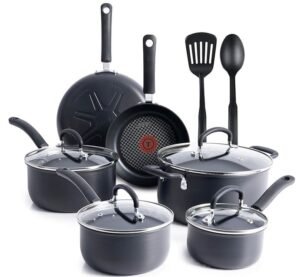
Hard anodized aluminum starts as regular aluminum. Manufacturers run it through an electrochemical process that thickens and hardens the natural oxide layer on the surface. That layer becomes part of the metal itself. It does not sit on top like a sprayed coating that can peel.
The result feels denser and tougher than plain aluminum. Most pans come in that familiar dark gray or black finish. Many brands add an extra nonstick layer on top—sometimes PTFE, sometimes ceramic—for easier food release.
Key traits I notice every time I use one:
- Heats up fast
- Spreads heat evenly across the base
- Stays relatively light in the hand
- Costs less than most premium options
Ever burned a batch of scrambled eggs because the pan had hot spots? Hard anodized aluminum usually avoids that problem. Aluminum conducts heat better than almost any other common cookware metal. The anodizing process keeps that advantage while adding scratch resistance.
I still reach for my older hard anodized skillet when I need pancakes on a Saturday morning. It responds the second I turn the burner. That quick reaction makes everyday cooking feel less stressful.
What Is Titanium Cookware, Really?
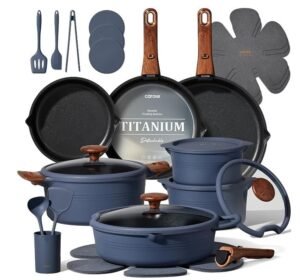
Here’s where things get tricky. The word “titanium” on a box can mean several different things.
True pure titanium cookware uses solid Grade 1 or Grade 2 titanium for the cooking surface and often the entire body. No coatings. No extra layers. Just the metal. Some higher-end pans use a tri-ply or multi-layer construction with pure titanium on the inside, aluminum in the middle for heat spreading, and stainless steel on the outside.
Then you have the bigger category: titanium-coated or titanium-reinforced pans. These usually start with an aluminum or stainless base and get a nonstick coating that contains titanium particles. Brands love the word titanium because it sounds premium. In reality you’re still cooking on a coating that will eventually wear.
I learned this the expensive way. I once bought a “titanium” pan that looked sleek. After a year the coating scratched and food started sticking like crazy. Lab tests and honest reviews later showed most of those pans are not solid titanium at all.
Pure titanium stands out for:
- Extreme corrosion resistance
- Almost zero metal leaching
- Incredible strength for its weight
- No coating to break down
The catch? Pure titanium conducts heat poorly on its own. Without an aluminum core it creates hot spots. You need to preheat carefully and often use a bit more oil than you would with a good nonstick surface.
Pros of Hard Anodized Aluminum Cookware
I keep a couple of hard anodized pans in rotation for good reasons.
Excellent heat conductivity. Aluminum moves heat fast and evenly. Your food cooks the same from edge to center. That matters for sauces, eggs, and anything that scorches easily.
Affordable price. You can get a solid set without emptying your wallet. Replacement costs stay reasonable if something happens.
Lightweight feel. Compared with cast iron or heavy clad stainless, these pans feel easy to lift and flip. My wrists appreciate that on busy nights.
Decent natural nonstick properties. Even without an extra coating, the hard surface resists sticking better than bare stainless. Add a little oil and most foods release cleanly when the pan is properly preheated.
Resistant to warping under normal home use. The thicker anodized construction holds its shape better than cheap thin aluminum.
Many people cook acidic tomato sauces in these pans for years without issues as long as the surface stays intact. The oxide layer acts as a barrier.
Cons of Hard Anodized Aluminum Cookware
Nothing is perfect. Here’s what bugs me about these pans over time.
The surface can wear. Metal utensils, abrasive scrubbers, or years of dishwasher use slowly thin the anodized layer. Once that happens you expose the softer aluminum underneath.
Potential for aluminum contact. If the layer wears through, acidic or salty foods can pull small amounts of aluminum into the food. Most health experts say the amounts stay low with intact pans, but I prefer to avoid the question entirely when possible.
Extra coatings fail. A lot of popular hard anodized pans come with PTFE or ceramic nonstick on top. Those coatings scratch, lose slickness, and eventually need replacement. Suddenly your “durable” pan feels temporary.
Induction limitations. Pure hard anodized aluminum does not work on induction cooktops unless the manufacturer bonds a magnetic steel disc to the base. Check the label carefully.
Not the prettiest. The dark matte finish shows water spots and stains more than shiny stainless. Some people care. I mostly don’t.
I’ve watched good pans turn patchy after three or four years of heavy use. That’s the main reason I started looking at titanium options.
Pros of Titanium Cookware
When you get real pure titanium or quality titanium-clad pieces, the advantages feel different.
Outstanding durability. Titanium resists corrosion, dents, and warping better than almost anything else in the kitchen. You can use metal utensils without the same fear. Many pure titanium pans come with lifetime warranties for a reason.
Truly non-reactive surface. Acidic foods, tomato sauces, wine reductions, citrus—none of them bother pure titanium. No metallic taste. No leaching concerns. That peace of mind matters if you cook a lot of bright, acidic dishes.
Lightweight strength. Titanium delivers high strength at lower weight than steel. A pure titanium pan feels solid yet easy to maneuver compared with thick clad stainless.
No coatings to fail. With solid titanium there is nothing to peel, flake, or break down at high heat. You avoid the PFAS conversation completely.
Long-term value. Higher upfront cost often pays off because you replace the pan far less often. I still own titanium pieces that look nearly new after heavy use.
Tri-ply versions with an aluminum core solve the heat problem pretty well. You get titanium’s safety with better even heating.
Cons of Titanium Cookware
I won’t sugarcoat the downsides.
Higher price tag. Real titanium costs more. Budget “titanium” pans usually cut corners with coatings instead.
Heat distribution challenges. Pure thin titanium creates hot spots. Food can burn in the center while the edges stay undercooked. You learn to preheat longer and move food around more. Clad versions improve this a lot, but they also raise the price and weight.
Food sticks more easily. Titanium is not magically nonstick. Eggs, fish, and pancakes need proper preheating, enough oil or butter, and a bit of patience. It behaves closer to stainless steel than to a slick nonstick pan.
Learning curve. The first few meals on pure titanium can frustrate you if you treat it like a regular nonstick skillet. Technique matters more.
Marketing confusion. Sorting real solid titanium from titanium-coated aluminum takes effort. Read the product details carefully. Look for “Grade 1 titanium,” “pure titanium cooking surface,” or third-party material tests.
I once scorched a batch of onions in a pure titanium pan because I cranked the heat too high too fast. Lesson learned the smoky way.
Head-to-Head Comparison: Hard Anodized Aluminum vs Titanium
Let’s put them side by side on the points that actually matter in a home kitchen.
Heat Performance
Hard anodized aluminum wins for most people. It heats quickly and evenly. Titanium needs help from an aluminum core or careful technique to match that evenness.
Durability and Longevity
Pure titanium takes the crown. The metal itself does not degrade the same way an anodized layer or coating does. Hard anodized holds up well for several years with good care but eventually shows wear.
Weight
Both stay lighter than cast iron or heavy stainless. Pure titanium can feel even lighter in thinner constructions, especially for camping or small kitchens. Everyday home pans often feel similar once you add cladding.
Nonstick Behavior
Hard anodized (especially with a good coating) usually releases food more easily when new. Titanium requires more oil and better preheating habits but never loses a coating because it has none.
Safety and Reactivity
Titanium edges ahead for pure non-reactivity and zero leaching worries. Intact hard anodized stays safe for most users. Damaged surfaces raise more questions.
Price
Hard anodized aluminum costs less up front. Titanium costs more but can last longer, improving the cost-per-year math for some cooks.
Maintenance
Both clean easily with soft sponges and mild soap. Avoid harsh abrasives on hard anodized. Titanium tolerates a bit more abuse. Many hard anodized pans prefer hand washing to protect the finish.
Induction Compatibility
Check each pan. Many titanium clad versions work. Hard anodized often needs a special base.
Which One Should You Buy?
It depends on how you cook and what you value most.
Choose hard anodized aluminum if:
- You want responsive, even heat for everyday meals
- Budget matters right now
- You mostly cook at medium heat and replace pans every few years anyway
- You like the convenience of a more forgiving nonstick surface
Choose titanium (preferably or quality clad) if:
- You cook lots of acidic foods
- You want a pan that lasts decades without coating concerns
- Health and material purity sit high on your list
- You’re willing to pay more and adjust your technique a little
Many home cooks end up with both. I keep hard anodized for quick weeknight eggs and stir-fries. Titanium handles the tomato-based sauces and long-term pieces I refuse to replace soon.
Buying Guide: What to Look For
Ready to shop? Here’s what I check every time.
For hard anodized aluminum:
- Thickness of the base—thicker usually means better heat and less warping
- Whether it includes a nonstick coating and what type (PTFE-free options exist)
- Oven-safe temperature rating
- Induction disc if you need it
- Warranty length
- Brand reputation for consistent anodizing quality
For titanium:
- Confirmation of pure titanium or clear description of the cladding layers
- Presence of an aluminum core for better heat
- Weight and balance in the hand if possible
- Warranty (lifetime is common on real titanium)
- Reviews that mention real-world sticking and hot spots
- Avoid vague “titanium-infused” language unless you specifically want a coated pan
General tips that save headaches:
- Read the care instructions before you buy
- Consider your stovetop type first
- Think about how often you cook acidic dishes
- Factor in replacement cost over five to ten years
- Look for pieces that feel balanced—not nose-heavy
I always check recent owner photos in reviews. New pans look perfect. Real life shows scratches and wear patterns faster than glossy marketing shots.
Care Tips So Your Pans Last Longer
Treat hard anodized gently. Use silicone, wood, or nylon utensils when possible. Skip the dishwasher if the brand recommends it. Cool the pan before washing. A soft sponge and mild soap keep the surface happier.
For titanium, you can be a bit tougher. Still, avoid thermal shock—don’t plunge a screaming-hot pan into cold water. Preheat properly. Use enough fat at first until you learn the surface. Clean with regular soap or a non-scratch pad.
Both benefit from occasional seasoning with a thin layer of oil if the surface starts to feel less slick.
Final Thoughts
Hard anodized aluminum gives you speed, even heat, and solid everyday performance at a friendlier price. Titanium delivers toughness, pure metal peace of mind, and longevity if you buy the real thing and accept a short learning curve.
Neither choice is wrong. The better pan is the one that matches how you actually cook and what bugs you most about your current set. FYI, I still use both and have no plans to pick only one.
Go measure your current pans, check your stovetop, and decide what matters most this year. Then buy the one that makes cooking feel easier instead of more complicated. You’ll thank yourself the next time dinner hits the table without drama. 🙂
Frequently Asked Questions
Is hard anodized aluminum safe to cook with?
Yes, when the anodized layer is intact. The hard oxide surface acts as a barrier. If it wears down from heavy scratching or years of use, small amounts of aluminum can transfer into acidic foods. Most people use these pans for years without issues.
Is titanium cookware really nonstick?
No. Pure titanium is not naturally nonstick like a PTFE coating. You need to preheat the pan properly and use a bit of oil or butter. It behaves more like stainless steel. Some “titanium” pans on the market have a nonstick coating with titanium particles mixed in—those release food more easily but the coating can still wear out.
Does titanium cookware leach metals into food?
Pure titanium is highly non-reactive and leaches almost nothing under normal cooking conditions. That’s one of its biggest advantages, especially for tomato sauces, citrus, and other acidic dishes.
Which one is better for induction stoves?
Titanium (especially multi-layer/clad versions) is more likely to work on induction. Hard anodized aluminum only works if the manufacturer added a magnetic steel disc to the base. Always check the product details.
Can I use metal utensils on these pans?
Hard anodized aluminum tolerates metal utensils better than regular nonstick, but repeated scraping can still wear the surface. Pure titanium handles metal utensils very well. Still, silicone or wood tools are gentler on both.
Which lasts longer?
Quality pure or clad titanium usually lasts much longer because there’s no coating or anodized layer to break down. Hard anodized aluminum is durable but typically needs replacement sooner, especially if it has an extra nonstick coating.
Is titanium worth the higher price?
It depends. If you cook a lot of acidic foods, want a pan that lasts decades, and prefer a coating-free surface, yes. If you mainly want fast, even heat and lower cost for everyday meals, hard anodized aluminum usually makes more sense.
Can I put either in the dishwasher?
Hard anodized pans often look better and last longer with hand washing. Many titanium pans are dishwasher-safe, but hand washing still helps keep them looking new.