

Stuck between two GreenPan ceramic sets and tired of staring at product pages that all sound the same? Yeah, I’ve been there. You want pans that actually release your eggs, won’t poison the planet (or your breakfast), and don’t make you feel like you need a second mortgage. GreenPan Lima and Valencia Pro both promise healthy, PFAS-free ceramic nonstick. But they’re not twins. One feels like a solid everyday workhorse. The other acts like it showed up ready for the big leagues.
I cooked on both for months—scrambled eggs every morning, weeknight chicken, tomato sauces that love to stick, the works. Here’s the real talk so you can pick the right set without the sales pitch headache.
Discounted Deals for GreenPan Lima and Valencia Pro:
1. Check Low Price Offer for GreenPan Lima>>>
2. Low Price Deal for Valencia Pro: The Link is Here>>>
GreenPan Lima Vs Valencia Pro: Quick Overview
| Feature | GreenPan Lima | GreenPan Valencia Pro |
|---|---|---|
| Body Construction | Hard-anodized aluminum | Hard-anodized aluminum with thicker, more robust build |
| Nonstick Coating | Thermolon ceramic (classic formula) | Advanced Thermolon (mineral-reinforced / diamond-infused) |
| Induction Compatible | No (gas & electric only) | Yes (Magneto base works on all cooktops) |
| Oven Safe Temperature | Up to 600°F (lids usually ~425°F) | Up to 600°F (more confident for stovetop-to-oven use) |
| Heat Distribution | Good, but more prone to hot spots over time | More even heating and better heat retention |
| Durability / Lifespan | Solid for light-to-moderate use (often 12–24 months of strong nonstick) | Longer-lasting nonstick under daily use (often 2–4 years) |
| Metal Utensil Safe | Not recommended | Marketed as metal-utensil safe (still better with silicone/wood) |
| Handles | Matte stainless steel | Stainless steel (often with silicone grip) |
| Cleaning | Easy when new; hand wash preferred | Easier overall (fully coated interiors on many pieces); hand wash preferred |
| Dishwasher Safe | Technically yes, but not recommended | Technically yes, but not recommended |
| Weight / Feel | Lighter and more basic | Slightly more substantial and stable |
| Price Range | More budget-friendly | Higher upfront cost |
| Best For | Occasional cooking, gas/electric stoves, budget kitchens | Daily cooking, induction users, people who want longer performance |
| Overall Positioning | Reliable everyday kitchen staple | Award-winning, more premium workhorse |
Why Ceramic Nonstick Even Matters Right Now
Traditional nonstick used to mean PTFE and a laundry list of chemicals nobody wants near their food. Ceramic changed the game. GreenPan’s Thermolon coating comes from sand. No PFAS, no PFOA, no PTFE. Heat it past the usual danger zone and it doesn’t spit out the same nasty fumes. That’s a real win if you own birds or just hate the idea of mystery chemicals in your omelet.
Both Lima and Valencia Pro use this approach. Both heat pretty evenly for aluminum. Both claim dishwasher safety (more on that later—don’t trust it completely). The differences show up in the construction, the coating strength, and how long the nonstick actually lasts under real kitchen abuse.
Ever wonder why some ceramic pans lose their slip after six months while others keep going? Construction and coating formula make the difference. Let’s break them down.
Meet the GreenPan Lima: The Reliable Kitchen Staple

GreenPan calls Lima a kitchen staple, and that description fits. This set uses hard-anodized aluminum for the body. That treatment makes the surface tougher and more scratch-resistant than plain aluminum. You get solid heat conduction without the crazy weight of cast iron.
The coating is GreenPan’s classic Thermolon ceramic nonstick. It starts out slippery. Eggs slide. Cleanup takes about thirty seconds with a soft sponge. Handles are matte stainless steel—comfortable, stay relatively cool on the stovetop. Glass lids let you peek without lifting.
Key Lima features at a glance:
- Hard-anodized aluminum body
- Thermolon ceramic nonstick (PFAS-free)
- Works on gas and electric (not induction)
- Oven safe up to 600°F (lids usually lower, around 425°F)
- Lightweight feel compared to heavier pro lines
- Usually the more budget-friendly option
I used a Lima fry pan for daily eggs and the occasional stir-fry. When it was new, it performed great. Food released cleanly with just a little oil or butter. The pan heated fast, which is nice when you’re rushing breakfast.
Here’s the catch I noticed after a few months. The nonstick started needing more encouragement. Scrambled eggs that once slid off needed a gentle nudge. Hot spots showed up more on higher heat. The base felt a bit thinner in daily use, so browning wasn’t always even across the whole surface. It still worked. It just stopped feeling effortless.
Lima shines if you cook a few times a week, stick mostly to medium heat, and don’t own an induction cooktop. It delivers healthy nonstick without the premium price tag. Think of it as the dependable friend who shows up on time but doesn’t always bring the extra flair.
Meet the GreenPan Valencia Pro: The Award-Winning Workhorse
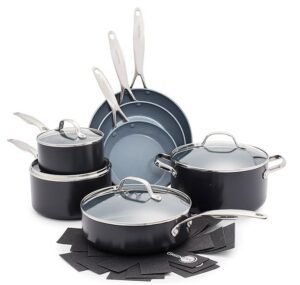
Valencia Pro sits higher in GreenPan’s lineup for a reason. It still uses hard-anodized aluminum, but the build feels more substantial. The big upgrade is the Magneto base. That patented bottom makes the pans work on every cooktop—including induction. Even heat distribution improves. The pan responds faster and more evenly.
The coating gets an upgrade too. Valencia Pro uses a tougher version of Thermolon—often described as mineral-reinforced or diamond-infused. GreenPan markets it as metal-utensil safe. In practice it handles accidental metal contact better than the basic version, though I still prefer silicone or wood to keep things happy longer.
Key Valencia Pro features:
- Hard-anodized aluminum with Magneto base
- Advanced Thermolon ceramic nonstick (more durable formula)
- Induction compatible plus gas, electric, ceramic
- Oven safe up to 600°F
- Fully coated interiors (including around rivets on many pieces) for easier cleaning
- Stronger heat retention and more even browning
- Frequently wins awards from places like Good Housekeeping and America’s Test Kitchen
I ran Valencia Pro through the same daily routine as the Lima. Eggs still slid after months of use. Chicken thighs browned more evenly without constant rotating. Tomato-based sauces cleaned up with less scrubbing. The pan felt more stable on the burner. High-heat searing (within reason) didn’t scare it as quickly.
The set options usually include multiple fry pans, saucepans, a sauté pan, and a stockpot. Some versions throw in pan protectors. It feels like a complete system rather than a starter kit.
Valencia Pro costs more upfront. You notice the difference in how long the nonstick stays useful and how versatile the pans feel day to day.
Head-to-Head: Where They Actually Differ
Let’s line them up on the stuff that matters when you’re standing in the kitchen at 7 a.m. trying to decide if breakfast will stick.
Construction and Heat Performance
Both use hard-anodized aluminum. Valencia Pro’s Magneto base and slightly more robust feel give it an edge in even heating. Lima heats fast but can develop more noticeable hot spots over time, especially on electric or flat cooktops. Valencia Pro spreads heat more evenly, so pancakes brown consistently and proteins cook without the “rotate the pan every two minutes” dance.
Warping resistance favors Valencia Pro in long-term daily use. Lima can show slight base changes after months of thermal cycling. Valencia Pro holds its shape better.
Nonstick Coating and Longevity
This is the big one. Both start strong. Lima’s classic Thermolon performs well early on. Valencia Pro’s tougher formula holds the release properties longer under regular cooking. In my experience the gap opened around the four- to six-month mark with daily use. Lima needed more oil and careful technique. Valencia Pro still felt closer to new.
Neither loves high heat forever. Keep both on medium or medium-low for best results. Metal utensils shorten life on both, though Valencia Pro tolerates accidents better. Dishwasher detergent is rough on ceramic coatings—hand washing extends the nonstick life for either set.
Cooktop Compatibility
Lima works on gas and electric. Skip it if you have induction or plan to switch. Valencia Pro works everywhere thanks to the Magneto base. That single feature decides the purchase for a lot of people right now.
Oven Safety and Versatility
Both go to 600°F for the pans themselves. Handles and lids have their own limits (usually lower for lids). Valencia Pro’s stainless handles handle the higher temps more confidently for stovetop-to-oven moves. Think finished frittatas, pan-roasted chicken, or baked pasta starts. Lima can do some of that, but the lower practical handle limit on some versions makes you more cautious.
Cleaning and Daily Maintenance
Both clean easily when the nonstick is healthy. A soft sponge and mild soap do the job. Avoid abrasive scrubbers and cooking sprays (the propellants mess with ceramic coatings over time). Fully coated interiors on many Valencia Pro pieces mean fewer stuck-on spots around rivets. Nice little quality-of-life upgrade.
Price and Value
Lima usually costs less. You get solid performance for the money if your cooking style matches its strengths. Valencia Pro asks for a higher investment. You get better durability, induction readiness, and longer nonstick life. Over two or three years the cost-per-use often favors Valencia Pro if you cook most days.
Quick comparison list:
- Budget focus → Lima
- Induction cooktop → Valencia Pro, no contest
- Daily heavy use → Valencia Pro
- Occasional cooking → Lima works fine
- Even browning and longevity → Valencia Pro
- Lightest possible price → Lima
Who Should Buy the GreenPan Lima?
Buy Lima if:
- You cook a few times a week, not every single day
- Your stove is gas or electric (no induction)
- You want healthy ceramic nonstick without stretching the budget
- You’re furnishing a first apartment, rental kitchen, or secondary set
- You already own good silicone or wood utensils and stay at medium heat
I gave a Lima set to a friend who mostly makes eggs, simple pastas, and the occasional stir-fry. She’s happy. The pans do the job and didn’t empty her wallet. That’s the right match.
Who Should Buy the GreenPan Valencia Pro?
Go Valencia Pro if:
- You cook most days and want the nonstick to last longer
- You have (or want) an induction cooktop
- You move pans from stove to oven regularly
- You value even heating and fewer hot spots
- You’re willing to pay more upfront for better long-term performance
This is the set I reach for when I’m making dinner for people who actually notice if the chicken skin isn’t evenly browned. It just feels more capable.
Real-World Care Tips That Keep Either Set Happier Longer
Both sets last longer if you treat them right. Here’s what actually works:
- Preheat on medium or lower. High heat kills ceramic coatings faster than almost anything else.
- Use a little oil or butter. Ceramic nonstick still benefits from a thin layer of fat.
- Stick to silicone, wood, or nylon utensils most of the time.
- Hand wash with soft sponge and mild soap. Dishwashers shorten the nonstick life.
- Avoid cooking sprays. The additives build up and wreck the surface.
- Store with pan protectors or soft cloths between pieces so they don’t scratch each other.
- Never put a hot pan under cold water. Thermal shock is real.
Follow those and either set will give you better service. Ignore them and even the Valencia Pro will start sticking sooner than you’d like.
The Bottom Line: Which One Belongs in Your Kitchen?
GreenPan Lima delivers honest everyday ceramic nonstick at a friendlier price. It works well for lighter use and non-induction kitchens. GreenPan Valencia Pro steps up the construction, coating durability, heat performance, and cooktop flexibility. It costs more but usually earns the difference if you cook regularly.
Still on the fence? Ask yourself two questions. Do I have (or want) induction? And how often do I actually cook? Those answers point pretty clearly.
I started with Lima because the price looked good. I upgraded pieces to Valencia Pro once I realized how much better the even heating and longer nonstick life felt on busy weeknights. Your mileage will depend on your stove and habits. Both beat traditional chemical nonstick on the health front. Both clean up easier than stainless when the coating is healthy.
Pick the one that matches how you actually cook, not the one with the flashiest marketing. Then go make some eggs that actually slide onto the plate. You’ll know pretty quickly if you chose right. 🙂
What’s your current cooktop situation? That alone might settle the debate.