
I spent way too much money on bad pans before I finally got serious about stainless steel. You know the ones. They warp after a year. Food sticks no matter what you do. Heat jumps all over the place. I got tired of it.
So I started looking at the real options. Two names kept coming up over and over: Made In and All-Clad D3. I’ve cooked with both for a while now. Not in some perfect test kitchen. Just in my regular kitchen, making weeknight dinners and the occasional weekend project that goes longer than it should.
Here’s what I’ve actually noticed.
Discounted Deals for Made In vs All-Clad D3 (up-to33% OFF)
Buy All-Clad D3 7-Piece Cookware Set with 33% OFF!
Made In 5 Ply Clad 10-Piece Cookware Set: 25% OFF!
The Basics First
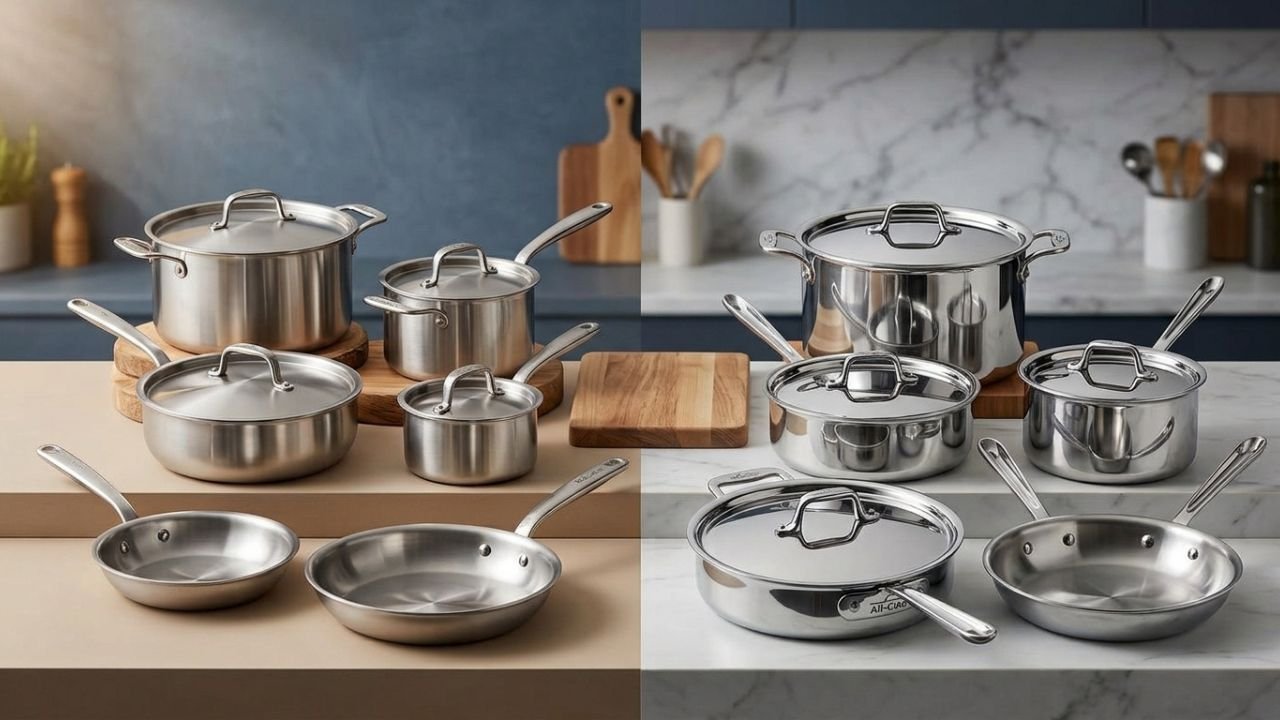
All-Clad D3 is the one most people think of when they hear “good stainless.” It’s tri-ply. Stainless, aluminum, stainless. Bonded all the way up. Made in Pennsylvania. The brand has been around forever and chefs still use it.
Made In’s stainless line is five-ply. More layers of aluminum in the middle. Most of it comes from Italy, some from the U.S. They sell mostly direct, so the prices usually sit lower.
Both work on every cooktop. Both go in the oven. Neither is nonstick. You’re going to need a little technique with both. That’s just how stainless works.
How They’re Built
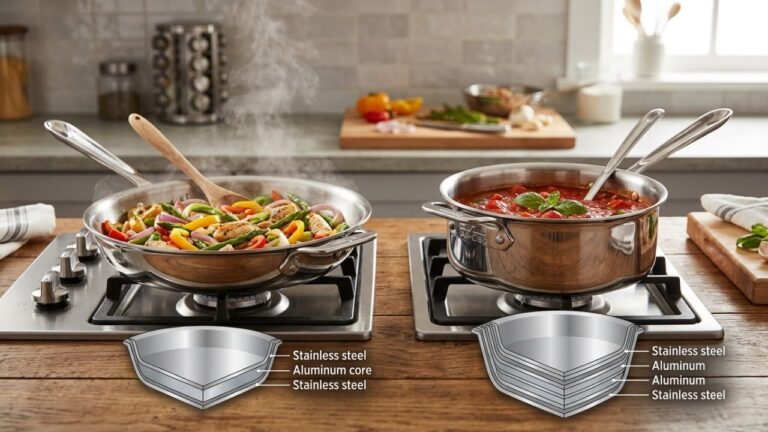
All-Clad keeps it simple with three layers. One solid aluminum core between two sheets of stainless. It’s been that way for a long time because it works.
Made In adds extra aluminum layers. The idea is more even heat and better retention. In real use the difference isn’t huge, but I do notice it when I’m searing a bigger piece of meat or trying to keep a sauce steady.
I cooked the same pork chops in both pans one night just to see. The Made In held temperature a little better when the pan got crowded. The All-Clad bounced back faster after I added cold meat. Both gave me a solid crust. Neither left me annoyed.
Fully clad construction is what actually matters. Both brands do that. The extra layers on Made In are nice, but they’re not a magic upgrade.
How They Cook Day to Day
Heat is pretty even on both. I’ve never had real hot spots that ruined a dish. Made In usually brings water to a boil a bit quicker. All-Clad feels a little more responsive when I need to drop the heat fast for something delicate.
Oven numbers are different. Made In goes up to 800°F. All-Clad stops at 600°F. Most of us never hit either of those temperatures, but if you like finishing things under a hard broiler, Made In gives you more room.
Handles stay reasonably cool on both. You’ll still grab a towel for longer oven time. Lids are a practical difference. A lot of All-Clad pieces come with lids. Made In often sells them separate, which adds up if you need them.
I reach for the All-Clad when I’m making a quick pan sauce and adjusting heat every thirty seconds. The Made In gets more use when I’m cooking for more people and just want steady heat without babysitting the burner.
The Feel in Your Hand
This stuff matters more than people admit.
All-Clad has that shiny polished look. Classic. The handles on the original D3 are the older style. Some people like the grip. Others find them a little short or awkward. The Everyday version has more contoured handles that feel better to me.
Made In went with a brushed finish. It hides fingerprints better and looks cleaner longer. The handles feel wider and more comfortable in my hand. Balance is good on both, though.
Weight is close enough that it doesn’t matter much. Cleaning is the same story. Stainless sticks if you don’t preheat right or skimp on fat. Once you get the hang of it, both clean up fine with Bar Keepers Friend. I hand wash mine. The dishwasher works but it dulls the finish over time.
The brushed Made In surface shows less of that rainbow discoloration that polished stainless gets. Small thing, but I notice it.
The Money Part
This is usually the deciding factor.
All-Clad costs more. You’re paying for the name, the U.S. factory, and decades of reputation. Retail markups play a part too.
Made In sells mostly direct. That keeps the price lower. You often get five-ply for roughly what All-Clad charges for three-ply. Sets especially look better on Made In’s side.
Is the extra money for All-Clad worth it? If American manufacturing and brand history matter to you, then yes. If you just want the pan to cook well and last, Made In usually gives you more for the dollar.
I bought my first All-Clad when it felt like the only serious option. These days I point friends toward Made In pretty often. Both will last a long time if you treat them right.
How Long They Last
Both come with lifetime warranties for manufacturing defects. Scratches, normal wear, and dishwasher damage usually aren’t covered.
All-Clad has the longer track record. Plenty of old pans are still going strong. Made In is newer, but the construction feels solid and early owners seem happy so far.
Neither warps under normal use. Treat them decently and either should outlast most other stuff in your kitchen.
Who Should Get the All-Clad D3
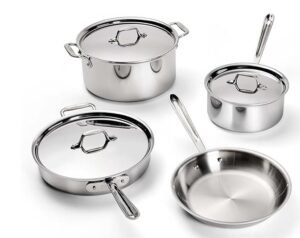
Get the All-Clad if you:
- Care about it being made in the U.S.
- Like the classic polished look
- Want lids included more often
- Prefer the brand with the long professional history
- Don’t mind spending more for that peace of mind
It still cooks great. The responsiveness is real. A lot of people just feel better owning the name.
Who Should Get Made In
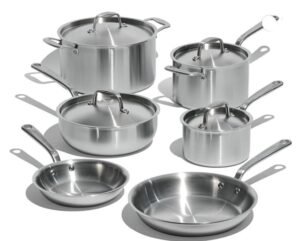
Go with Made In if you:
- Want better performance for the money
- Like the extra layers and higher oven rating
- Prefer the brushed finish and more comfortable handles
- Are fine ordering direct
- Care more about results than the logo
In my kitchen the Made In pans get used just as hard as the All-Clad ones. Heat control is excellent. The price makes it hard to argue against.
Pros and Cons
All-Clad D3 pros
Proven history
Made in the USA
Very responsive heat
Lids often included
Classic look
Strong support and resale
All-Clad D3 cons
Costs more
Lower oven max
Handles can feel less comfortable
Only three layers
Made In pros
Better value
Five-ply construction
Oven-safe to 800°F
More comfortable handles for many people
Lifetime warranty
Competitive pricing
Made In cons
Newer brand
Lids often extra
Mixed manufacturing locations
Less retail presence
Made In vs All-Clad D3 Quick Comparison
| Feature | All-Clad D3 | Made In Stainless Clad |
|---|---|---|
| Layers | 3-ply | 5-ply |
| Core | Aluminum | Triple aluminum |
| Origin | USA | Italy & USA |
| Oven safe | 600°F | 800°F |
| Induction | Yes | Yes |
| Finish | Polished | Brushed |
| Handles | Riveted stainless | Riveted, often more ergonomic |
| Lids | Often included | Usually separate |
| Warranty | Limited lifetime | Lifetime |
| Price | Premium | Better value |
| Best for | Heritage & reliability | Performance per dollar |
Common FAQs
Is Made In actually as good as All-Clad?
For regular cooking, yes. Results are very close. All-Clad has the longer history. Made In usually costs less and goes higher in the oven.
Does five-ply always win?
No. Bonding quality matters more. Both brands do it well. Five-ply holds heat longer. Three-ply can feel more responsive.
Which works better on induction?
Both do fine.
Will food stick?
It will if you treat them like nonstick. Preheat properly, use enough fat, and don’t mess with the food too soon. Once you learn it, sticking becomes rare.
Dishwasher okay?
It works, but hand washing keeps them looking better. I hand wash mine.
Which lasts longer?
Both should last decades. All-Clad just has more years of proof because it’s been around longer.
Where I Landed
Neither is a bad buy. Both will cook better than the cheap pans that frustrate most people.
If the American-made story and long track record matter most to you, get the All-Clad D3. It’s a classic that still performs.
If you want strong results without paying the full premium, Made In is the smarter spend for a lot of people. The five-ply construction delivers and the price is hard to ignore.
I keep both. The All-Clad comes out when I want that familiar responsive feel. The Made In gets used when I’m cooking bigger meals or just want the extra heat holding power.
Think about how you actually cook and what you care about. Then pick the one that feels right. Either way you’re done with pans that quit on you after a year or two. That’s the part that actually matters.