
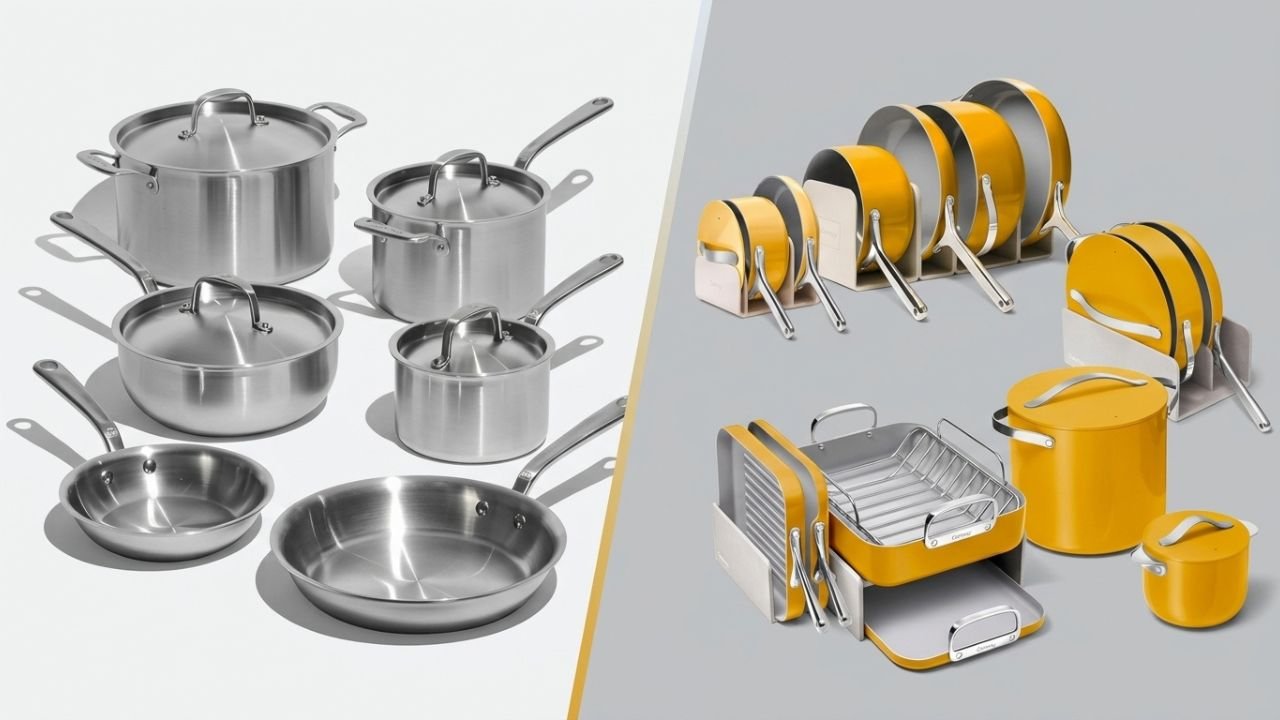
You stand in your kitchen, staring at a pile of scratched nonstick pans that stick to everything and a budget set that warps on high heat. You’re ready to upgrade. Two brands keep popping up: Made In and Caraway. One feels like the pro’s choice. The other looks like it belongs on a perfectly styled countertop. Which one actually earns a permanent spot in your kitchen?
I’ve cooked with both. I’ve seared steaks that made me proud and flipped eggs that slid off like they were on ice. I’ve also dealt with the cleanup and the long-term reality of each. Let’s break it down without the marketing fluff so you can decide what fits your cooking style and wallet.
Deep Discounted Offers for Made In Cookware & Caraway
Made In Cookware Set 10 Piece : 20% OFF>>>
Caraway 31-Piece Cookware Set: 15% OFF>>>
Quick Snapshot of Each Brand
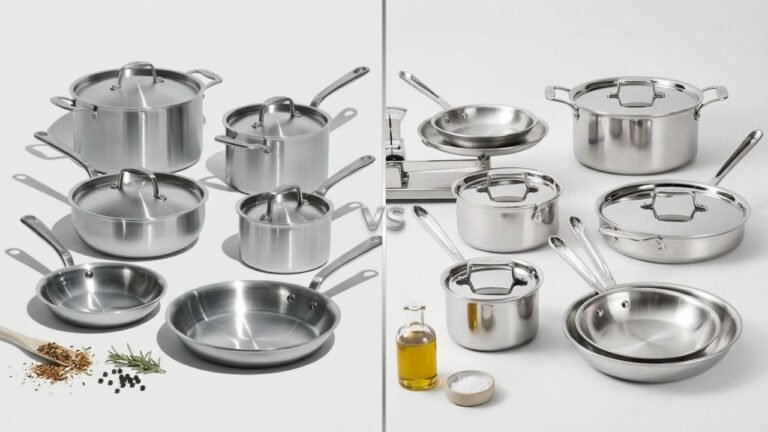
Made In kicked off around 2017. Their whole idea was pretty simple: give regular home cooks the same kind of solid, restaurant-grade pans chefs actually use, without the crazy markup. The backbone of the brand is their 5-ply stainless steel. Most of it comes out of Italy, with some pieces made here in the US. They didn’t stop there though. You can also get carbon steel, their CeramiClad ceramic nonstick, regular nonstick, enameled cast iron, and even copper. These pans show up in real restaurant kitchens, not just pretty Instagram photos. Performance and staying power are what they care about most.
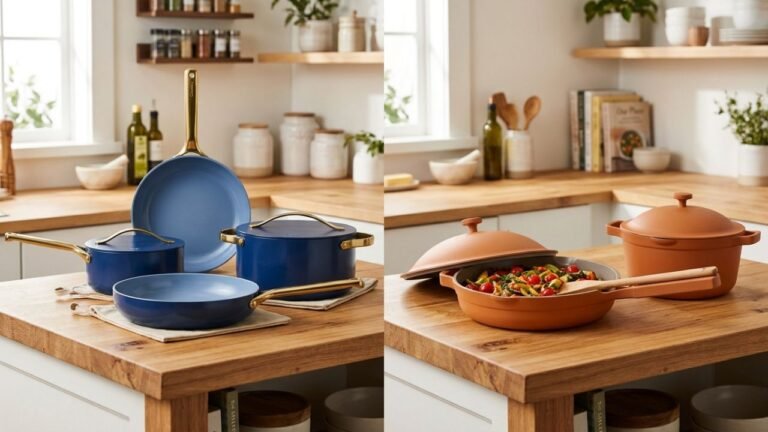
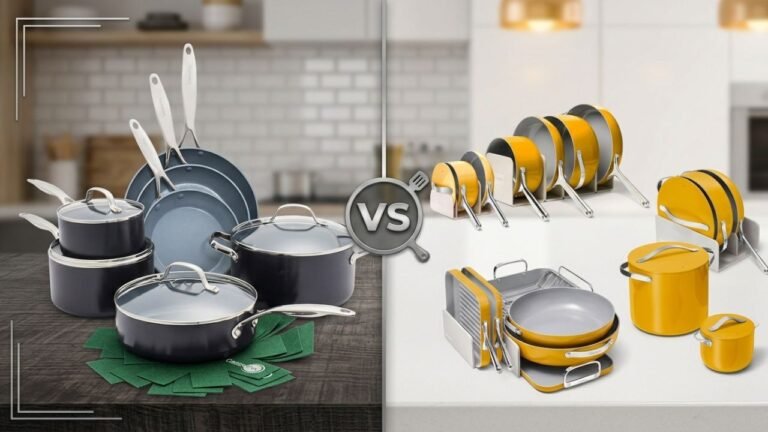
Caraway came along a little later and took off for a totally different reason. Their colorful ceramic nonstick pans are the ones you keep seeing everywhere. Navy, sage, cream, marigold… the kind of colors that make you want to leave the pans out on the stove instead of hiding them in a cabinet. The main line is aluminum with a ceramic coating that skips the PTFE, PFOA, and PFAS. Since then they’ve added stainless steel and enameled cast iron too. Most sets come with those magnetic storage racks and lid holders, which is honestly pretty handy. They’re made in China. The whole brand feels aimed at people who want cooking to be easy and their kitchen to look put-together.
So yeah, two pretty different approaches. One cares more about how the pan handles heat and holds up over years. The other cares more about ease and how it looks sitting on your counter. Funny how those two things don’t always line up, right?
Materials and Construction: What’s Under the Surface
This is where the real difference starts.
Made In Cookware
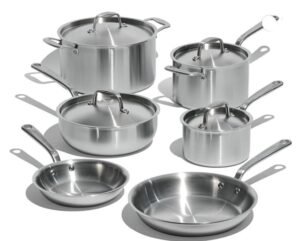
Made In’s stainless steel uses 5-ply fully clad construction. Layers of stainless and aluminum bond together so heat spreads evenly up the sides, not just across the bottom. The cooking surface is 18/10 stainless. The exterior is magnetic so it works on induction. Thickness sits around 3 mm. These pans feel solid without being ridiculous to lift. Carbon steel pieces come from France or Sweden and develop a natural nonstick surface once seasoned. Their CeramiClad line puts a ceramic coating on the same 5-ply base, which is smarter than most ceramic pans that start with thinner aluminum.
Caraway Cookware
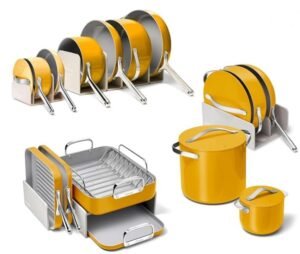
Caraway’s main ceramic line uses a thick aluminum core (around 3.8–4 mm) with a silica-based ceramic coating. The pans feel substantial. Handles are polished stainless. They’re induction compatible thanks to a magnetic base. The stainless steel line they added later is also 5-ply, so they’ve closed some of the performance gap there. But the ceramic collection remains their identity.
Here’s the practical difference I noticed: Made In stainless responds fast when I crank the heat or drop it. Caraway ceramic heats quickly too, but it doesn’t hold heat the same way once you pull it off the burner. For gentle cooking, that doesn’t matter. For a proper sear or a pan sauce, it does.
Key takeaway: Made In builds for decades of high-heat work. Caraway builds for easy, lower-heat cooking with less oil.
Cooking Performance: How They Actually Behave
I care most about what happens when food hits the pan.
Searing and High Heat
Made In stainless and carbon steel crush this. I get a deep crust on steaks and chops without the pan complaining. The 5-ply construction keeps temperature steady even when I add a cold piece of meat. Caraway’s ceramic line isn’t built for aggressive searing. High heat shortens the life of the coating. You can get decent browning, but it’s not the same. If you love a hard sear, Made In wins.
Everyday Cooking and Eggs
Caraway shines here. Eggs slide around with almost no oil when the coating is fresh. Pancakes release cleanly. Cleanup is usually a quick wipe. Made In stainless needs proper preheating and a bit of fat to prevent sticking. Once you learn the technique (hot pan, cold oil, wait for the shimmer), it works great. Their CeramiClad nonstick closes the gap for delicate foods.
Sauces and Deglazing
Stainless steel from Made In is the clear winner. Those browned bits on the bottom turn into amazing pan sauces. Ceramic coatings don’t develop the same fond, and you have to be careful not to scrape them hard.
Heat Distribution and Hot Spots
Both do well. Made In’s cladding feels more even across the whole pan, especially on larger pieces. Caraway is solid for its category but can show slight edge differences on some burners.
Rhetorical question time: Do you cook mostly quick weeknight meals on medium heat, or do you regularly push temperatures higher for better flavor? Your answer points strongly toward one brand.
Durability and Longevity
This is the part most people skip until their pans start failing.
Made In stainless has no coating to wear out. With basic care (hand wash preferred, though many pieces handle the dishwasher), these pans last decades. Carbon steel gets better with use if you season it. Even their nonstick options tend to hold up longer than average because of the solid base. Lifetime warranty on the stainless line is real confidence.
Caraway ceramic is the weak spot for long-term use. Ceramic coatings typically lose their slickness after 1–3 years of regular cooking, especially if you go too high with heat or use the wrong utensils. Scratches and staining happen. The pans themselves stay structurally sound, but the nonstick performance declines. Their stainless line should last much longer. Hand washing is required for the ceramic pieces.
I’ve seen people replace Caraway ceramic sets more often than they expected. That changes the math on “value.”
Bold reality check: A cheaper set you replace every few years can cost more over time than a better set you buy once.
Design, Aesthetics, and Kitchen Fit
Caraway wins the beauty contest for most people. Those colors look intentional. The storage system (magnetic racks and lid holder) solves real cabinet chaos. Handles feel polished and modern.
Made In looks professional and understated. Brushed stainless, clean lines, no flashy colors. It disappears into most kitchens in a good way. Some people love that it doesn’t scream for attention. Others want the Instagram moment. Your call.
Handles on both stay reasonably cool during stovetop use, though Caraway’s can warm up more during longer cooks. Oven safety differs: Made In stainless goes to 800°F or higher in many cases. Caraway ceramic tops out around 550°F.
Price and Value Comparison
Prices fluctuate with sales, but ballpark numbers look like this:
- Caraway ceramic full set: often $395–$545
- Made In 10-piece stainless set: frequently $700–$1,000+ (sales bring it down)
- Individual fry pans: Caraway around $100–$125, Made In stainless often similar or a bit less on sale
Caraway includes organizers that Made In doesn’t. That storage system has real value if your cabinets are a mess.
Long-term value favors Made In for most serious cooks. You’re not replacing the core pieces every few years. Caraway’s lower entry price and included accessories make it attractive if you want easy nonstick performance right away and care about looks.
Pros and Cons
Made In Pros:
- Excellent heat performance and searing ability
- Extremely durable construction with no coating to fail on stainless and carbon steel
- Wide range of materials for different techniques
- High oven temperatures
- Lifetime warranty on stainless
- Used by actual chefs
Made In Cons:
- Steeper learning curve for stainless (especially eggs)
- Higher upfront cost for full sets
- Less “pretty” than colorful options
- Nonstick lines still need careful handling
Caraway Pros:
- Excellent nonstick release when new
- Attractive colors and modern design
- Includes useful storage accessories
- PFAS-free ceramic claims
- Easy cleanup for everyday cooking
- Lower entry price for a complete set
Caraway Cons:
- Ceramic coating wears over time
- Not ideal for high-heat searing
- Hand wash only for ceramic
- Made in China (some people care about this)
- Heavier than some nonstick alternatives
Who Should Buy Which?
Choose Made In if:
- You cook with high heat often
- You want pans that will still perform in 10–15 years
- You make pan sauces and care about browning
- You’re willing to learn proper stainless technique
- You prefer performance over color options
Choose Caraway if:
- Easy nonstick and low-oil cooking matter most
- You want cookware that looks good on the counter or open shelves
- Storage is a real pain point in your kitchen
- You cook mostly on medium heat
- You prefer a lower upfront investment and don’t mind eventual replacement of ceramic pieces
Some people buy both. A Made In stainless set for serious cooking plus one or two Caraway ceramic pans for eggs and quick meals is a smart hybrid approach. I’ve done versions of this and it works.
Made In Cookware vs Caraway (Comparison Table)
| Feature | Made In | Caraway |
|---|---|---|
| Signature Material | 5-ply stainless steel | Ceramic-coated aluminum |
| Other Options | Carbon steel, CeramiClad, cast iron, copper | Stainless steel, enameled cast iron |
| Best For | Searing, sauces, longevity | Easy nonstick, everyday meals, looks |
| Oven Safe | Up to 800°F+ (stainless) | Up to 550°F |
| Dishwasher | Yes (stainless) | No (hand wash recommended) |
| Induction Compatible | Yes | Yes |
| Coating Longevity | N/A for stainless; good for their nonstick | 1–3 years typical for ceramic |
| Warranty | Lifetime (stainless) | Limited (often 1 year on ceramic) |
| Made In | Italy, USA, France, Sweden | China |
| Approximate Set Price | $700–$1,000+ | $400–$550 |
| Standout Extra | Professional performance | Storage organizers + colors |
FAQs
Is Caraway really non-toxic?
Caraway states their ceramic coating is free of PTFE, PFOA, PFAS, lead, and cadmium, with third-party testing claims. Stainless steel from either brand is inherently free of those coatings.
Can I use metal utensils?
On Made In stainless and carbon steel, yes. On any ceramic or traditional nonstick (both brands), stick to wood, silicone, or nylon.
Which is better for induction?
Both work. Made In’s cladding and Caraway’s magnetic bases handle induction fine.
Do I need to season Made In carbon steel?
Yes. It develops a natural nonstick surface over time, similar to cast iron but lighter and more responsive.
Will Caraway ceramic last if I’m careful?
It lasts longer with low-to-medium heat, no metal tools, and gentle cleaning. High heat and rough treatment shorten its life.
Is Made In worth the higher price?
If you cook a lot and keep pans for years, yes. The cost-per-use drops significantly over time compared to replacing coated pans.
Final Thoughts
Look, neither of these brands is ripping anyone off. Both make good stuff. They just aim at different kinds of cooks.
If you regularly crank the heat, like a real sear, make pan sauces, and want pots and pans that stick around for years, go with Made In. The performance difference is noticeable, and the durability lines up with what people who cook a lot actually need. Yeah, you pay more at the start. But you’re not back on the website every two or three years buying replacements.
On the flip side, if colorful pans that make cooking and cleanup feel easy matter more to you, if you like the storage stuff they throw in, and most of your meals stay on the gentler side, Caraway does exactly what it promises. Just know going in that the ceramic coating won’t last forever.
Personally, my Made In stainless pieces have hung around the longest. Those are the ones I grab when I actually care about how the food turns out. The Caraway pans still get used when I want zero hassle or I’m making something delicate like eggs.
It really comes down to your kitchen and how you cook. Pick the one that fits the way you actually use your stove, not the one that looks best in a photo. Then just get in there and cook something. Good cookware shouldn’t be the star of the show. The food should.