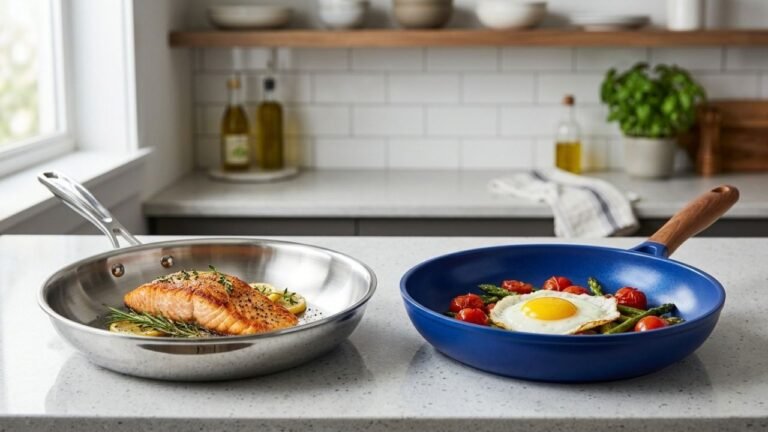

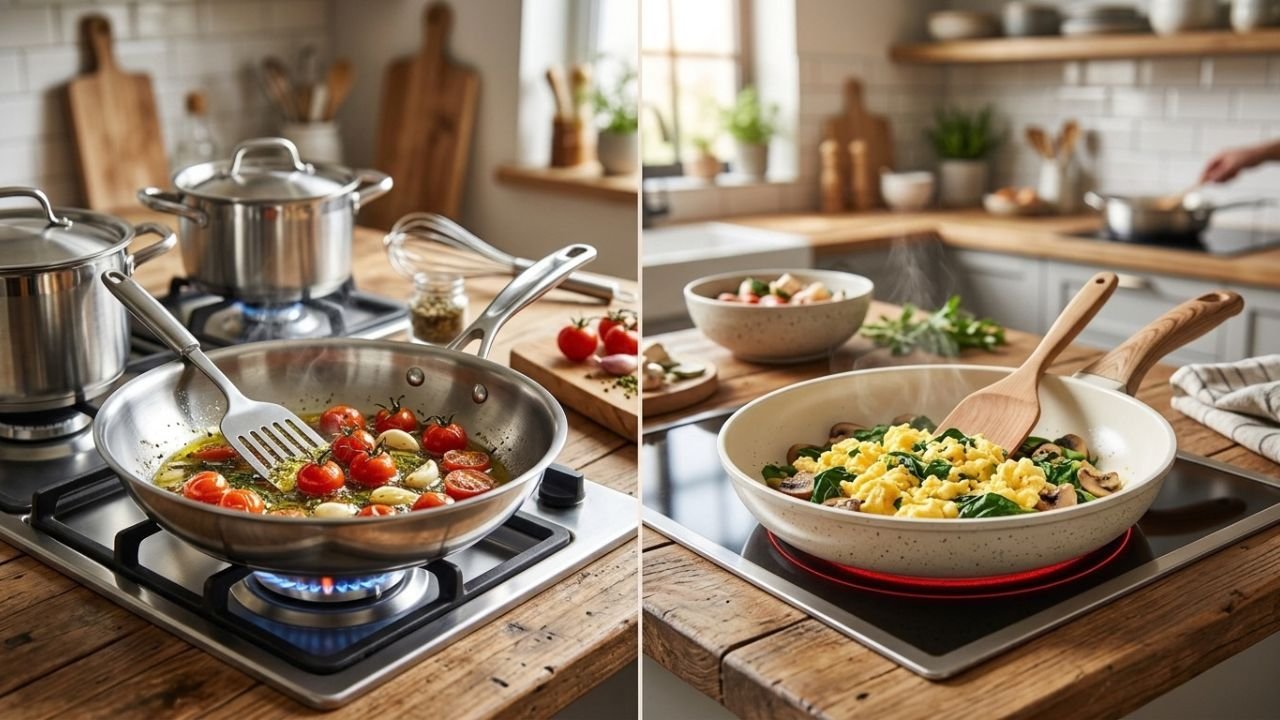
You know that moment when you’re standing in the store looking at two pans and your brain just freezes? One is this heavy shiny stainless steel thing. The other is a pretty ceramic pan that looks like it belongs on Instagram. Which one do you actually take home?
I went through this exact mess a year and a half ago. My old nonstick set started flaking off into the food and I was over it. So I bought both. A solid stainless steel skillet and a bright ceramic set. Then I just cooked with them. Steaks, oatmeal that sticks to everything, tomato sauce, eggs, the whole deal. Some nights I felt like a genius. Other nights I wanted to chuck the pan out the back door. Here’s what actually happened after living with both for a long time.
What Stainless Steel Cookware Feels Like When You Use It
Stainless steel is basically steel mixed with chromium and nickel. The better pans have layers. Aluminum or copper stuck in the middle so the heat spreads out instead of creating hot spots. Most of the decent ones say 18/10 or 18/8 on the bottom. That’s just the mix of metals.
I still remember picking up my first real three-ply stainless skillet. It felt heavy in a way that made me think, okay, this is a tool. Not some flimsy thing. You can shove it in a hot oven and it doesn’t care. Second week I owned it I seared a ribeye. The crust came out better than anything I’d made before. The pan just took the heat and kept going. No warping. No drama.
Cheap thin stainless is a whole different animal. It sticks like crazy and warps if you give it a dirty look. Spend a bit more and you notice the difference pretty quick.
Ceramic Cookware in Actual Daily Life
Ceramic usually means some aluminum or steel base with that smooth mineral coating on top. Brands love talking about how it’s free of the old nonstick chemicals. It looks nice. Comes in colors. Feels lighter when you pick it up.
My ceramic set showed up and I got excited. First batch of scrambled eggs slid right out. Barely needed any oil. Felt like I’d finally figured something out. Then regular life started. The coating doesn’t love high heat. Metal spatulas leave little marks. After a few months that slick surface started feeling less slick. Food began hanging on in spots. I had to treat it more carefully than I wanted to.
Durability — The Part That Actually Matters Over Time
This is where things get real.
Stainless steel takes a beating and keeps showing up. I’ve used metal tongs on it, scrubbed stuck bits with steel wool, thrown it in a 500-degree oven. Still looks solid. Dropped it on the tile floor once. Expected a big dent. Got almost nothing. It just bounced.
Ceramic starts out strong and then slowly loses ground. Tiny scratches showed up from normal cooking. Once the coating wears down, the pan sticks worse than plain metal. Some brands say their coating is tough. In my kitchen it still faded. I’m not careful every single night. Life gets messy.
If you cook a lot and hate buying new pans every couple years, stainless steel holds up better. Ceramic feels more temporary. You know that feeling when something starts going downhill and you keep using it anyway because replacing it feels like a hassle? That’s ceramic after the first year for a lot of people.
How Heat Really Works in Both Pans
Heat is the quiet thing that decides if dinner turns out good or annoying.
Stainless with a decent core takes a minute to get hot. Then it stays steady. I run mine on medium most of the time now. Chicken thighs get crispy skin without the bottom burning. The pan holds heat so you can finish things in the oven if you want.
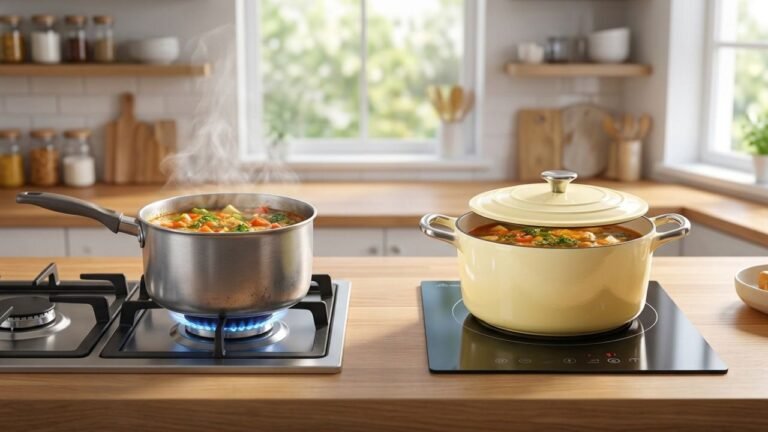
Ceramic heats up fast because the base is usually thinner. Sounds convenient until the hot spots show up. My first pancake batch made that clear. Center burned while the edges stayed pale. I learned to keep the heat lower and move the food around a lot. If you have an induction stove you need to check whether the ceramic base works with it. Most stainless does fine.
Want even browning and the freedom to stick the pan in the oven? Stainless wins. Need something that gets hot quick on busy nights? Ceramic can handle it if you watch the temperature.
The Nonstick Truth Nobody Tells You Straight
This is the part everyone cares about.
Ceramic wins the early egg test, no question. Crack an egg with a little oil and it slides out clean. I felt like I finally had my life together. Then the easy part started fading. The surface lost some of that slick feel. I needed more oil or more careful heat control.
Stainless sticks if you rush it. Heat the pan first. Add oil or butter. Wait until it shimmers. Then put the food in. Once you get the timing right, things release clean. My stainless skillet now makes fish with crispy skin that actually looks good. Took some practice. The good news is the skill sticks around.
I still pull out the ceramic on mornings when I want zero effort. Stainless handles anything that needs real browning. Both have their jobs.
Health Stuff That People Actually Think About
Stainless doesn’t have a coating that can peel off. Good quality pans stay pretty quiet chemically. Acidic stuff like tomato sauce can pull tiny amounts of nickel if the pan is cheap or all scratched up. I cook tomato sauce in mine all the time and never noticed anything weird. Most people don’t either.
Ceramic skips the old PTFE chemicals. That feels better when you read the label. High heat can still break the coating down over time though. If it chips, little pieces can end up in the food. I stopped using high heat with mine pretty early. Just easier that way.
Neither one is perfect. Stainless feels cleaner in the long run because nothing is wearing off into dinner.
Cleaning — The Nightly Reality
Ceramic cleans easy when it’s new. Soft sponge, a little soap, done. I liked that a lot. Then the scratches showed up and I had to get gentler. No hard scrubbing. Some of them don’t love the dishwasher if you want the coating to last.
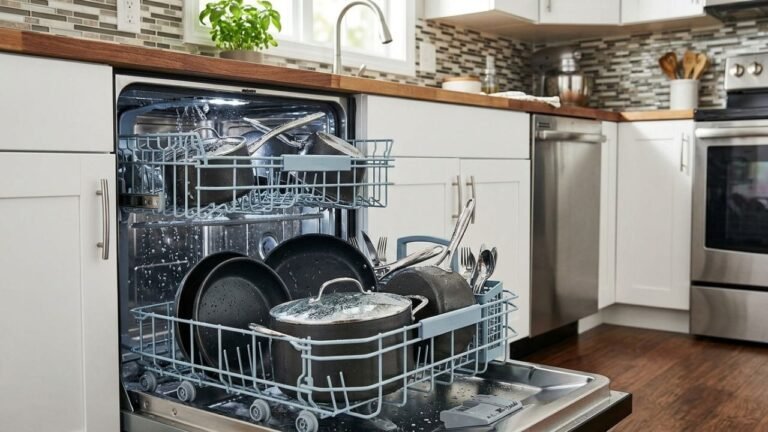
Stainless needs a bit more attention sometimes. Stuck-on bits usually give up with baking soda paste or a quick vinegar simmer. Bar Keepers Friend fixes those rainbow stains. I run mine through the dishwasher most nights. It survives just fine. The weight keeps it from bouncing around in there too.
I used to hate cleaning pans. Now the stainless is just part of the routine. Ceramic still wins on the easy nights, but only while the coating is still doing its job.
Money and What You Actually Get for It
Ceramic sets usually cost less at the start. You can get a decent one without spending a ton. Even the nicer ceramic stays cheaper than top-end stainless most of the time.
Good stainless costs more up front. A solid skillet runs real money. Full sets get expensive fast. Here’s what surprised me though. The stainless pieces I bought still work like the day I got them. The ceramic already shows wear. Buying new ceramic every couple years adds up quietly.
I spent more on stainless and never regretted it. The value shows up later.
What Each One Actually Does Best
Stainless steel owns the high-heat jobs. Searing steaks. Making sauces where you want to scrape up the brown bits. Moving from the stove straight into the oven. Stir-frying when you need real heat. Induction cooking without thinking about it.
Ceramic is better for eggs, delicate fish, sticky oatmeal, and low-oil weeknight cooking. Light and easy while the coating is still fresh.
I keep both in the kitchen now. Stainless gets used more. Ceramic handles breakfast. That combination covers almost everything I cook.
The Small Stuff That Adds Up
Weight matters more than people say. Stainless feels solid in your hand. Ceramic feels easy to lift when you’re already tired. Looks matter too. Ceramic comes in colors that brighten up the counter. Stainless just looks like serious cookware.
On the environmental side, stainless lasts longer so you buy fewer replacements. The metal can be recycled. Ceramic coatings wear out and eventually get thrown away. Longevity beats the marketing language most of the time.
Real Stories From My Stove
Steak night made the difference obvious. Stainless gave me a crust I could actually feel proud of. Ceramic never quite got there without me worrying about the coating.
Omelets went to the ceramic pan for months. Then stainless caught up once I stopped rushing the preheat.
Tomato sauce lived fine in the stainless. Ceramic stayed clean but I kept the heat lower than I really wanted.
Sticky rice tested both. Ceramic released easier at the beginning. Stainless needed a good soak once or twice. Both survived.
I made plenty of mistakes. Burned a few things. Scratched the ceramic earlier than I should have. Learned the water droplet test for stainless the hard way. The stainless forgave more of those mistakes.
Pros and Cons Without the Marketing Speak
Stainless steel is tougher, handles high heat, goes in the oven, and lasts. It asks you to learn a little technique. The reward sticks around for years.
Ceramic gives easy release when it’s new, feels lighter, and costs less at the start. It asks you to treat it gently and accept that the coating won’t last forever.
Neither one wins every single job. That’s why a lot of people end up keeping one of each.
Stainless Steel Cookware vs Ceramic: Side-by-Side Comparison
| Feature | Stainless Steel | Ceramic |
|---|---|---|
| Durability | Handles years of rough use | Strong at first, coating fades |
| Nonstick feel | Needs good technique, stays steady | Great when new, then declines |
| Heat tolerance | High, oven-friendly | Moderate, careful with max temps |
| Even heating | Solid with a good core | Can develop hot spots |
| Cleaning | Some effort, dishwasher is fine | Easy early on, then gentler care |
| Weight | Heavier | Lighter |
| Upfront cost | Higher | Usually lower |
| Best jobs | Searing, sauces, longevity | Eggs, low-oil cooking |
| Metal tools | No problem | Risky |
| Induction | Usually works | Check the base |
Questions I Keep Getting Asked
Is one clearly better for everyday cooking?
Depends what you cook most. Lots of searing and high heat? Go stainless. Lots of eggs and gentle cooking? Ceramic while the coating lasts.
Does ceramic have weird chemicals in it?
The good ones skip the old nonstick stuff. Still treat high heat carefully. Stainless has zero coating chemicals.
Can I use metal utensils on stainless?
Yes. It handles them fine. Ceramic does not.
Which one cleans easier?
Ceramic at the beginning. Stainless once you know the baking soda or vinegar tricks.
How long does the ceramic coating actually last?
Heavy use can wear it in a year or two. Gentler use stretches it further. Stainless just keeps going.
Is stainless safe with tomato sauce and other acidic food?
Yes for most people with decent pans. Avoid the cheap damaged ones if nickel bothers you.
Should I buy a full matching set?
I didn’t. One good stainless skillet plus a ceramic pan for eggs covers more ground than a full set of either.
Where I Ended Up After All the Cooking
Stainless steel versus ceramic isn’t a clean knockout. Stainless feels like the long-term partner. It asks a little more from you at the start and then sticks around. Ceramic feels like a helpful friend for a while. Easy and fun until the easy part starts fading.
I reach for the stainless more these days. It taught me better habits and never quit. The ceramic still earns its spot on quiet mornings. Both live in my kitchen. Both get used. That’s the honest answer after cooking with them side by side for a long stretch.
Think about how you actually cook on a tired Tuesday night. That’s the real test. Heat the pan the way it needs. Use a little fat when it helps. Clean it without getting mad. Your food gets better and the whole process feels less annoying. Grab the one that fits your life, or grab both if you can. Your next meal will tell you pretty quick if you picked right.