
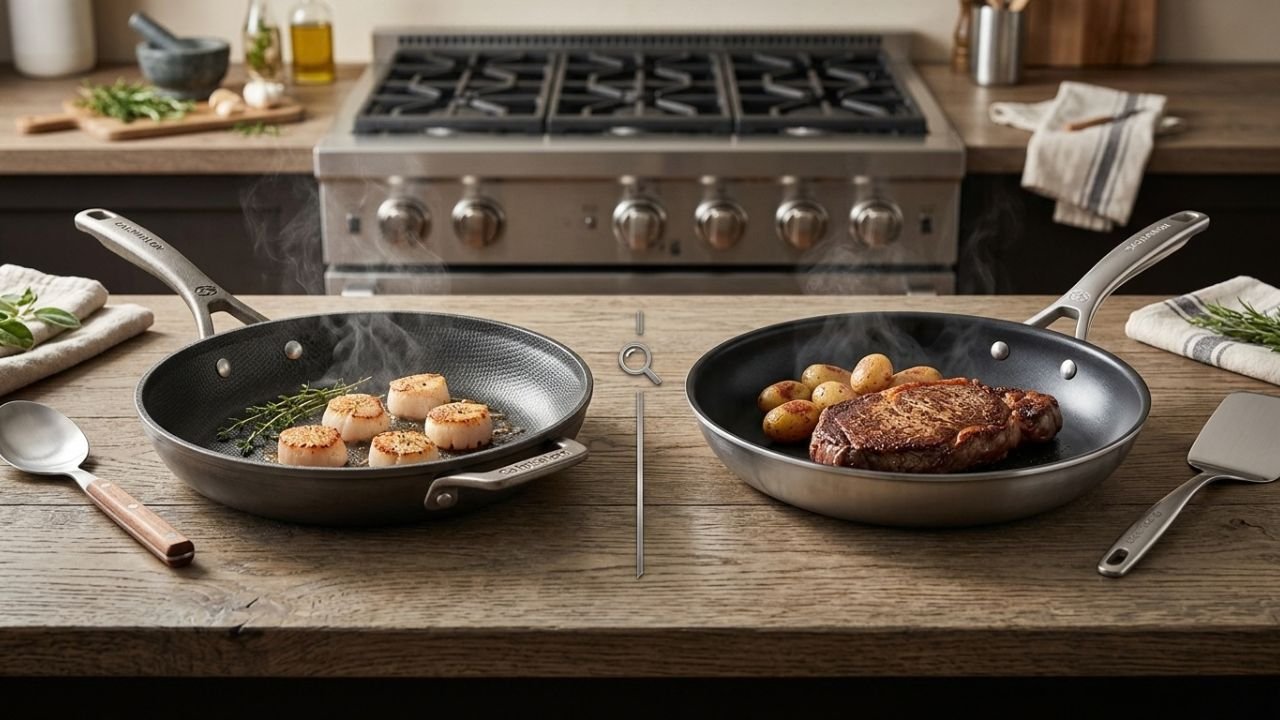
So you’re staring at two fancy Calphalon lines and wondering which one actually deserves your money. Calphalon Elite or Signature? I get it. Both look premium. Both cost real money. And both claim to make cooking easier. But which one wins in a real kitchen?
I’ve cooked with both. I’ve burned eggs in both (don’t ask). And I’ve cleaned both more times than I care to admit. Let’s break this down like we’re just chatting over coffee. No fluff. No sales pitch. Just the straight talk you need.
What Are Calphalon Elite and Signature Anyway?
Calphalon makes a ton of cookware. Some of it is basic. Some of it is solid middle-of-the-road. Then you hit the top shelf: Elite and Signature.
Elite is the one you usually find at Williams-Sonoma. It’s their hard-anodized nonstick line with a textured surface. They make it in the USA. It feels heavy and looks serious.
Signature sits right next to it in the high-end category. You can buy the nonstick version or the stainless steel version. The nonstick side feels very close to Elite. The stainless side gives you induction compatibility that Elite doesn’t offer.
Both lines target people who want better-than-average pans. Neither is cheap. Neither is a toy. So which one should you actually bring home?
Construction and Materials: What’s Under the Hood?
Let’s start with the bones of these pans.
Calphalon Elite uses heavy-gauge hard-anodized aluminum. The walls feel thick. The base feels substantial. That extra thickness helps the pan hold heat better when you drop cold chicken into it. The nonstick coating is a triple-layer setup with a textured top. Calphalon calls it their “sear” surface. It is supposed to brown food better than smooth nonstick.
Signature nonstick also uses hard-anodized aluminum at roughly the same thickness. The triple-layer nonstick coating looks and feels almost identical. The handles are stainless steel and riveted. Same story with Elite.
The big difference shows up when you look at Signature stainless steel. Those pans use a 5-ply construction. Three layers of aluminum sit between two layers of stainless. That design spreads heat more evenly than a simple hard-anodized pan. It also works on induction cooktops.
Elite stays hard-anodized only. No stainless option. No induction.
Here’s a quick side-by-side:
- Elite body: Hard-anodized aluminum, thick gauge
- Signature nonstick body: Hard-anodized aluminum, thick gauge
- Signature stainless body: 5-ply clad (stainless + aluminum)
- Elite handles: Stainless, riveted
- Signature handles: Stainless, riveted
- Elite lids: Tempered glass
- Signature lids: Tempered glass
Both feel solid in the hand. Neither feels flimsy. If you pick them up side by side, you might need a minute to tell them apart by weight alone.
Nonstick Performance: Does the Food Actually Slide?
This is where most people care the most. Does the egg slide? Does the salmon stick? Does the pancake flip clean?
I’ve cooked scrambled eggs in both. I’ve seared steaks in both. I’ve made sticky rice in both just to test the limits.
Elite performs very well. The textured surface does help with browning. You get a better crust on chicken thighs than you get on cheaper smooth nonstick. The triple-layer coating holds up to metal utensils better than most pans. I still prefer silicone or wood, but metal won’t destroy it overnight.
Signature nonstick feels nearly identical. Same textured sear surface. Same triple-layer claim. Same metal-utensil-safe promise. In my kitchen the food behaved the same way. Eggs released clean. Burgers browned nicely. Cleanup stayed easy.
The stainless version of Signature is a different animal. It is not nonstick. You need oil or butter. You need to preheat properly. Once you learn the technique, it sears beautifully and deglazes like a dream. But if you want true nonstick convenience, stick with the hard-anodized versions of either line.
Quick tip from my own stove: never crank the heat past medium-high on either nonstick pan. High heat kills nonstick coatings faster than anything else. Both lines can take oven heat up to 500°F, but the stovetop is where most people mess up.
Heat Distribution and Everyday Cooking
How even is the heat? Does the center get hotter than the edges?
Both Elite and Signature nonstick heat pretty evenly. The thick aluminum helps. I ran the classic flour test (sprinkle flour in a dry pan over medium heat). Both showed fairly uniform browning with only minor hot spots near the center.
Signature stainless does a slightly better job because of the full cladding. Heat travels up the sides more effectively. Sauces reduce more evenly. You get fewer scorched spots when you’re reducing a pan sauce.
For everyday cooking—eggs, stir-fries, chicken, vegetables—both nonstick lines work great. You won’t notice a huge difference unless you’re very picky.
One thing I noticed: Elite pans seem to hold heat a tiny bit longer when you remove them from the burner. That can be good or bad depending on what you’re cooking. If you need precise temperature control, Signature stainless gives you a little more responsiveness.
Durability: Which One Lasts Longer?
Nobody wants pans that peel after a year.
Both lines come with limited lifetime warranties. That tells you Calphalon stands behind them. In real kitchens the story depends on how you treat them.
I’ve seen Elite pans last five-plus years with daily use when people respect the rules: no high heat, no metal scrapers, no dishwasher abuse even though they claim dishwasher-safe status. The textured coating does hide scratches better than smooth nonstick.
Signature nonstick behaves the same way. The stainless version can last decades if you don’t warp it with extreme temperature shocks. Stainless doesn’t peel. It just needs more elbow grease to keep looking nice.
Here’s the honest truth: if you cook like a normal human and follow basic nonstick care, both will outlast cheaper pans by a long shot. If you treat them like rental car cookware, both will disappoint you.
Cleaning and Daily Care
Nobody loves scrubbing pans after dinner.
Both Elite and Signature nonstick clean up fast. A soft sponge and warm soapy water usually does the job. Stuck-on bits come off with a little soak. I sometimes use a plastic scraper. Never steel wool.
The rivets collect a bit of gunk over time. That’s true for both lines. You can get in there with a soft brush if it bothers you.
Signature stainless needs more attention. You may deal with water spots or rainbow discoloration. A quick polish with Bar Keepers Friend fixes most of it. Some people love the ritual. Others find it annoying.
Dishwasher claims exist for both. I still hand-wash mine. The dishwasher shortens the life of nonstick coatings. Why risk it when hand-washing takes two minutes?
Oven Safety and Versatility
Both lines go into the oven up to 500°F. That opens up a lot of recipes. You can sear a steak on the stove and finish it in the oven without switching pans. You can bake frittatas. You can roast vegetables.
Glass lids have lower temperature limits (usually around 450°F). Keep that in mind.
Elite stays non-induction. Signature stainless works on induction. If you have an induction cooktop, that alone may decide the winner for you.
Price: What Are You Actually Paying For?
Elite usually costs more. The Williams-Sonoma exclusivity adds a premium. Sets run higher. Open stock pieces cost more too.
Signature often sits a bit lower while delivering very similar nonstick performance. You also get the option of stainless steel pieces if you want to mix and match.
Is the extra money for Elite worth it? Only if you really want the Williams-Sonoma packaging and the slight “I bought the exclusive one” feeling. For pure cooking performance, Signature nonstick gives you almost the same results for less cash.
Who Should Buy Calphalon Elite?
Buy Elite if:
- You shop at Williams-Sonoma and like their return policy
- You want the USA-made story
- You prefer the exact handle and finish they offer
- Money is not the main concern
It is a strong nonstick pan. It just rarely offers a clear performance edge over Signature.
Who Should Buy Calphalon Signature?
Buy Signature if:
- You want solid high-end nonstick without the exclusivity tax
- You might want stainless steel pieces later
- You cook on induction (go for the stainless versions)
- You like better value for nearly identical nonstick results
Most people I talk to end up happier with Signature. The performance gap is tiny. The price gap is real.
My Personal Take After Cooking With Both
I’ve owned pieces from both lines. I still reach for Signature more often. The nonstick version cooks just as well as Elite in my daily rotation. When I want serious searing and deglazing, I grab the Signature stainless.
Elite feels special when you first unpack it. After six months the special feeling fades and you’re left with a good pan that costs more than it needs to.
IMO, Signature wins for most home cooks. 🙂
That said, if you find Elite on a deep sale, grab it. The quality is there.
Side-by-Side Comparison Table
| Feature | Calphalon Elite | Calphalon Signature Nonstick | Calphalon Signature Stainless |
|---|---|---|---|
| Body Material | Hard-anodized aluminum | Hard-anodized aluminum | 5-ply clad stainless |
| Nonstick Coating | Triple-layer textured | Triple-layer textured | None |
| Oven Safe | 500°F | 500°F | 500°F |
| Induction Compatible | No | No | Yes |
| Metal Utensil Safe | Yes | Yes | Yes |
| Dishwasher Safe | Yes (hand-wash recommended) | Yes (hand-wash recommended) | Yes |
| Made In | USA | USA (nonstick) / China (some) | China |
| Best For | Premium nonstick convenience | Best overall value nonstick | Searing & induction |
| Typical Price Position | Highest | High but better value | High |
Frequently Asked Questions
Is Calphalon Elite better than Signature?
For pure nonstick cooking they perform almost the same. Elite costs more and is exclusive to certain stores. Signature usually offers better value.
Can I use metal utensils on both?
Yes. Both claim metal-utensil-safe coatings. I still prefer silicone or wood to keep them looking new longer.
Which one works on induction?
Only the Signature stainless steel line. Elite and Signature nonstick do not.
Do these pans last?
With proper care both last years. High heat and metal abuse shorten their life. Hand-washing helps a lot.
Is the textured nonstick worth it?
It does help with browning compared to smooth cheap nonstick. You still need a little oil for best results.
Should I buy a full set or open stock?
Start with a 10- or 12-inch skillet and a 3-quart sauté pan. See how you like them before committing to a big set.
Final Thoughts
Both Calphalon Elite and Signature belong in the upper tier of hard-anodized nonstick. Elite feels a bit more exclusive. Signature delivers nearly the same cooking experience for less money and gives you stainless options.
If you want the best balance of performance and value, go with Signature. If you specifically want the Williams-Sonoma version and don’t mind paying extra, Elite will not disappoint you.
Either way you end up with solid cookware that makes weeknight dinners easier. Just promise me you’ll keep the heat at medium-high or lower. Your future self (and your future nonstick surface) will thank you.
Now go cook something good. And if you already own one of these lines, drop a comment and tell me how it’s holding up. I’m always curious.