

You stand in the kitchen aisle or scroll Amazon at midnight, staring at two big names. Calphalon sits on one side looking polished and a bit fancy. Farberware sits on the other looking like it won’t empty your wallet. Which one actually belongs in your kitchen?
I’ve cooked on both for years. I’ve burned eggs in one and seared perfect steaks in the other. I’ve watched nonstick coatings fail and stainless steel hold up through daily abuse. Today I’m breaking it all down like we’re chatting over coffee, no sales pitch, just real talk.
Calphalon Cookware Sets: Discounted Deals on Amazon! 20% OFF
Farberware Cookware Sets: Discounted Deals on Amazon! 15% OFF
Quick Brand Backgrounds
Calphalon Cookware
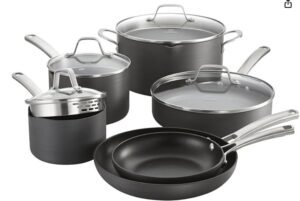
Calphalon started in the 1960s when a guy named Ronald Kasperzak borrowed a toughening process from the aerospace industry. He created hard-anodized aluminum cookware and named the brand after it. The company built its reputation on durable, even-heating pans that home cooks and some pros actually like.
Farberware Cookware

Farberware goes way back to the early 1900s. It built a name on affordable stainless steel and everyday pots that showed up in regular American kitchens. Today Meyer Corporation owns it, and the brand focuses hard on budget-friendly sets you can grab at big-box stores or online without thinking twice.
One brand aims higher. The other aims cheaper. That difference shows up in almost every category.
Materials and Construction: Where the Real Differences Start
Pick up a Calphalon pan and you feel the weight right away. Most of their popular nonstick lines use hard-anodized aluminum. That process makes the metal denser and more resistant to scratches and corrosion. Many collections add multiple layers of nonstick coating on top.
Their stainless steel options often use multi-ply construction with an aluminum core. Some higher lines go fully clad, which means the good heat-conducting layers run up the sides, not just the bottom.
Farberware keeps things simpler and lighter. A lot of their nonstick pans start with thinner aluminum. The coating is usually a standard PTFE or one of their branded versions like PowerDiamond or DiamondMax. They claim longer life than basic nonstick, but real-world results vary.
Their stainless steel sets typically use an impact-bonded aluminum disc on the bottom rather than full cladding. That design works okay, but heat moves differently than it does in thicker, multi-layer pans.
Ever notice how some cheap pans warp after a few months on a hot burner? Thin construction is usually the culprit. Calphalon’s heavier gauge fights that problem better in my experience.
Heat Performance: Fast vs Steady
Farberware pans heat up fast. In independent tests, some of their skillets reached boiling water quicker than many pricier options. That speed feels great when you want eggs in a hurry.
The downside hits just as fast. Those same pans lose heat quickly. Drop a cold steak in and the temperature can plummet. Browning suffers. Sauces can scorch in one spot while staying cool in another.
Calphalon pans take a bit longer to heat but hold that heat more evenly. Hard-anodized aluminum and better cladding spread temperature across the cooking surface. I’ve seared chicken thighs and made pan sauces without constant babysitting. The difference shows up most when you cook for more than one or two people.
Want consistent results night after night? Calphalon usually delivers. Need something that responds instantly on a weak apartment stove? Farberware can work in a pinch.
Durability: How Long Will These Actually Last?
This is where opinions get strong. Nonstick coatings fail on every brand eventually. The question is how soon.
Calphalon’s multi-layer coatings on Premier and Signature lines often last 3 to 5 years with normal care. People who baby their pans and avoid high heat and metal utensils report even longer. The hard-anodized bodies themselves rarely warp or dent under regular home use.
Farberware nonstick coatings commonly start peeling or losing slickness in 1 to 3 years. Some users report issues even sooner if they cook on high heat or use the dishwasher a lot. The thinner bases can warp, especially on powerful gas burners or induction if the pan isn’t designed for it.
Stainless steel changes the story. Farberware’s better stainless sets hold up longer than their nonstick, often several years with decent care. Calphalon’s stainless options last even longer and resist the dents and dings that thin pans pick up.
I’ve had a Calphalon hard-anodized skillet go strong for over six years. The nonstick finally started sticking a little, but the pan itself still looks solid. My old Farberware nonstick set needed replacement much sooner. Your mileage will vary based on how hard you cook and how carefully you clean.
Price and Value: What You Actually Get for the Money
Farberware wins the “cheap to buy” contest hands down. Full sets often land between $50 and $150. Individual pans can cost less than a couple of fancy coffees. That low entry price makes it tempting for first apartments, college kids, or anyone who just needs something functional right now.
Calphalon costs more. Entry-level Classic sets start higher, and Premier or Signature collections can reach several hundred dollars. Individual skillets often run $40 to $100 or more depending on size and line.
Here’s the value question that matters: how many times will you replace the cheap set? If Farberware lasts two years and Calphalon lasts five or more, the math starts looking different. I used to buy the cheapest option every time. After replacing pans too often, I switched. The higher upfront cost stopped annoying me once I stopped shopping for replacements.
Sales and outlet deals can shrink the gap. Still, Calphalon rarely drops to Farberware’s everyday prices.
Ease of Use, Cleaning, and Everyday Cooking
Both brands offer dishwasher-safe options, but hand-washing extends the life of any nonstick surface. Calphalon’s thicker pans feel more stable on the stove. Handles on higher lines stay cooler longer and give a solid grip.
Farberware pans feel lighter, which some people prefer for quick flipping or less strain. Glass lids on both brands let you check food without lifting. Oven-safe temperatures differ by collection. Many Farberware pieces top out around 350°F. Several Calphalon lines go to 400°F or 450°F, which helps when you want to finish a steak under the broiler.
Eggs and delicate fish slide off a good nonstick pan from either brand when the coating is new. After a couple years the story changes more dramatically with Farberware in most kitchens I’ve seen.
Stainless steel from both brands needs proper preheating and a bit of oil or butter for best results. Once you learn the technique, you can get solid sears and easy cleanup with a little soak and scrub.
Who Should Buy Farberware?
Buy Farberware if money is the biggest factor right now. You need a full set for a temporary situation. You cook simply and not every day. You’re okay replacing pans every couple of years.
It works fine for basic tasks like boiling pasta, scrambling eggs, or making simple sauces. Just don’t expect heirloom quality or perfect heat control.
Who Should Buy Calphalon?
Choose Calphalon if you cook most nights and want pans that feel better and last longer. You care about even browning and consistent results. You’re willing to spend more once so you shop less often.
The Premier and Signature lines especially reward people who use their cookware hard. Hard-anodized nonstick handles everyday meals well. The stainless options give you more versatility for high-heat searing and deglazing.
Personal Side-by-Side Experiences
I once cooked the same meal on both brands the same night just to compare. Chicken thighs went into a Farberware nonstick skillet and a Calphalon hard-anodized one. The Farberware heated fast but developed hot spots. One side of a thigh browned too much while the other lagged. The Calphalon browned more evenly and held temperature when I added the cold meat.
Cleanup told a similar story. Both cleaned easily that night. Six months later the Farberware started showing wear. Food stuck more. The Calphalon still released food with almost no effort.
Another time I made a big batch of chili. The Farberware stockpot heated the bottom fast but the sides lagged. I had to stir constantly to avoid scorching. The Calphalon version needed less babysitting.
These aren’t lab tests. They’re just what happened in a regular home kitchen with regular cooking habits.
Common Complaints and Real Talk
Some Calphalon owners complain about customer service and warranty hassles. Others say the nonstick didn’t last as long as they hoped. Those complaints exist. They also exist for almost every nonstick brand.
Farberware complaints center on warping, peeling coatings, and handles that loosen. The price softens the blow for many people. Still, frustration hits when a “new” set starts failing earlier than expected.
Neither brand matches true premium stainless like All-Clad for lifelong durability. Both sit in more accessible price ranges with the trade-offs that come with that.
Final Recommendation
For most people who cook regularly, Calphalon is the better brand. Better materials, stronger construction, more even heat, and longer useful life add up. You pay more at the start and usually get more years of solid performance.
Farberware makes sense when the budget is tight and you need something that works today. Just go in with eyes open about how long it will stay in good shape.
Think about how often you cook, what kinds of food you make, and how long you want these pans to stick around. That answer usually points clearly to one side or the other.
If you’re still on the fence, start with one solid Calphalon skillet in a size you use most. Test it against whatever you already own. The difference often becomes obvious pretty fast.
Happy cooking. May your eggs never stick and your steaks always brown evenly. 🙂
Comparison Table
| Feature | Calphalon | Farberware |
|---|---|---|
| Typical Price Range | Mid to high ($100–$700+ for sets) | Budget ($50–$180 for sets) |
| Main Materials | Hard-anodized aluminum, multi-ply stainless | Thinner aluminum, impact-bonded stainless |
| Heat Distribution | More even, better retention | Fast heating, weaker retention |
| Nonstick Lifespan | Often 3–5 years with care | Often 1–3 years |
| Durability | Higher resistance to warping | More prone to warping and coating wear |
| Oven-Safe Temps | Often 400–450°F+ | Often around 350°F |
| Best For | Regular cooks wanting longevity | Budget buyers or temporary needs |
| Overall Value Long-Term | Stronger | Better short-term savings |
FAQs
Is Calphalon worth the extra money over Farberware?
For most people who cook often, yes. The better construction and longer life usually pay off.
Which lasts longer, Calphalon or Farberware?
Calphalon typically lasts longer, especially the hard-anodized and higher stainless lines.
Can I use metal utensils on either brand?
Avoid metal on nonstick from both. Stainless steel handles metal better.
Are these brands induction compatible?
Some stainless lines from both work on induction. Most pure hard-anodized nonstick does not unless it has a special base.
Which is better for beginners?
Farberware gets you cooking for less money. Calphalon teaches better heat control and rewards careful technique longer.
Do both brands offer lifetime warranties?
Many collections do, but results and customer service experiences vary. Read the fine print.