
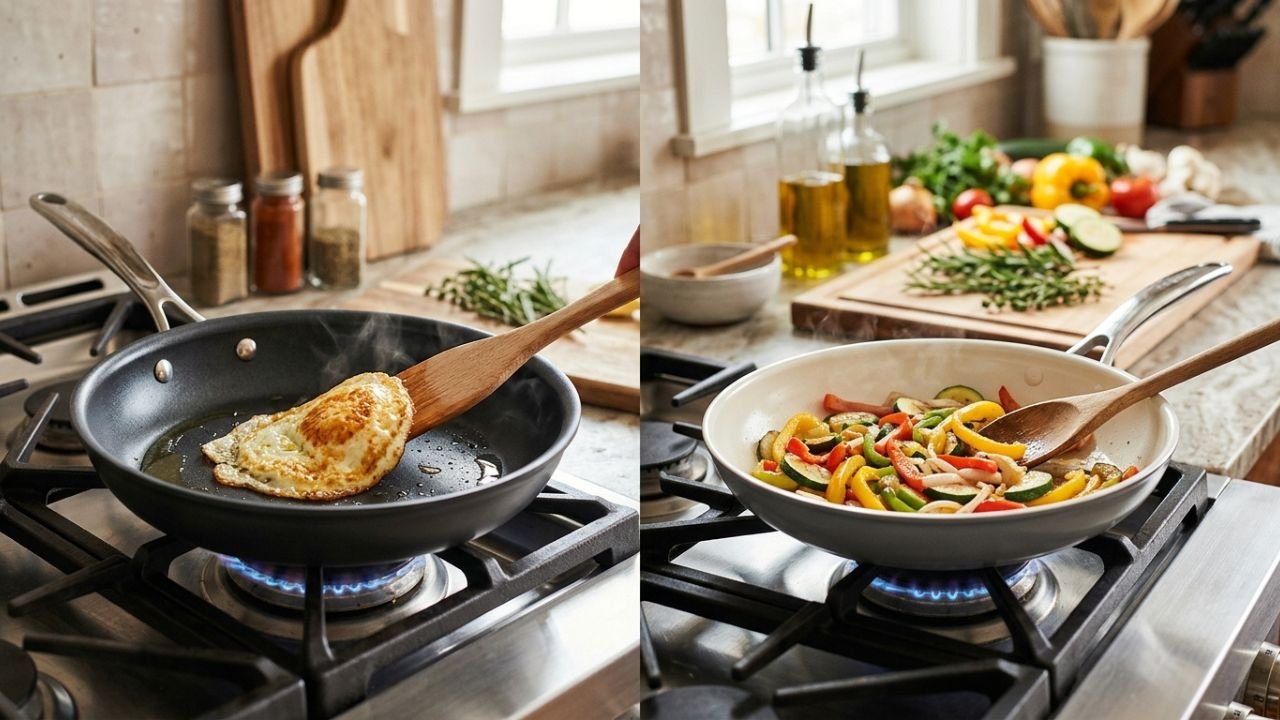
You stand in the aisle staring at two pans. One costs less than a couple of fancy coffees. The other looks sleek and promises zero scary chemicals. Which one do you grab?
I’ve cooked with both Tramontina and GreenPan for years. I’ve scrambled eggs at 6 a.m., seared steaks on weeknights, and burned a few things when I got distracted by my phone. Today I’m breaking it all down for you like we’re chatting over coffee.
No corporate fluff. Just real talk about Tramontina vs GreenPan non-stick cookware so you can pick the right one for your kitchen.
Extremely Low Price Deals for Tramontina & GreenPan
Tramontina 15-Piece Nonstick Set: Under $50 (Limited Time Offer)
GreenPan 10 Piece Cookware Set Ceramic ( 20% OFF)
Tramontina vs GreenPan at a Glance: Comparison Table
| Feature | Tramontina (Non-Stick Lines) | GreenPan (Ceramic) |
|---|---|---|
| Coating | PTFE (PFOA-free) | Ceramic (Thermolon, PFAS-free) |
| Typical Lifespan | 3–5 years | 1–3 years |
| Price (10″ pan) | $30–$40 | $50–$100+ |
| Heat Performance | Excellent even heating | Fast and even, lower max preferred |
| Non-Stick Strength | Strong long-term | Excellent when new |
| Oven Safe | Usually up to 400°F | Up to 600°F on many models |
| Best For | Durability & value | Chemical-free & style |
| Metal Utensils | Not recommended | Some lines claim safe |
| Induction | Select models | Many models |
Quick Brand Background
Tramontina
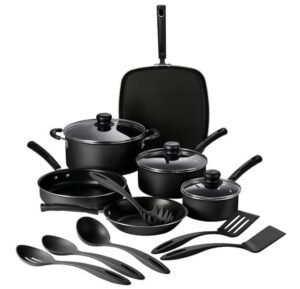
Tramontina started in Brazil over a century ago. They make solid, no-nonsense gear that shows up in home kitchens and restaurants. Their Professional non-stick fry pans keep winning tests year after year for good reason. You get heavy-gauge aluminum, a slick coating, and a price that doesn’t make you wince.
GreenPan
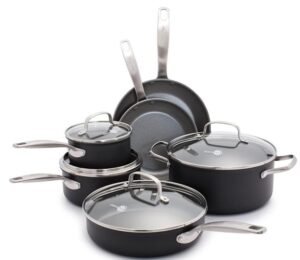
GreenPan launched the ceramic non-stick trend back in 2007. Their big claim? A coating made from sand. No PFAS. No PFOA. No PTFE. They lean hard into the healthy and eco-friendly vibe. Their pans look modern and come in lots of colors and styles.
Both brands sell plenty of options. Tramontina offers stainless steel, hard-anodized, and PTFE non-stick lines. GreenPan sticks mostly to ceramic non-stick on aluminum or hard-anodized bases. Some GreenPan pieces even work on induction.
The Big Difference: Coating Type
This is the heart of the Tramontina vs GreenPan debate.
Tramontina’s popular non-stick pans use a PFOA-free PTFE coating (think modern Teflon-style). It’s reinforced in multiple layers on their better lines. Food slides off like it’s on ice. Eggs, fish, pancakes—you name it.
GreenPan uses Thermolon ceramic non-stick. They make it from sand-derived materials. It starts super slick and needs almost no oil. The brand markets it as safer because it avoids forever chemicals.
Here’s the catch. Ceramic coatings tend to lose their non-stick power faster. PTFE usually hangs on longer if you treat it right.
I learned this the hard way. My first GreenPan skillet released eggs perfectly for about a year. Then it started getting sticky in spots. My Tramontina Professional? Still sliding food off after three years of regular use.
Heat Performance and Everyday Cooking
How do these pans actually cook?
Tramontina’s aluminum bodies heat evenly. The Professional series distributes heat well across the surface. You get solid browning without crazy hot spots. The flared edges make it easy to slide food out. I use mine for weeknight stir-fries and weekend omelets without drama.
GreenPan also heats fast and even on most lines. The Valencia Pro and similar collections do a nice job with gentle cooking. Eggs stay tender. Fish doesn’t stick when the pan is new. High-heat searing? Not their strongest suit. The ceramic surface doesn’t develop the same deep crust as a good PTFE pan or stainless steel.
Want a hard sear on a steak? Tramontina’s non-stick holds up better for medium-high heat. GreenPan prefers medium or lower. Overheat ceramic and the coating can break down faster.
Rhetorical question time: Ever watched an egg turn into a glued-on mess because the pan lost its slickness? Yeah. Both brands can get there eventually, but Tramontina takes longer in my experience.
Durability: How Long Do They Really Last?
Let’s get real about lifespan.
Tramontina non-stick pans typically last 3 to 5 years with normal care. Some people push them longer. The coating is tougher against everyday wear. Still, skip metal utensils and high-heat abuse.
GreenPan ceramic usually lasts 1 to 3 years. Some premium lines claim better durability, and a few owners report longer life. But reviews and tests often show the non-stick fading sooner. Scratches and high heat speed that up.
I once ran a rough test at home (don’t judge). After repeated spatula scraping and some aggressive cleaning, the Tramontina still released eggs cleanly. The GreenPan showed more wear.
Both brands recommend hand washing for longest life. Dishwashers can shorten the coating’s life on either. Tramontina’s Professional line is often dishwasher-safe, but I still hand wash mine.
Safety and the “Healthy” Factor
This is where GreenPan wins a lot of fans.
GreenPan’s ceramic coating contains no PFAS, PFOA, PTFE, lead, or cadmium. The brand emphasizes third-party testing. Many people feel better cooking on it, especially for kids or if they worry about chemicals.
Tramontina’s PTFE non-stick is PFOA-free. Modern versions meet current safety standards. The main concern with PTFE comes from overheating it past about 500°F, when it can release fumes. Stick to normal cooking temps and you’re fine according to most experts.
I switched between both for a while. For pure peace of mind on chemicals, GreenPan feels better. For pure performance and longevity, I reach for the Tramontina more often.
IMO, if chemical-free is your top priority, GreenPan makes sense. If you just want a pan that works hard for years without fuss, Tramontina delivers.
Price and Value
Tramontina wins the value game almost every time.
A solid 10-inch Tramontina Professional non-stick fry pan often costs around $30–$40. You get restaurant-style performance without the restaurant price.
GreenPan starts higher. A comparable ceramic skillet usually runs $50–$100 or more depending on the line. Sets can get pricey fast.
You pay extra for the PFAS-free coating and the modern look. Whether that premium is worth it depends on what matters most to you.
I’ve bought both on sale. The Tramontina always felt like the smarter everyday buy. The GreenPan felt like a nicer “treat yourself” option that needed more babying.
Cleaning and Daily Use
Both clean up easily when the non-stick works.
Tramontina’s slick surface lets you wipe most messes with a soft sponge and a bit of soap. Food rarely sticks hard. The rivets on some models can trap bits, so give those a little extra attention.
GreenPan also cleans with almost no effort at first. The ceramic surface rinses clean. Once the coating starts wearing, you scrub more.
Handles matter too. Tramontina’s Professional pans often come with a comfortable silicone grip that stays cool. GreenPan uses stainless or stay-cool designs that look sharp.
Both work on gas, electric, and ceramic cooktops. Some Tramontina and many GreenPan lines handle induction. Check the specific model.
Who Should Buy Tramontina?
Pick Tramontina if you want:
- Strong long-term non-stick performance
- Excellent everyday value
- A pan that handles regular home cooking without drama
- Something proven in independent tests for years
It suits busy households, people who cook a lot, and anyone who doesn’t want to replace pans every couple of years. The Professional series remains a top pick for good reason.
Who Should Buy GreenPan?
Go with GreenPan if you want:
- A PFAS-free ceramic non-stick surface
- Stylish pans that look good on the stove
- Low-oil or almost oil-free cooking
- Higher oven-safe temperatures on many models (up to 600°F on some)
It fits people who prioritize chemical concerns, like modern design, or mainly cook delicate foods like eggs and fish.
My Personal Take After Years of Use
I’ve owned multiple pans from both brands. The Tramontina Professional is the one I grab most often. It just works. Eggs slide. Cleanup is fast. It holds up.
The GreenPan feels nicer when it’s new. I like the idea of the ceramic coating. But I get annoyed when the non-stick starts fading earlier than expected.
Neither is perfect. Non-stick of any kind eventually wears out. That’s just reality. Treat them gently—medium heat, soft utensils, hand washing—and both last longer.
Sarcasm alert: Buying the “healthiest” pan only to replace it twice as often isn’t exactly eco-friendly either. Just saying.
Final Thoughts
So which non-stick cookware brand is actually better—Tramontina or GreenPan?
It depends on your priorities.
If you want reliable performance, solid durability, and great value, choose Tramontina. It’s the practical winner for most home cooks.
If avoiding PFAS and loving the ceramic story matters more than maximum lifespan, choose GreenPan. Just treat it kindly.
I keep both in my kitchen. The Tramontina sees more action. The GreenPan comes out when I want that fresh ceramic feel or I’m cooking something delicate.
What’s your biggest priority in a non-stick pan—longevity, chemical concerns, price, or looks? Think about how you actually cook. That answer points you to the right brand.
Grab the one that fits your real life, not the marketing. Your future self (and your scrambled eggs) will thank you. 🙂
Frequently Asked Questions
Is GreenPan safer than Tramontina?
GreenPan’s ceramic coating contains no PFAS or PTFE. Tramontina’s modern PTFE is PFOA-free and safe at normal cooking temperatures. Many people prefer GreenPan for the chemical-free aspect.
Which lasts longer, Tramontina or GreenPan?
Tramontina’s PTFE non-stick generally lasts longer—often 3 to 5 years versus 1 to 3 years for most ceramic coatings.
Can I use metal utensils on either brand?
Avoid metal on both for best results. Some GreenPan lines claim metal-utensil safety, but soft tools still extend the life of any non-stick coating.
Are these pans dishwasher safe?
Many are labeled dishwasher-safe, but hand washing keeps the non-stick working longer on both brands.
Which is better for induction cooktops?
Check specific models. Plenty of GreenPan lines work on induction. Some Tramontina Professional pieces do too.
Do I need oil with these pans?
Both need very little. GreenPan often works with almost none when new. Tramontina also performs well with a light coat or spray.
There you go. Honest comparison, no hype. Now go cook something good.