
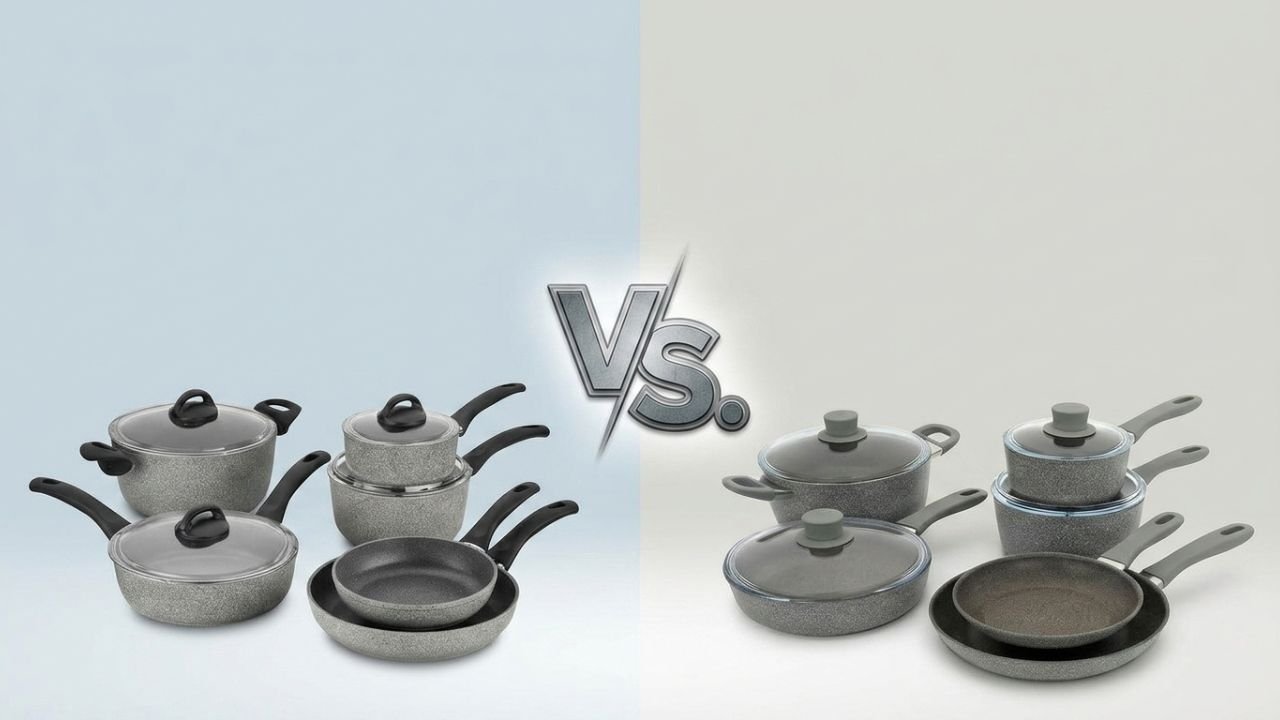
You stand in the kitchen aisle or scroll through online listings. Two Ballarini lines stare back at you. Parma and Parma Plus. Same brand. Same Italian roots. Same nonstick promise. So which one do you actually bring home?
I asked myself that exact question a while back. I cook a lot. Eggs most mornings. Stir-fries on weeknights. The occasional steak that needs a good sear. Cheap pans failed me too many times. Food stuck. Coating peeled. I got tired of it.
Ballarini kept popping up in reviews. Made in Italy. Granitium coating. Thermopoint handles. Sounds solid, right? But then the “Plus” version showed up and complicated everything. Is the upgrade worth it? Or does the regular Parma do the job just fine?
Let’s break it down like we’re talking over coffee. No fluff. Just real talk on what these pans actually deliver.
Quick Look at Ballarini as a Brand
Ballarini comes from Italy. They’ve been making cookware for a long time. Zwilling owns them now, so you see the Henckels connection a lot. They focus on nonstick pans that feel approachable but still perform.
Their big selling point is the Granitium coating. It’s PTFE-based with ceramic particles and those signature speckles. The idea is better scratch resistance than plain nonstick. Most lines use cold-forged aluminum too. That means the body heats up fast and spreads heat pretty evenly.
Both Parma and Parma Plus sit in the mid-range price zone. Not budget junk. Not ultra-premium either. They aim at people who cook often and want something that lasts longer than the $20 pans from the big-box store.
Ever notice how some nonstick pans look great for three months and then start sticking? Yeah. That’s the problem these lines try to fix.
Ballarini Parma: The Solid Everyday Option
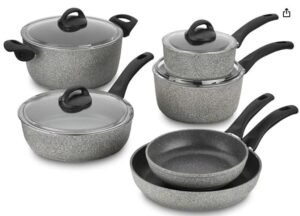
The original Parma line keeps things straightforward. You get cold-forged pure aluminum bodies. The Granitium nonstick coating sits on top with ceramic reinforcement and speckles. Handles stay cool with that soft-grip feel. Most pieces come with the Thermopoint heat indicator. It changes color when the pan is hot enough or cool enough to handle.
Oven-safe up to 300°F. Pouring rims help when you drain or serve. Glass lids without big rims make cleaning easier. The coating is PFOA-free. Ballarini says it’s metal-utensil safe, though I still treat nonstick gently.
Handles on the Parma line tend to be black. Lid knobs match that look. Sets usually include fry pans, saucepans, a sauté pan, and a Dutch oven. You can also buy pieces individually.
I used a Parma fry pan for months. Eggs slid right off. Pancakes never stuck. Cleanup took about thirty seconds with a soft sponge. Heat distribution felt even enough for everyday stuff. No wild hot spots when I cooked on medium.
Does it feel premium? Not really. It’s light, which some people love. Others want more heft. The coating holds up well if you avoid high heat and metal abuse. But after heavy daily use, you might notice it starting to lose that perfect release a bit sooner than the Plus version.
Who does the regular Parma suit best? Folks who cook a few times a week. People on a tighter budget. Anyone who wants reliable Italian nonstick without paying for the extra layers.
Ballarini Parma Plus: The Upgraded Version
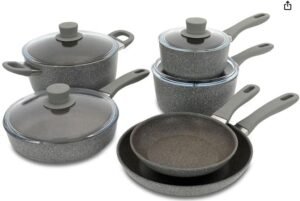
Parma Plus takes the same foundation and dials a few things up. Same cold-forged aluminum. Same Thermopoint technology. Same oven limit of 300°F. Same easy-clean glass lids and pouring rims.
The big difference sits in the coating. Parma Plus gets three extra durable layers of Granitium. Ballarini reinforces it with more ceramic particles and those signature speckles. They call it superior nonstick with better scratch resistance. Marketing language says “heart of stone.” Basically, they claim it holds up longer under daily use and handles metal utensils better.
Handles often come in gray. Lid knobs look a bit different—rounder and matching the gray tone. The overall look feels a touch more modern.
I switched to a Parma Plus 10-inch fry pan for a stretch. The release felt slightly more consistent after months of use. Scratches from occasional metal spatula slips stayed shallower. Food still slid off cleanly long after my older pans would have started sticking.
Heat performance stayed similar. Aluminum heats fast. The Plus version sometimes feels a bit more stable on the burner, possibly from slight construction tweaks. Nothing dramatic, though.
Price runs higher. You’re paying for that reinforced coating and the “Plus” branding. Is it night-and-day better? Not always. But if you cook every day and hate replacing pans, the extra durability starts to matter.
Head-to-Head Comparison: Ballarini Parma vs Parma Plus
Here’s the straight comparison so you don’t have to hunt for it.
| Feature | Ballarini Parma | Ballarini Parma Plus |
|---|---|---|
| Body Material | Cold-forged pure aluminum | Cold-forged pure aluminum |
| Nonstick Coating | Granitium with ceramic particles | 3 extra durable layers of Granitium ceramic-reinforced |
| Scratch Resistance | Good | Better (reinforced speckles) |
| Handles | Soft-grip, usually black | Soft-grip, usually gray |
| Thermopoint Indicator | Yes | Yes |
| Oven Safe | Up to 300°F | Up to 300°F |
| Metal Utensil Safe | Claimed yes | Claimed yes (stronger claim) |
| Pouring Rims | Yes | Yes |
| Glass Lids | Yes | Yes |
| Price Point | Lower | Higher |
| Best For | Occasional to moderate use | Daily heavy use |
The table tells most of the story. Construction stays almost identical. Coating and some design details set them apart.
Digging Into the Granitium Coating
This is the heart of the debate. Both lines use Granitium. It’s Ballarini’s proprietary nonstick. PTFE base mixed with ceramic particles and those gray speckles that look a bit like stone.
The speckles aren’t just for looks. They help with durability and release. Ballarini pushes the idea that this coating resists scratches better than standard nonstick.
On the regular Parma, you get solid performance. Food releases well. Cleanup is easy. With normal care—medium heat, soft tools, hand washing preferred—it lasts a good while.
Parma Plus layers it thicker. Three extra durable layers. More reinforcement. The company markets this as the version that keeps performing longer under tougher conditions.
In my experience, the Plus coating does feel a bit tougher. I accidentally left a metal spoon in the pan once. The regular Parma would have shown more marks. The Plus shrugged it off better. Still, no nonstick coating is invincible. High heat and aggressive scrubbing kill them all eventually.
FYI, both are PFOA-free. That’s standard now, but nice to confirm.
Do you really need the extra layers? Only if you cook hard and often. For weekend warriors, the regular Parma coating does the job.
Heat Performance and Everyday Cooking
Both pans heat up quickly because of the aluminum. Cold-forging helps with even distribution. You get fewer hot spots than cheaper stamped pans.
I tested eggs, chicken, and veggies in both. Results looked similar. The Thermopoint is kind of fun. The spot on the handle changes color when the pan reaches the right temperature. Some people call it a gimmick. I kind of like it for mornings when my brain is still half asleep. It reminds me the pan is ready without guessing.
Neither line handles screaming-hot searing like cast iron or carbon steel. Keep the heat at medium or medium-high. Nonstick coatings hate extreme temperatures. They break down faster.
Oven use stays limited to 300°F. Perfect for finishing a frittata or keeping something warm. Not for high-heat roasting.
Induction compatibility depends on the specific piece and market. Newer versions of both lines often work on induction. Check the bottom for the induction symbol if that matters to you.
Durability, Care, and Real-World Longevity
How long do these last? It depends on how you treat them.
Hand wash both. Dishwashers can shorten the life of any nonstick coating. Use soft sponges or cloths. Avoid abrasive scrubbers. Medium heat is your friend. High heat is the enemy.
Parma holds up well for moderate use. After a year of regular cooking, you might see some fading in the nonstick performance if you’re not careful.
Parma Plus aims for longer life. The extra layers help it resist wear. People who cook daily often prefer it for that reason. I noticed my Plus pan still released food cleanly after more aggressive use than the regular one tolerated.
Both claim metal-utensil safety. I still recommend silicone, wood, or nylon most of the time. Why risk it?
Weight stays light on both. Easy to maneuver. Some cooks miss the solid feel of heavier pans. Others love how easy these are to lift and pour from.
Price and Value: Is the Plus Worth the Extra Cash?
Parma usually costs less. You can find solid sets or individual pans at a friendly price. Parma Plus asks for more money. Sometimes noticeably more.
Is the upgrade worth it? For me, it depends on cooking frequency. If you cook a couple times a week and treat your pans kindly, save the money and grab the regular Parma. It performs great.
If you cook almost every day, scramble eggs for a family, or just hate replacing cookware, the Plus makes more sense. The reinforced coating buys you extra months or years of good performance. That value adds up.
Sales pop up often. Watch for them. Sets offer better per-piece pricing than buying singles.
IMO, neither feels overpriced for what you get. You’re paying for Italian manufacturing and a better-than-average nonstick surface.
Who Should Buy Ballarini Parma?
Grab the regular Parma if:
- You cook a few times a week
- Budget matters
- You mainly make eggs, pancakes, simple sautés, and light stir-fries
- You want solid nonstick without the premium price
It delivers reliable performance. The Thermopoint is handy. Cleanup stays easy. You won’t feel like you settled.
Who Should Buy Ballarini Parma Plus?
Go for Parma Plus if:
- You cook daily or multiple times a day
- You want the toughest coating Ballarini offers in this line
- You occasionally use metal tools (still carefully)
- You prefer the gray handle look
- Longer lifespan matters more than saving a few bucks upfront
The extra layers and marketing claims around durability give it the edge for heavy users.
My Personal Take After Using Both
I started with a Parma fry pan. It impressed me right away. Eggs slid off like they were on ice. Cleanup was almost too easy. I thought, “Why did I waste money on other brands?”
Then I tried the Plus. The difference wasn’t huge at first. After several months of real kitchen chaos—kids helping, rushed weeknights, the occasional forgotten spatula—the Plus held its nonstick performance longer. Scratches stayed milder. Release stayed consistent.
For my kitchen, I lean toward the Plus now. I cook enough that the extra durability pays off. If my cooking volume dropped, I’d happily stick with regular Parma and pocket the difference.
Neither is perfect. The 300°F oven limit feels low compared to some competitors. The light weight isn’t for everyone. And like all nonstick, they need care. But for the price and performance, both punch above their weight.
Other Things Worth Knowing
Both lines offer individual pieces and sets. Popular sets include 8-inch and 10-inch fry pans, saucepans with lids, a sauté pan, and a Dutch oven. You can mix and match as needed.
Colors stay in the gray speckled family. They look modern without screaming for attention on the stovetop or open shelves.
Made in Italy still carries weight for a lot of people. The manufacturing standards feel consistent. You don’t get the random quality drops you sometimes see with no-name brands.
One small annoyance: lid knobs on some pieces feel a bit small. They can get warmer than I’d like. Not a dealbreaker, but worth noting.
Final Recommendation
So which nonstick cookware is better—Ballarini Parma or Parma Plus?
If I had to pick one for most people, I’d say Parma Plus. The reinforced coating gives it a real edge for everyday durability. You pay more, but you get longer-lasting performance in return.
That said, the regular Parma is no slouch. It’s a smart buy if you want solid Italian nonstick without stretching the budget. Plenty of home cooks will be perfectly happy with it for years.
Think about how often you cook and how hard you are on your pans. That answers the question better than any review.
Either way, you’re getting cookware that makes weeknight dinners less of a chore. Food releases. Cleanup stays simple. And you get that little Italian flair in the kitchen.
Now go cook something. And maybe skip the metal spatula for a while. Your pans will thank you. 🙂
FAQs About Ballarini Parma vs Parma Plus
Is Parma Plus really better than Parma?
Yes, mainly because of the extra layers of Granitium coating. It offers better scratch resistance and longer nonstick performance under regular use.
Can I use metal utensils on these pans?
Ballarini says both are metal-utensil safe thanks to the reinforced coating. I still prefer soft tools to maximize lifespan.
Are Ballarini Parma and Parma Plus induction compatible?
Many newer pieces work on induction. Check the product details or look for the induction symbol on the bottom.
Do I need to hand wash them?
Yes, for best results. Dishwashers can wear down nonstick coatings faster over time.
How hot can I go in the oven?
Both are safe up to 300°F. Keep that limit in mind for finishing dishes.
Which one lasts longer?
Parma Plus generally holds up better with heavy daily use thanks to the thicker coating layers.
Are they PFOA-free?
Yes. Both use PFOA-free coatings.
Should I buy a set or individual pieces?
Sets usually give better value if you need multiple sizes. Buy singles if you already own some pieces or only need specific pans.