
You ever stand in your kitchen staring at a pile of scratched-up nonstick pans and think, “There has to be something better”? Yeah, me too. That’s exactly why I decided to put Anolon stainless steel cookware sets through their paces. I wanted pots and pans that wouldn’t quit after a couple years, could handle real heat, and didn’t cost a small fortune like some of the big-name brands.
I’ve cooked with these for months now—weeknight dinners, weekend searing sessions, the works. So let’s talk about what actually works, what drives me a little nuts, and whether these sets deserve a spot in your kitchen.
What Makes Anolon Stainless Steel Cookware Different?
Anolon isn’t some brand-new flash in the pan. They’ve been around for decades making solid cookware for regular home cooks. Their stainless steel lines focus on two main styles: the Nouvelle Stainless (sometimes with a copper accent) and the Tri-Ply Clad / EverLast collections.
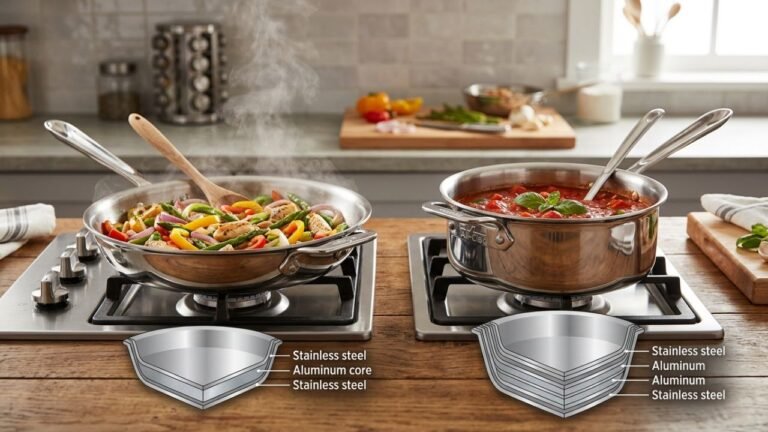
The Nouvelle stuff uses a multi-layer disc base—aluminum and a bit of copper sandwiched in there for heat conduction—bonded to a stainless body. The Tri-Ply Clad is fully clad from base to rim. That means layers of stainless, aluminum, and stainless all the way up the sides. Big difference in how heat moves.
Both are induction-compatible. Both go in the oven up to 500°F. And neither has any nonstick coating to flake off. Pure stainless cooking surface. You control the heat and the oil, and the pan responds.
Ever wondered why stainless feels different from those slick nonstick pans? It’s because it actually browns food properly and builds that tasty fond on the bottom for sauces. Nonstick just… slides everything around. Different tools for different jobs.
Key Features That Stand Out
Here’s the stuff that matters day to day:
- Multi-layer bases or full cladding for better heat spread
- Stainless steel lids and handles (no silicone that limits oven temps)
- Dishwasher safe (though I still hand-wash most days)
- Metal utensil friendly—no panic if you grab a metal spatula
- Lifetime limited warranty against manufacturing defects
- Polished or brushed finishes that look sharp on the stove
The handles feel solid. Dual-riveted on most pieces. They stay relatively cool on the stovetop, but yes, they get hot in the oven. Use a pot holder like a normal person.
The Pros – Why I Keep Reaching for These Pans
Let’s start with the good stuff, because there’s plenty of it.
Even heating on the bottom is solid. I boiled water in the 10- or 12-inch skillet and the bubbles rose pretty evenly. No crazy hot spots that burn one side of the chicken while the other stays pale. The copper-aluminum base in the Nouvelle line pulls heat fast. The fully clad Tri-Ply does an even better job spreading it up the walls when you’re simmering sauces or braising.
They sear like champs. I threw a couple thick steaks in the skillet after a proper preheat. Got a beautiful crust. Same with pork chops and chicken thighs. That Maillard reaction happens. You build fond. You deglaze. You make a pan sauce that tastes like you know what you’re doing. Try that with a worn-out nonstick pan and you’ll just get sad gray meat.
Durability is a big win. No coating to scratch or peel. I’ve used metal utensils without worry. Dropped a lid once (oops). Still fine. These should last years if you don’t abuse them. Way longer than any nonstick set I’ve owned.
Price feels fair. A full 10-piece set usually lands in the mid-range—hundreds, not thousands. Compare that to All-Clad and you save a chunk of change while still getting professional-looking results. IMO, that’s the sweet spot for most home cooks.
Induction ready and oven safe. If you have an induction cooktop or like finishing things in the oven, these handle it without drama. Stockpot goes from stovetop to oven for a big batch of chili? No problem.
They look good. Sleek stainless. Professional without being showy. Guests notice. Or at least I pretend they do.
The Cons – Because Nothing’s Perfect
Okay, time for the honest part. These aren’t magic.
Stainless has a learning curve. If you toss cold food into a cold pan or use zero fat, things stick. Hard. Eggs can be a fight until you learn the preheat-and-oil dance. I burned a few scrambled eggs early on and muttered some creative words at the pan. Once you get the timing right—medium heat, let the pan heat up, add oil, wait for it to shimmer—things release much better.
Not fully nonstick. That’s the point of stainless, right? But if you’re used to sliding eggs around with zero effort, this will frustrate you at first. Keep a good nonstick skillet for eggs and delicate fish. Use the Anolon for everything else.
Some sets have size quirks. The 1.25-quart saucepan in certain Nouvelle sets tips easily when empty or lightly filled. It’s small. Almost comically small for some recipes. A few people online complained about it, and yeah, I noticed it too. The rest of the pieces feel right-sized for a regular household.
Copper accents can discolor. On the Nouvelle Copper versions, that pretty copper ring on the base can tarnish or fade over time. Doesn’t hurt performance, but it looks less fancy after a while. Bar Keepers Friend helps, but still.
Weight is noticeable. These are heavier than cheap aluminum pans. The fully clad ones especially. My wrists notice after flipping a full skillet of veggies for a long time. Not back-breaking, but not feather-light either.
Water spots and rainbow stains happen. Stainless shows everything. Dry them right after washing or you’ll get those annoying spots. High heat can leave rainbow discoloration. It’s cosmetic. Scrub with a little vinegar or Bar Keepers Friend and it mostly comes off.
18/0 steel in some lines. Higher-end brands often use 18/10 for the cooking surface (more corrosion resistant). Anolon uses 18/0 in places for better induction compatibility and lower cost. It’s fine for most people, and great if you have a nickel sensitivity. Just know it’s not the absolute top-tier alloy.
Real-World Tests I Actually Ran
I didn’t just look at the shiny boxes. I cooked real food.
Boiling water test: Skillet came up to a rolling boil in a reasonable time. Even bubble distribution. No weird cold spots.
Searing test: Steaks and chicken got deep browning. Fond developed nicely for deglazing with wine or broth. Sauce turned out rich. That’s the stainless advantage right there.
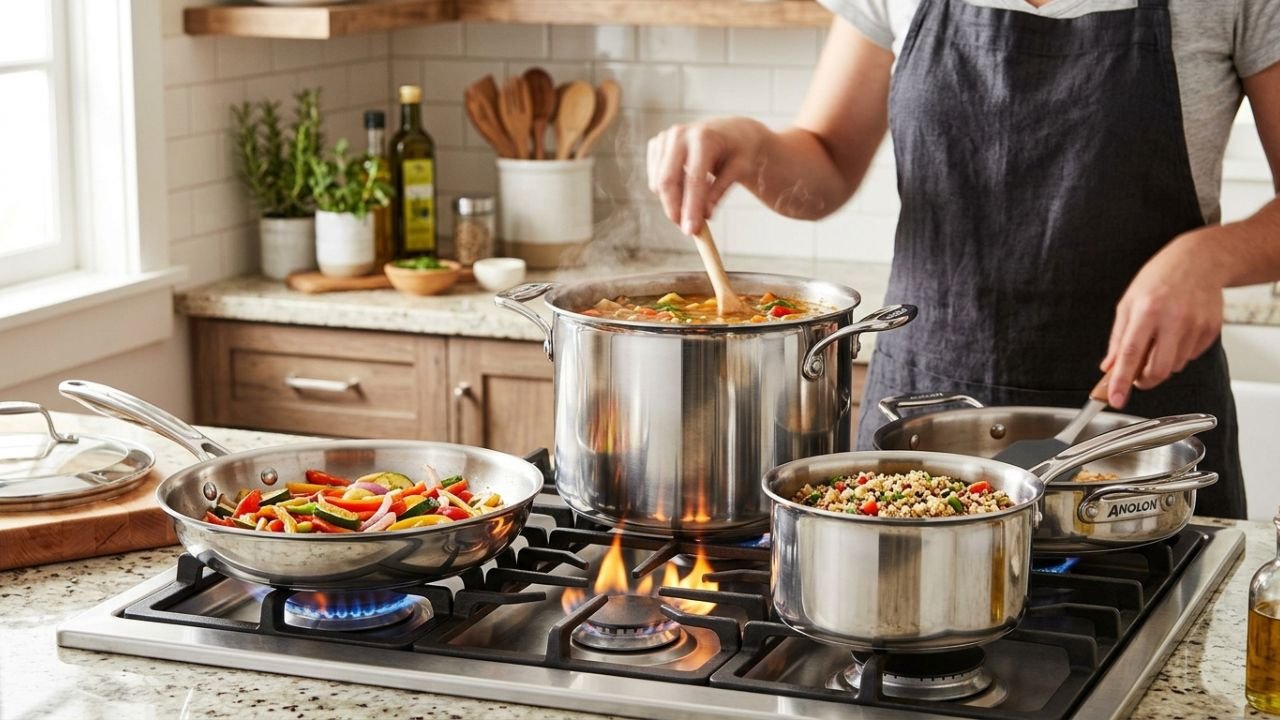
Sauté and stir-fry: Vegetables cooked evenly. Onions caramelized without burning in one corner. The disc base handles everyday sautéing just fine. Fully clad does even better for longer simmers.
Sauce and reduction: Tomato sauce and pan sauces reduced without scorching the bottom when I kept the heat moderate. Stir occasionally and you’re good.
Oven test: Skillet and sauté pan went into a 450°F oven for finishing. Handles got hot (as expected). Food cooked through evenly. No warping.
Cleaning test: Stuck-on bits came off with a soak and a scrub pad or Bar Keepers Friend. Dishwasher works, but hand-washing keeps them looking newer longer. No coating to protect, so you can scrub harder than with nonstick.
Daily use over weeks: Weeknight pasta, weekend roasting, batch cooking soup. The stockpot holds a solid amount. Lids fit well and trap steam. Handles feel secure. Nothing wobbled or felt cheap.
One funny moment: I tried to make crepes early on without enough practice. They stuck. I laughed, scraped them out, and made eggs instead. Lesson learned. Technique matters more with stainless than with nonstick.
How Does Anolon Stack Up Against Other Brands?
People always ask about All-Clad. Fair question.
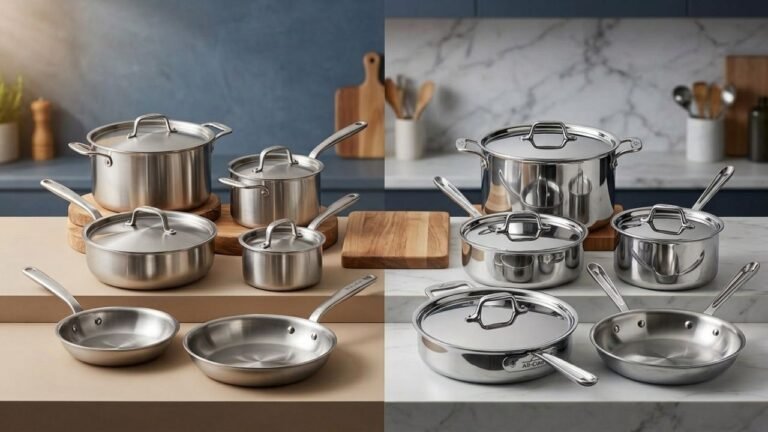
All-Clad fully clad stainless is the gold standard for many chefs. Heat distribution is excellent edge to edge. Build quality feels premium. It also costs a lot more. Anolon’s Tri-Ply gets you close for everyday cooking at a lower price. The Nouvelle disc-base versions heat the bottom very well but don’t match full cladding up the sides.
Cuisinart Multiclad Pro sits in a similar price range. Solid, but Anolon’s designs (especially the Nouvelle looks) often feel a bit more refined to me. Calphalon has good options too, but Anolon’s induction performance and warranty give it an edge for many buyers.
Bottom line: If money is no object and you want the absolute best heat control, go All-Clad. If you want 80-90% of the performance for a lot less cash, Anolon delivers.
Who Should Buy Anolon Stainless Steel Cookware?
You if:
- You’re tired of replacing nonstick every few years
- You cook on induction or want oven-safe versatility
- You like building real flavor with searing and pan sauces
- You want something that looks nice and lasts
- Your budget is mid-range, not luxury
Maybe skip if:
- You only cook eggs and hate any learning curve
- You want the absolute lightest pans possible
- You need every single piece oversized for big families (check the set contents carefully)
Care Tips That Actually Work
Treat them right and they’ll treat you right.
Preheat on medium. Add oil after the pan is hot. Let the oil shimmer. Then add food. Don’t crowd the pan. For stuck-on messes, soak with warm water and a little dish soap. Bar Keepers Friend or a paste of baking soda works wonders on stains and rainbow marks. Dry thoroughly. Store with care so they don’t bang into each other.
That’s it. No complicated rituals.
Final Thoughts – Are Anolon Stainless Sets Worth It?
After months of real cooking, I still reach for these pans most days. They heat well, sear properly, clean up without drama once you know the tricks, and don’t cost a fortune. The pros outweigh the cons for how I cook.
Is it perfect? No. Stainless never is if you’re used to nonstick convenience. But once you get the hang of it, the flavor payoff is real. And the fact that these should still be working years from now feels good.
If you’re ready to level up from basic nonstick or want a reliable everyday stainless set without the All-Clad price tag, Anolon is a smart pick. Grab a set, practice a couple sears, and see how it feels in your kitchen. You might end up like me—wondering why you waited so long.
Now go cook something good. And if your first attempt at eggs sticks a little, just laugh it off. We’ve all been there. 🙂
FAQs
Are Anolon stainless steel pans induction compatible?
Yes. Both the Nouvelle disc-base and Tri-Ply Clad lines work on induction cooktops.
Can I put Anolon stainless in the oven?
Most pieces are safe up to 500°F. Always check the specific set, but the stainless lids and handles handle high heat well.
Do Anolon stainless pans stick?
They can if you don’t preheat properly or use enough fat. With good technique, food releases much better. Keep a nonstick for eggs if needed.
Is Anolon dishwasher safe? Yes for the stainless lines.
Hand-washing helps them stay looking newer longer, though.
How does Anolon compare to All-Clad?
All-Clad usually edges it out on full heat distribution and premium feel. Anolon gives very good performance for less money.
What’s the warranty?
Limited lifetime against manufacturing defects. Normal wear and misuse aren’t covered, so treat them reasonably.
Which Anolon stainless set should I buy?
Look at the Tri-Ply Clad / EverLast if you want heat up the sides. Nouvelle if you like the copper accent and strong base heating. Check the piece sizes against how you actually cook.