
You’re standing in the kitchen aisle or scrolling online, looking at pans, and you just want a straight answer. Glass or aluminum? Which one actually belongs in your kitchen without driving you crazy?
I’ve been cooking almost every day for years. Breakfast, weeknights, the occasional weekend project that goes sideways. I’ve owned both kinds of pans, broken a couple, burned food in others, and slowly figured out what works. So let’s just talk about it like we’re hanging out in my kitchen.
Glass vs Aluminum Pan: Features Comparison Table
| Feature | Aluminum Pan | Glass Pan |
|---|---|---|
| Heat conductivity | Heats fast and spreads evenly | Slower to heat up |
| Durability | Dents but rarely breaks | Can crack or shatter |
| Weight | Light and easy to handle | Heavier |
| Non-stick feel | Excellent with coating | Decent, needs more oil sometimes |
| Cleaning | Usually quick and easy | Easy to see dirt, may need soaking |
| Oven performance | Good if oven-safe | Excellent, great for serving |
| Health side | Fine with quality pans | Completely non-reactive |
| Best everyday use | Stovetop frying and sautéing | Baking and casseroles |
| Price | Often more affordable | Similar for basic pieces |
| How long it lasts | Long with normal care | Long if you treat it carefully |
The Real Reason This Decision Bugs People
Your pan decides a lot. How fast dinner hits the table. How much scrubbing you do later. Whether the food cooks evenly or you end up with one side perfect and the other underdone.
I used to think pans were just pans. Then I ruined a nice piece of salmon because the heat wasn’t spreading right. Lesson learned the hard way.
Heat: Who Actually Gets the Job Done Faster?
Aluminum wins here, and it’s not close. Aluminum heats up quick and spreads the heat pretty evenly. You put it on the burner and things start happening. Food cooks the way you expect.
Glass is slower. It takes its time warming up. Sometimes you get weird hot spots. I tried searing chicken thighs in a glass pan once on medium-high. One side looked great. The other side looked like it was still thinking about it. Not ideal.
Here’s the simple truth: Aluminum is better when you’re cooking on the stove and want speed plus even heat. Glass holds heat longer once it’s hot, which is nice for oven stuff, but it doesn’t get there as fast.
Ever put a cold pan on a hot burner and just waited? Yeah. Aluminum cuts that wait time way down.
Can These Pans Survive Real Life?
Aluminum is tough. You drop it, it might get a dent, but it usually keeps working. I’ve knocked pans off the counter more times than I should admit. Most of them just shrugged it off.
Glass is more dramatic. Drop it wrong or go from blazing hot to cold water and it can crack. I did that once with a glass baking dish. Heard the crack and just stood there staring. Instant bad mood.
Tempered glass is stronger, sure. But aluminum still feels more forgiving when life gets messy in the kitchen.
Bold point: If your kitchen sees a lot of action and the occasional accident, aluminum tends to last longer without drama.
Weight: How Heavy Do You Want Your Tools?
Aluminum pans are light. You can flip food, move them around, and not feel like you’re lifting weights. My go-to skillet feels easy in my hand even when it’s full.
Glass pans feel solid. Sometimes that feels nice. Other times, after carrying a full dish of lasagna across the kitchen, your wrist starts complaining. I’ve noticed that more as the years go by.
If you cook a lot or have any joint issues, the lighter option starts looking better pretty fast.
Does Food Stick or Not?
Most aluminum pans these days come with a non-stick coating. Eggs slide off. Pancakes flip clean. Cleanup stays simple. I cook eggs almost every morning and I reach for the aluminum every time.
Glass is smooth and doesn’t hold onto food as bad as bare metal, but it’s not the same as a good non-stick surface. I usually need a bit more oil or butter when I cook in glass.
Some people don’t like coatings. Fair. They can wear down if you abuse them. But if you use silicone or wood tools and don’t crank the heat to crazy levels, a good non-stick aluminum pan lasts a long time.
IMO, for daily frying and scrambling, aluminum with a solid coating is just easier.
Cleaning Up After Yourself
Aluminum non-stick is usually a quick wipe or light wash. A lot of them can go in the dishwasher, though I hand-wash mine to be safe.
Glass shows every little bit of leftover food, which is both good and annoying. You see exactly what needs scrubbing. Sometimes baked-on stuff needs a soak. It’s not hard, just a little more work on certain nights.
I like the low-effort cleanup of aluminum when I’m tired. Glass is fine when I have more time or when I’m baking something that looks nice enough to serve in the same dish.
Health Stuff People Actually Worry About
Some folks get nervous about aluminum. The amount that can transfer into food is usually tiny, especially with coated or anodized pans. I still use aluminum for most things and don’t lose sleep over it.
Glass is completely non-reactive. Nothing leaches. If you cook a lot of tomato-heavy sauces or other acidic foods, that peace of mind can feel good.
Neither one is a problem for normal home cooking if you buy decent quality and replace stuff when it’s worn out.
Oven Use and Everyday Flexibility
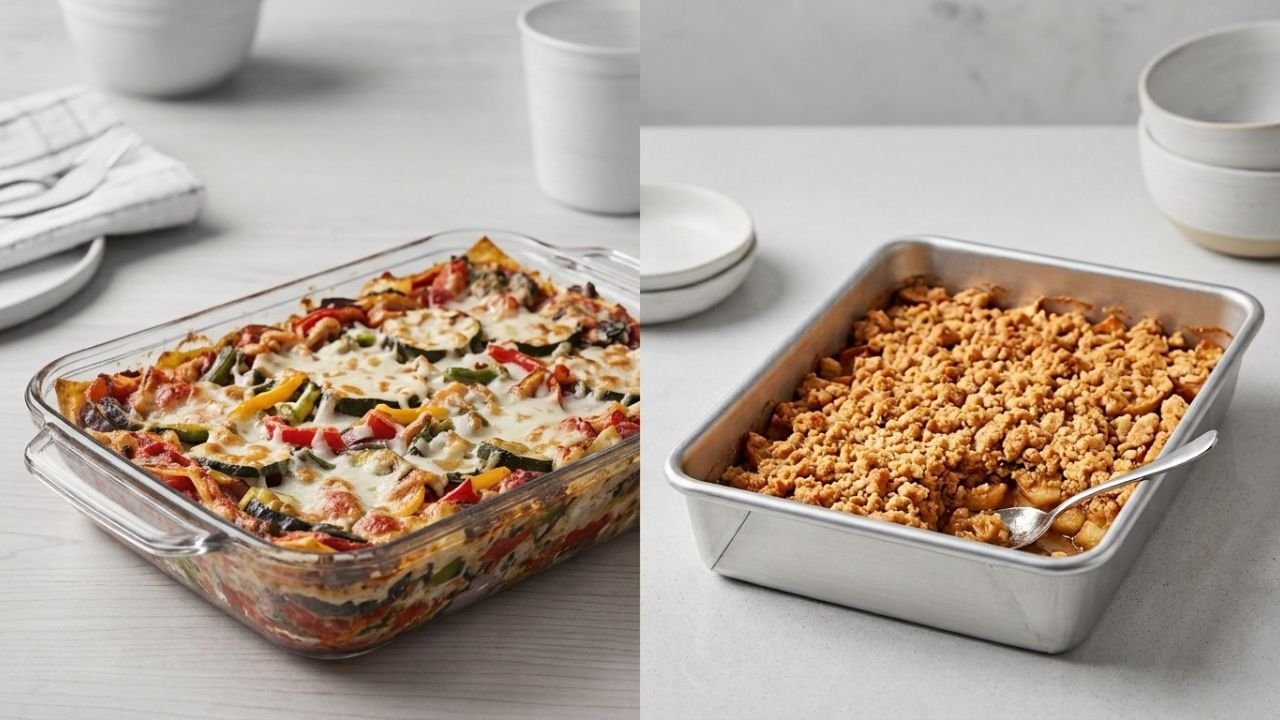
Glass loves the oven. You can bake in it, watch the food through the sides, and even carry it to the table. I use glass dishes for roasted vegetables, casseroles, and desserts all the time.
Aluminum works in the oven too if it’s marked oven-safe. Plenty of skillets handle regular baking temperatures just fine. But glass usually looks better when you want to serve straight from the dish.
For pure stovetop work, aluminum is the one I grab. For baking and serving, glass earns its spot.
Money Talk
Aluminum pans are often cheaper to buy. You can get a solid one without spending a fortune. They last if you treat them reasonably well.
Glass baking dishes sit in a similar price range for the basic ones. Fancy glass cookware can cost more. And when glass breaks, it’s gone. Aluminum can dent and keep going.
Over time, aluminum usually gives better value for the pans you use every single day.
What I Actually Reach For in Real Life
Weeknight chicken and vegetables? Aluminum skillet. Fast heat, easy to move, quick clean.
Weekend lasagna or a big tray of roasted potatoes? Glass. Holds the heat, looks good on the table, no weird tastes.
Morning eggs? Non-stick aluminum, every time. Nothing sticks and I don’t have to think about it.
I tried forcing one material to do everything. It never felt as good as just matching the pan to the job.
A Few Myths That Need to Die
People say glass is always the healthier choice. Not really. Good aluminum is fine for most of us.
People say aluminum always warps. Cheap thin stuff does. Thicker or anodized pans stay flat much better.
People say nothing sticks to glass. It can, especially if you don’t use enough fat or preheat properly.
I believed some of these until I actually cooked with both for a while.
How to Decide for Your Own Kitchen
Think about what you cook most.
Mostly stovetop stuff? Aluminum.
Lots of baking and serving from the same dish? Glass.
Hate heavy pans? Aluminum.
Worried about coatings or metal? Glass gives extra calm.
Most people do best with both. One good aluminum skillet for daily cooking and one solid glass baking dish for oven work covers almost everything.
Simple Care Tips That Actually Help
Aluminum:
- Keep the heat medium most of the time
- Skip metal utensils on non-stick surfaces
- Hand wash when you can
- Dry it after washing
Glass:
- Don’t shock it with sudden temperature changes
- Warm it up gradually
- Use wood or silicone tools
- Treat it a little more carefully
Do those things and both last longer than you’d expect.
My Honest Take After Using Both for Years
Aluminum is the better everyday pan for me. It heats faster, feels lighter, cleans easier, and handles the chaos of real cooking better. Glass is great for baking and when I want something that looks nice on the table.
If I could only keep one type? Aluminum. I’d miss the glass dishes, but I cook on the stove way more than I bake.
Your kitchen might be different. Pay attention to what you actually cook and how you like to cook it. That matters more than any general ranking.
Last Bit of Advice
Don’t overthink this forever. Buy one decent aluminum skillet and one good glass baking dish. Use them for a few weeks. You’ll feel which one you grab more often.
Cooking is supposed to be enjoyable, not a fight with your tools. The right pan just makes things smoother. That’s really the whole point.
Now go make something good. And if the pan acts up, at least you’ll know why.
FAQs People Actually Ask
Can I put glass pans on the stove?
Some tempered ones are made for it, but a lot aren’t. Always check the label. Even when they are rated for it, aluminum usually works better for direct heat.
Does aluminum get into my food?
Very small amounts can, mostly with acidic foods and uncoated pans. Coated or anodized aluminum cuts that way down. Most home cooks don’t need to worry.
Which one is better if I hate sticky food?
Aluminum with a good non-stick coating usually wins. Glass is smooth but still needs more oil or butter a lot of the time.
Can glass go straight from freezer to oven?
Some claim they can, but sudden changes raise the risk of cracking. I prefer letting things warm up a bit first. Safer that way.
How do I know my aluminum pan is okay?
Look for anodized aluminum or pans with a coating that’s still in good shape. Avoid anything heavily scratched. Thickness and brand quality matter more than people think.
Is one better for the environment?
Both have pluses. Aluminum is light and recyclable. Glass is inert and also recyclable. Buying fewer good pieces and using them longer helps more than picking one material over the other.
Should I toss my old pans?
Only if the non-stick is badly worn or the glass is cracked. Otherwise keep using what still works. No need to replace stuff just because it’s not new.
That’s the real version. No fluff. Just what I’ve learned from actual cooking and a few broken pans along the way. Pick what fits how you cook, and you’ll be happier every time you turn on the stove.