
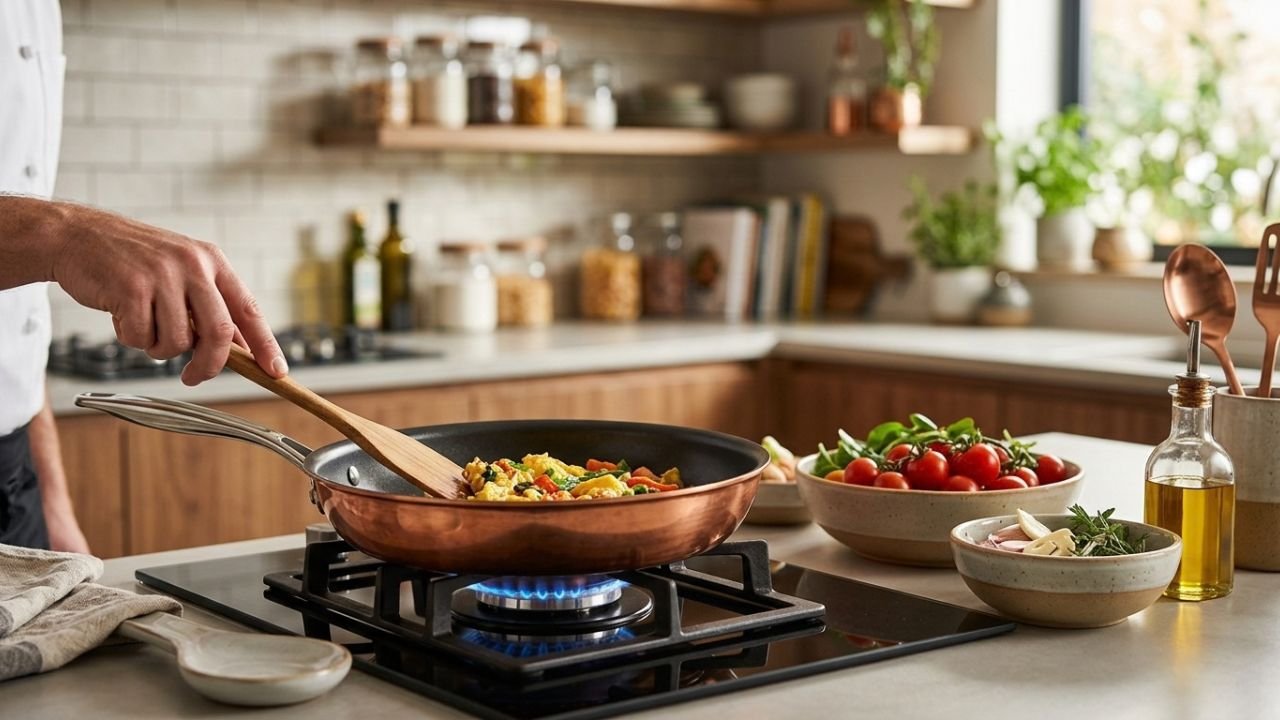
Okay so you just bought one of those shiny copper non-stick pans (or you’re thinking about it) and now you’re sitting there wondering if it’s gonna slowly poison you. Yeah. I’ve been there.
I grabbed one a couple years ago because it looked cool on the stove and the non-stick claim made weeknight eggs stupidly easy. Then the internet got in my head. Copper leaching. Forever chemicals. Some bird dying from fumes story. Suddenly every scrambled egg felt suspicious.
Let’s just talk this through straight. No hype. No scare articles. Just what I’ve figured out from using the things and reading the actual expert stuff.
First, What These Pans Actually Are
Most copper non-stick pans aren’t pure copper on the inside. The copper is usually the outside layer for looks and heat spreading. Inside you get either a regular non-stick coating (the PTFE kind) or a ceramic-style coating that a lot of brands push as the “safer” option.
Some brands mix copper particles into the ceramic coating. Others just paint the outside copper-colored. Either way, the pan heats pretty evenly, which is nice. Food doesn’t stick when the coating is new. Cleanup is easy. That’s why people buy them.
But the safety questions always circle around two things: the copper and the coating.
Does the Copper Get Into Your Food?
Copper conducts heat like a champ. Real chefs use pure copper pans for a reason. Your body also needs a little copper. It’s a mineral. Too much at once, though, and you can feel sick—nausea, stomach issues, the works.
Bare copper reacts with acidic stuff. Tomato sauce, lemon, vinegar, wine. The acid pulls copper into the food. Health Canada and the FDA both say don’t cook or store food in unlined copper. That’s solid advice.
Here’s the thing most people miss: almost every copper non-stick pan you buy today has a lining or coating so food never touches the copper. Stainless lining or the non-stick layer itself. As long as that barrier holds up, copper leaching stays really low.
I had an old unlined copper pot once that a relative gave me. Pretty to look at. I never cook in it. Just sits on a shelf. Not worth the risk with tomato sauce.
If the coating starts scratching or wearing thin and you see reddish metal showing, retire the pan. Simple.
The Coating Side—Where People Get Nervous
This is the bigger worry for most folks. Traditional non-stick uses PTFE (the Teflon family). PTFE belongs to the PFAS group, the “forever chemicals.” Older versions used PFOA in manufacturing, and that stuff had real health links. Companies in the US stopped using PFOA around 2013-2014.
Newer pans are PFOA-free. The FDA says the PTFE coating binds so tightly that only tiny amounts can move into food under normal cooking. German risk experts basically agree—when you use these pans the way you’re supposed to, health problems aren’t expected.
The real danger is overheating. Leave an empty non-stick pan on high heat and the coating can break down around 500°F. Fumes come off. People can get something called polymer fume fever—feels like the flu for a day or two. Birds are way more sensitive and can die from it. Not super common if you cook normal, but it happens when someone forgets a pan on the burner.
A lot of the copper non-stick pans push ceramic coatings instead. These are usually silica-based and marketed as free of PTFE and PFOA. Consumer Reports tested a couple popular ones (including a Red Copper style) and didn’t find the PFAS compounds they looked for. That’s why a lot of people switch to them.
Ceramic coatings do wear out faster though. They lose the slick feel sooner. You’ll probably replace them every couple years with regular use. Still, a lot of us sleep better knowing there’s no PTFE in the mix.
What the Experts Actually Say When You Cut Through the Noise
I looked this up so you don’t have to keep Googling at 11 pm.
The FDA allows certain PFAS in cookware and says migration stays negligible with normal use. They’re not ringing alarm bells for home cooks.
Health Canada points out small copper amounts are fine (and needed) but tells you to skip scratched or uncoated copper. They also warn about non-stick fumes if you overheat.
German experts (BfR) say no expected health issues from PTFE coatings used as intended. Just don’t overheat empty pans.
Consumer Reports and similar tests show ceramic PTFE-free options often come back clean. Traditional non-stick can still have other PFAS even when labeled PFOA-free.
One researcher put it pretty plain: “nontoxic” is mostly a marketing word. Nothing is zero risk. You just manage it.
Stuff I’ve Actually Noticed in My Own Kitchen
I used a copper non-stick skillet almost every day for eggs and quick stir-fries for about two years. Medium heat, silicone spatula, mostly hand washed. Worked great until the coating started looking rough and food stuck more. Tiny scratches showed up. I stopped using it.
Switched to a ceramic-coated copper-looking pan and felt better about it mentally. Still easy cleanup. Heat still spread nicely. After a year it needed a little more oil, but no big deal.
I’ve also done the same meals in stainless steel and cast iron. More effort, more oil sometimes, but zero coating questions. For rushed mornings when I just want eggs that don’t stick, I still grab the non-stick. IMO that’s the honest trade-off.
You ever burn something and immediately start wondering if the pan just released something bad? Yeah. Same.
How to Keep the Risk Low
Here’s what actually works if you want to keep using these pans:
- Stay on medium or medium-low heat. High heat is where problems start.
- Never heat an empty pan on high. Put oil or food in first.
- Stick with wooden, silicone, or nylon tools. Metal scratches the surface.
- Hand wash with a soft sponge. Skip the dishwasher and anything abrasive.
- Replace the pan when the coating flakes, peels, or food starts sticking bad.
- Be extra careful with long acidic cooks if the surface looks worn.
- Open a window or turn on the fan if you ever push the heat higher than usual.
Do those things and you’re basically following what the experts recommend. If you have pet birds, be even more careful with any PTFE pans. Keep them out of the kitchen during high-heat cooking.
How Copper Non-Stick Stacks Up Against Other Pans
Copper non-stick (especially the ceramic ones)
Good heat control and easy release when new. Often no PTFE. Coating wears faster and they can cost more for the quality.
Regular PTFE non-stick
Stays slick longer and cheap options are everywhere. Some people don’t like the PFAS side and you have to watch the heat closely.
Stainless steel
Tough, no coatings, lasts forever if you take care of it. Food sticks more and you need better technique plus oil.
Cast iron
Holds heat great and gets naturally non-stick when seasoned. Heavy and needs some maintenance. Not the best for long acidic cooks.
Carbon steel
Lighter than cast iron and seasons well. Also needs care with the seasoning.
I keep a mix in my kitchen. Non-stick for eggs and fish. Stainless for sauces. Cast iron when I want a hard sear. No single pan wins every category.
Myths That Keep Circulating
“All copper pans leach dangerous metal.”
Not the lined modern ones under normal use.
“Non-stick pans give you cancer.”
No good evidence connects proper home use of newer pans to cancer. The old PFOA manufacturing issues were a different story.
“Ceramic coatings last forever and stay perfect.”
They wear. Plan on replacing them.
“If the box says non-toxic or PFOA-free you’re completely safe.”
Labels can be flexible. Look for PTFE-free if that matters to you, and still follow the heat and care rules.
Who Might Want to Skip These Pans
If you cook on high heat a lot, have birds in the house, just hate coatings, or don’t want to replace pans every few years, go with stainless, cast iron, or carbon steel. Some people with specific health concerns choose uncoated options for extra calm. I’m not a doctor—talk to yours if you’re really worried.
Where I Land After Using Them and Reading the Stuff
Are copper non-stick pans safe? Yeah, if you buy ones with solid linings or ceramic coatings and treat them right. Keep the heat reasonable, skip metal utensils, and ditch them when the surface goes bad. The experts from the big agencies basically say the same for normal home cooking.
I still use mine for easy eggs. I just don’t pretend they’re indestructible. They’re convenient, not forever tools.
You don’t need to toss yours tomorrow. Check the surface, cook a little smarter, and pick the level of caution that feels okay for your kitchen. What’s the one cookware thing that still bugs you? I’m curious.
Copper Non Stick Pans vs Other Cookware
| Feature | Copper Non-Stick (Ceramic) | Traditional PTFE Non-Stick | Stainless Steel | Cast Iron |
|---|---|---|---|---|
| Heat spreading | Excellent | Good | Good | Very good |
| Non-stick feel | Great when new | Stays good longer | Needs oil and skill | Great once seasoned |
| PFAS issues | Usually none | Has PTFE | None | None |
| How long it lasts | Moderate (coating wears) | Moderate to good | Excellent | Excellent |
| Best uses | Eggs, fish, quick meals | Everyday non-stick jobs | Sauces, high heat | Searing, oven work |
| Care needed | Gentle, replace often | Gentle | Easy | Seasoning |
| Acidic food | Fine if coating is good | Fine | Fine | Limited |
That’s everything I’ve got from cooking with these pans, checking the expert sources, and living with the usual kitchen questions. Cook the way that feels right for you.
FAQs
Are copper non-stick pans toxic?
Not with normal use. The lining or coating keeps copper and chemicals from moving into food in any meaningful amount at regular cooking temperatures.
Can they cause copper poisoning?
Only if the protective layer fails and you cook a lot of acidic food in them. Intact modern pans keep that risk very low.
Is the ceramic coating safer than regular non-stick?
A lot of people prefer it because it usually has no PTFE or PFAS. It just doesn’t last as long.
What temperature is safe?
Stay under about 450-500°F. Medium heat covers most everyday cooking.
Should I throw out old non-stick pans?
If they’re from before 2014 or the coating is damaged, yes. Newer ones in good shape are fine if you use them carefully.
Do they leach heavy metals?
Very little under normal conditions with an intact surface. Acidic long cooks raise the chance if the coating is worn.