
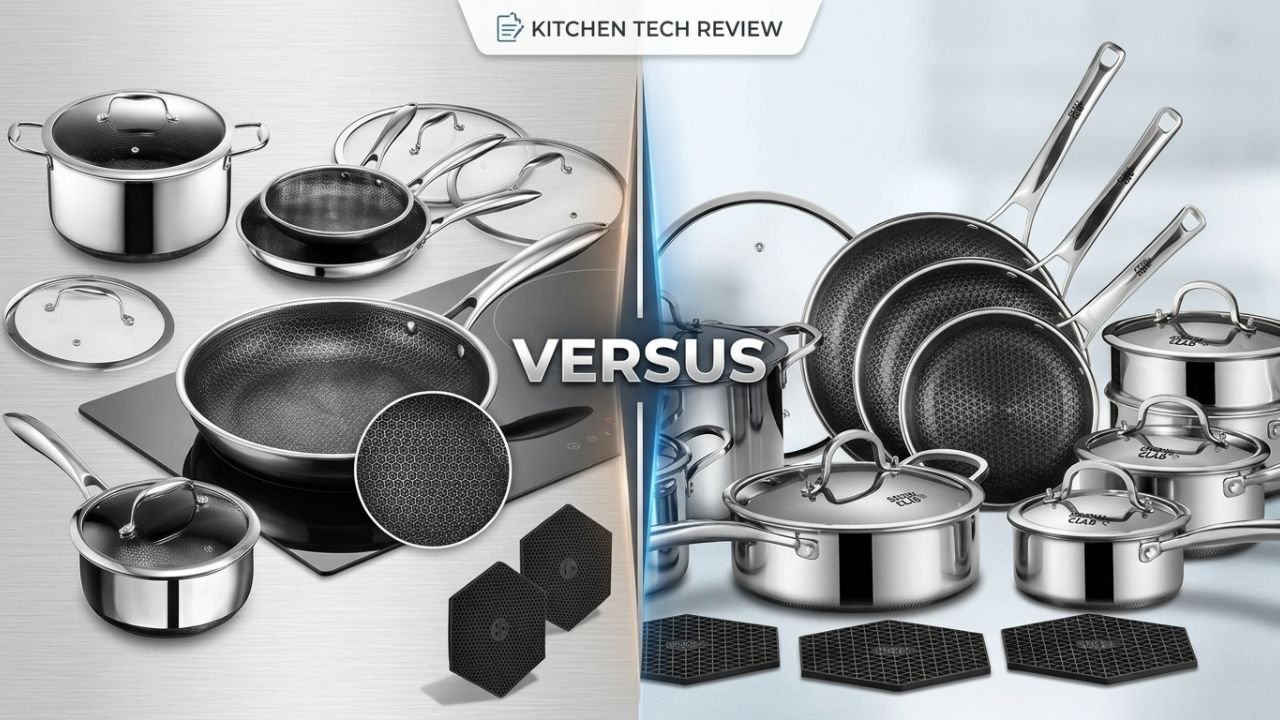
Alright, real talk. You’re standing in your kitchen looking at another nonstick pan that just started flaking after eight months. Or maybe your stainless one sticks everything no matter how much oil you throw at it. You’ve seen the ads. HexClad this, SnowClad that. Hybrid pans that supposedly sear like steel and release like nonstick. Sounds too good, right?
I bought both. Used them hard. Burned a few things. Cleaned them at 11 pm after work. Here’s what actually happened.
Discounted Deals for HexClad & SnowClad (Up-to 25% OFF)
SNOWCLAD Hybrid 25 Pieces Set 25% OFF (Limited Time Offer)
HexClad Hybrid Nonstick 14-Piece Cookware Set 20% OFF (Limited Time Offer)
HexClad vs SnowClad Comparison Table
| Feature | HexClad | SnowClad | Who Wins |
|---|---|---|---|
| Price (about 12″) | $150–$180 | $50–$80 | SnowClad |
| Pattern | Hexagons | Snowflake | Your call |
| Searing | Excellent | Very good | HexClad |
| Nonstick release | Good with oil | Good with oil | Close, slight early edge to SnowClad |
| Long-term toughness | Better | Good for the price | HexClad |
| Weight | Heavier | Lighter | SnowClad |
| Warranty | Lifetime | Limited | HexClad |
| Oven safe | Around 500–900°F | Around 500°F | HexClad |
| Best for | Daily serious cooking | Everyday value cooking | Depends on you |
First, What the Heck Is a Hybrid Pan Anyway?
These pans try to fix the old problem. Stainless sears great but food sticks. Regular nonstick is easy but you can’t crank the heat or use a metal spatula without ruining it. Hybrid pans laser-etch raised stainless steel bits with nonstick stuff in the low spots. Steel does the browning. Coating helps the food let go.
HexClad made the hexagon pattern famous. Gordon Ramsay pushes it. SnowClad does basically the same thing with a snowflake look and costs way less. Both are tri-ply. Aluminum in the middle for heat, stainless outside. Work on induction. Metal utensils are okay. Oven safe around 500 degrees.
That’s the sales pitch. Now for the real kitchen version.
HexClad – The Fancy One Everyone Talks About
You pick up a HexClad and it feels expensive. Solid weight. Nice handle. That hex pattern looks cool under the lights.
Here’s what stood out when I cooked with it:
- Those raised steel peaks actually protect the coating pretty well. I scraped with metal tongs more than once and it held up.
- Searing is legit. Steak gets a real crust.
- Dishwasher safe on paper, but I still hand wash most days.
- Lifetime warranty if something’s wrong from the factory.
- Works on every stove I’ve tried, including induction.
- Newer ones use their TerraBond ceramic-type coating. They say no PTFE.
Last month I did a thick ribeye. Medium heat, little oil, and boom – nice brown crust. Eggs needed some fat still. Not pure magic nonstick. But once the pan was hot they came off clean. Cleanup was quick with a soft sponge.
The catch? Money. One 12-inch pan runs $150 to $180 easy. Sets get crazy. You’re paying for the name and the marketing and that Ramsay connection.
Is it worth it? If you cook a lot and hate replacing pans every year or two, yeah, the durability helps. If not, keep reading.
SnowClad – The Amazon One That Surprised Me
SnowClad popped up everywhere. Same hybrid idea. Snowflake pattern instead of hexes. They claim more stainless surface than the usual hex ones.
What I liked right away:
- Price is way lower. You can get a solid pan or small set for half what HexClad costs, sometimes less.
- Feels sturdy enough. Not flimsy.
- Nonstick works decent with a bit of oil or butter.
- Metal spatula is fine for normal cooking.
- Oven to 500 and induction ready.
- Lighter than HexClad, so flipping food doesn’t kill your wrist.
I ran a 12-inch SnowClad for a few weeks straight. Eggs slid with a small pat of butter. Chicken thighs browned okay. Even sticky rice came out without a fight. Heat felt even on my induction burner. No warping. Cleaned easy.
The snowflake pattern looks different but does the same job. Steel takes the hits, coating helps release.
Downsides? Long-term toughness seems more of a question mark. Some people say the coating wears faster if you go hard with metal tools or high heat every day. Warranty isn’t lifetime. Base feels a little thinner sometimes.
Still – for the money this thing punches above its weight.
Side by Side, No Marketing Speak
Searing
HexClad wins here. Thicker feel and the hex pattern hold heat better. Deeper crust on steaks and chops. SnowClad sears fine for home stuff but doesn’t hit that same level.
How nonstick it feels
Both need a little fat. Neither is like a brand new cheap nonstick for zero-oil eggs. SnowClad felt a bit slicker at the start for delicate food. HexClad stayed more consistent the longer I used it.
Durability and metal tools
HexClad holds up better day after day. Peaks do their job. SnowClad is okay for regular use but shows wear sooner if you scrape hard.
Weight
SnowClad is easier to move around. HexClad has more heft. Some people like that stability. Others get tired of it.
Cleaning
Both beat bare stainless by a mile. SnowClad usually needs less scrubbing after normal meals. HexClad can take a bit more work after a hard sear because fond sticks to the steel spots.
Price
This is the real difference. SnowClad gets you most of the hybrid thing for a lot less cash. HexClad costs more but feels more solid long-term.
Oven and stoves
Pretty even. Both do induction, gas, electric, and oven around 500. Check the lids – glass ones usually can’t go as hot.
Who Should Actually Buy HexClad?
Get HexClad if you:
- Cook most days and want something that lasts.
- Care a lot about searing steaks and chops.
- Like the lifetime warranty and premium feel.
- Don’t mind spending more for better long-term results.
- Already have basic pans and want an upgrade that feels nicer.
It’s a real investment. You’re buying peace of mind and that solid kitchen vibe.
Who Should Buy SnowClad Instead?
SnowClad makes more sense if you:
- Want the hybrid benefits without dropping serious money.
- Keep replacing cheap nonstick that dies fast.
- Mostly cook eggs, chicken, fish, veggies.
- Like trying new gear without a big risk.
- Care more about value than the brand name.
Most regular home cooks will be happier here first. You get close to the HexClad experience for way less. Hard to argue with that. 🙂
Stuff People Mess Up With These Pans
They’re not pure nonstick or pure stainless. Treat them wrong and you’ll get mad.
- Not preheating. Give it a minute or two on medium.
- Using zero fat. A light oil or butter helps a lot.
- Going full high heat right away. Medium is usually better.
- Expecting zero sticking forever. Coatings wear. Normal.
- Putting them in the dishwasher every single time. Hand washing keeps them going longer.
Do the basics and both brands work fine.
Is Either One Actually Worth the Money?
Hybrid pans fix a real annoyance. If your current nonstick flakes and your stainless sticks everything, one of these can handle a lot of meals.
HexClad is worth it if you’re serious about cooking and want the stronger, longer-lasting option. SnowClad wins on pure value for almost everyone else. You can get a whole SnowClad set for the price of one or two HexClad pans and still have cash left for better meat or whatever.
I own both and don’t regret it. HexClad feels like the grown-up pick. SnowClad feels like the smart everyday pick.
Stories From My Actual Kitchen
Saturday breakfast for friends. Scrambled eggs, bacon, toast. SnowClad released the eggs clean with almost no oil. Someone asked what pan it was. I told them the price and they looked shocked.
Next week, thick pork chops. HexClad gave a better crust and held the heat when I made a quick sauce. SnowClad version still tasted good, just not as pretty.
I keep both. HexClad comes out when I want that sear or I’m cooking something special. SnowClad is the weeknight workhorse for eggs, fish, veggies. Both work. Neither is perfect.
You know that feeling when a pan just clicks after a few uses? Happened with both. Short learning curve. Preheat. Use a little oil. Don’t blast an empty pan on high. That’s it.
Wrapping This Up
If money isn’t the main issue and you want the toughest hybrid with strong searing, go HexClad. You’ll notice the difference when you cook.
If you want solid performance without the big price hit, SnowClad is the smarter buy for most people. You’ll get most of what makes hybrids useful and keep more money in your pocket.
Buy one good pan from either first. Use it for a couple weeks. See how it fits the way you actually cook. Specs and ads only go so far. Real time at the stove tells the truth.
What’s driving you crazy in the kitchen right now? Eggs that stick? Weak sears? Pans that die too fast? One of these hybrids might finally fix it. Just match it to your budget and how hard you cook.
Now go make something good. Your next meal will be better for it.
FAQs
Are HexClad and SnowClad basically the same?
Nah. Same general idea – stainless peaks plus nonstick valleys – but different patterns, build quality, price, and how long they tend to last. HexClad is the premium one. SnowClad is the budget version that still works well.
Can I use metal utensils on both?
Yes. That’s part of the point. The raised steel protects the coating. Still, don’t go crazy scraping every time if you want them to last longer.
Do I need to season them like cast iron?
Not really. A light oil wipe the first time helps. After that just cook with a little fat when you need it.
Which one is better on induction?
Both work. HexClad feels a bit more responsive sometimes, but SnowClad does the job fine too.
How long will they last?
HexClad usually goes longer with heavy use because of the thicker build and better warranty. SnowClad can give you solid years if you don’t abuse it. Neither stays perfect nonstick forever.
Should I buy a full set or just one pan first?
Start with a 10- or 12-inch skillet. Live with it a few weeks. Then decide if you want more. No point dropping cash on a big set until you know you like how it cooks.