
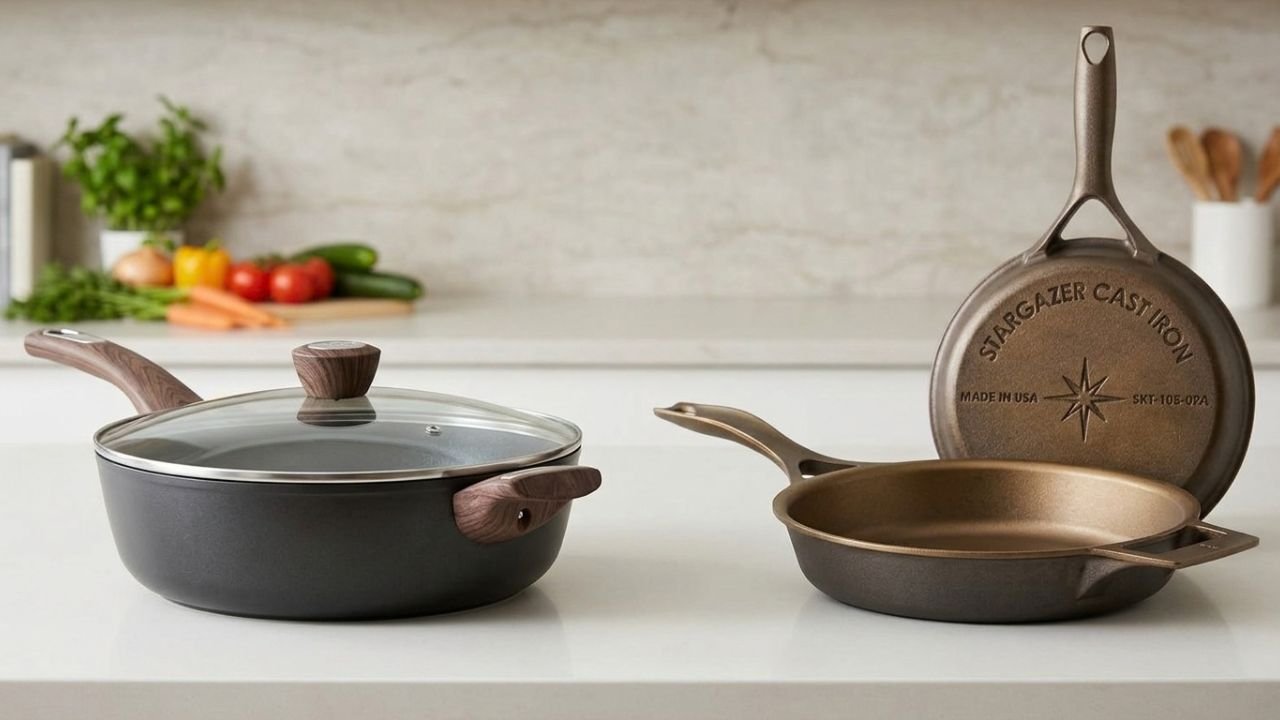
You’re standing in the kitchen store or scrolling Amazon at 11 p.m. trying to figure out which pan isn’t going to disappoint you in six months. Nonstick looks easy. Cast iron looks like something your grandpa used. Both claim to be the answer. I’ve owned plenty of both and burned more food than I care to admit, so here’s what actually happens when you live with them.
I’ve gone through cheap nonstick pans that started peeling after the first year. I’ve also got a cast iron skillet that’s been with me longer than some of my friendships. So yeah, I’ve got opinions.
Discounted Deals for Nonstick & Cast Iron
Cast Iron Cookware: 20% OFF (Limited Time Offer)
Nonstick Cookware: 33% OFF (Limited Time Offer)
Nonstick vs Cast Iron (Quick Comparison Table)
| Category | Nonstick | Cast Iron | Edge |
|---|---|---|---|
| How long it lasts | 2–5 years for most | Decades if you don’t wreck it | Cast iron |
| Price to buy | Often cheaper at first | Similar for basic ones | About even |
| Price over time | Adds up with replacements | Usually cheaper long-term | Cast iron |
| High heat searing | Not great | Excellent | Cast iron |
| Eggs and delicate food | Best when new | Good once seasoned well | Nonstick |
| Cleaning | Super easy | A bit more work | Nonstick |
| Weight | Light | Heavy | Nonstick |
| Oven use | Limited | No problem | Cast iron |
| Metal utensils | Bad idea | Fine | Cast iron |
| Learning curve | Almost none | Some | Nonstick |
The Durability Reality Check
Let’s get the big one out of the way first. Which one lasts longer?
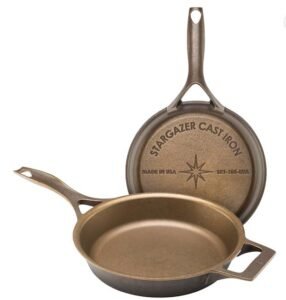
Cast iron, hands down. A decent cast iron pan can outlive you if you don’t completely abuse it. My main skillet is a Lodge I bought over a decade ago for maybe twenty-five bucks. Still going strong. The surface just keeps getting better the more I use it. You can scrape it with a metal spatula, stick it in a screaming hot oven, even use it on a campfire. The iron doesn’t care.
Nonstick? Different story. The coating is the weak link. Heat it too high, scratch it with the wrong utensil, stack another pan on top of it, or run it through the dishwasher a few times and that slick surface starts to go. Once it chips or gets those dark, sticky spots, you’re done. Most of the ones I’ve owned lasted somewhere between two and five years of regular use. Some cheaper ones barely made it past year one.
I used to replace nonstick pans the way some people replace phone cases. It got old. With cast iron you just keep going. Sure, it can rust if you leave it wet in the sink overnight like an idiot (I’ve done that). But you scrub the rust off, re-season it, and it’s back in business. Try fixing a peeled nonstick coating. You can’t.
Ever notice how people still buy old cast iron at yard sales? Those pans from the 1940s still work. You don’t see many people hunting for vintage nonstick.
How They Actually Cook
This is where it gets personal.
Cast iron holds heat like nothing else. You get it hot and it stays hot. Drop a cold steak on there and the temperature doesn’t tank. You get that deep brown crust that makes people think you know what you’re doing. Same with chicken thighs, pork chops, even roasted vegetables. It also goes straight from the stove into the oven, which is huge for finishing things or making cornbread.
The natural nonstick surface builds up over time if you take care of it. Mine releases eggs pretty cleanly these days. Not quite as effortless as a brand-new nonstick pan, but close enough that I don’t mind.
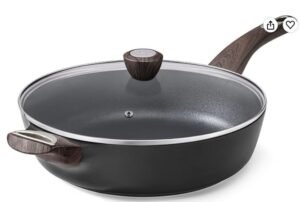
Nonstick is the king of low-effort cooking when it’s new. Eggs slide right out. Fish doesn’t stick. Pancakes flip without drama. You can use almost no oil and still get clean results. Cleanup is stupid easy. Wipe it, done.
But nonstick has limits. Most of them don’t like high heat. Manufacturers usually warn you not to go much past 450 or 500 degrees. Push it and the coating can break down. Cast iron doesn’t care. I’ve had mine well over 500 in the oven with zero issues.
I remember trying to get a good sear on scallops in a nonstick pan once. They came out fine, but pale. Switched to the cast iron and suddenly they had that deep golden crust. Night and day difference.
Here’s the honest split:
- Want serious browning and high heat? Cast iron.
- Mostly cooking eggs, fish, or anything delicate? Fresh nonstick wins.
- Need to go from stove to oven? Cast iron.
- Want the food to basically clean itself out of the pan? Nonstick, at least while the coating is good.
One annoying thing about cast iron: it takes forever to heat up compared to a thin nonstick pan. On busy mornings that extra couple minutes can feel like an eternity. Nonstick is ready faster. That matters more than people admit.
The Cost Thing Nobody Talks About Enough
Up front, nonstick often looks cheaper. You can grab a decent one for twenty or thirty bucks. A basic Lodge cast iron is usually in the same ballpark, sometimes a little more.
But look at the long game. If you’re replacing a nonstick pan every three years and a cast iron pan lasts twenty or thirty years, the math changes. I’ve spent more money on replacement nonstick pans over the years than I ever spent on that one cast iron skillet.
There’s also the little stuff. Nonstick kind of forces you into soft utensils and careful storage if you want it to last. Cast iron wants some oil now and then and maybe a chainmail scrubber if you’re serious about cleaning. Those costs are small.
I used to think the heavy cast iron was a pain because it uses more energy to heat up. In real life the difference is tiny for home cooking. Once it’s hot you can usually turn the burner down and it holds the heat.
If you’re broke right now and just need something that works tomorrow, get a solid nonstick. If you can swing it and want something that stops the replacement cycle, go cast iron.
Taking Care of Them Day to Day
This is where a lot of people decide they hate cast iron.
Nonstick is simple. Soft sponge, no metal tools, don’t go crazy with the heat, don’t stack them unprotected. That’s pretty much the whole list. Some people put them in the dishwasher anyway and then wonder why the coating dies early.
Cast iron needs a little more from you, especially at first. You season it. You don’t soak it. You dry it right away. Sometimes you wipe a little oil on it after cleaning. Once the seasoning is built up it gets easier. A lot of nights I just wipe mine out with a paper towel if I cooked something fatty.
I used to think seasoning was this big complicated ritual. It’s not. Thin layer of oil, hot oven, done. Do it a few times when the pan is new and then just cook with it. The more you use it, the better it gets.
Rust happens if you’re careless. It’s fixable. A scratched-up nonstick pan is just done.
The weight is real though. Cast iron is heavy. If you’ve got wrist issues or you move a lot, that matters. Nonstick feels light and easy. I get why people prefer it for that reason alone.
The Health Stuff People Argue About
Some folks still worry about nonstick coatings, especially the older PTFE ones and high heat. Modern ones are better, but a lot of people still prefer not to push the temperature. Cast iron can put a little iron into your food, particularly with acidic stuff like tomato sauce. For most of us that’s fine or even helpful. If your doctor has you watching iron intake, that’s different.
I’ve stopped stressing about either one. Use them the way they’re meant to be used and you’re fine. Common sense beats panic every time.
When I Actually Reach for Nonstick
I still keep one good nonstick pan. Eggs. Delicate fish. Anything where I want zero stick and minimal oil. It’s perfect for those jobs. I don’t expect it to last forever and I don’t treat it like it will. When the coating starts going, I replace it without drama.
If you live in a small place, hate heavy cookware, or mostly cook soft foods, nonstick makes a lot of sense. No shame in that.
When Cast Iron Just Wins
Steaks. Chops. Anything that needs a hard sear. Baking in the pan. Situations where you want the pan to improve with age instead of slowly dying. Cast iron is built for that.
My main pan is the cast iron. I use it more than anything else. The weight doesn’t bother me anymore. The results keep me reaching for it.
My Actual Opinion After All This Time
I used to think cast iron was for people who enjoyed making cooking harder than it needed to be. Then I learned how to use it and stopped being scared of it. Now I think nonstick is great for specific jobs but gets oversold as the everyday solution.
If I could only keep one pan in the kitchen, it would be the cast iron. It lasts longer. It handles more cooking situations well once you know it. Over time it costs less. The learning curve exists but it’s shorter than people make it sound.
That said, I still own nonstick. Matching the tool to the job is smarter than forcing one pan to do everything. FYI, there’s no perfect pan for every single meal. 🙂
Common Questions People Ask Me
Can I put cast iron in the dishwasher?
Please don’t. It strips the seasoning and leads to rust. Just wash it by hand and dry it.
What if my nonstick starts peeling?
Stop using it. Time for a new one. Don’t keep cooking on a damaged coating.
How do I season cast iron without making a mess?
Wash and dry it completely. Rub on a very thin layer of oil (canola or grapeseed work fine). Bake it upside down at around 450–500°F for an hour. Let it cool. Repeat a couple times if you want a stronger start.
Does food taste metallic from cast iron?
Not if the seasoning is decent. Acidic foods can pull a little iron, but most people never notice any weird taste.
Will nonstick work on induction?
Only if it has a magnetic base. A lot of newer ones do. Cast iron works great on induction.
Best oil for seasoning?
Something with a high smoke point. Grapeseed, canola, vegetable oil. Save the fancy olive oil for finishing food, not seasoning the pan.
Should I buy pre-seasoned cast iron?
Yeah, most people should. It gives you a usable surface right away. You can keep improving it as you cook.
Wrapping This Up
Nonstick makes life easy in the moment. Cast iron rewards you over years. If longevity and cooking power matter more to you, cast iron usually comes out ahead. If you want something light and fuss-free right now, nonstick still has its place.
I reach for the cast iron more than anything else these days. It’s heavy. It needs a little attention. But it keeps showing up and doing the job. That counts for a lot.
Try both if you can. Cook real food in them for a couple weeks. Pay attention to what actually feels good to use and what results you get. Your own kitchen will tell you more than any article.
Now go cook something. And maybe stop stacking your nonstick pans directly on top of each other. That little habit kills them faster than almost anything else.