
You’re standing in your kitchen, staring at a warped nonstick pan that sticks everything, and you think, “Enough.” You want pots and pans that actually work. Scanpan and All-Clad keep popping up in every search. Both cost real money. Which one deserves your cash?
I’ve cooked with both for years. I’ve burned eggs in cheap pans and seared steaks that stuck like glue. These two brands fixed a lot of that for me. Let’s talk straight about what they do well, where they fall short, and which one fits your kitchen.
Deep Discounted Deals for Scanpan and All-Clad Stainless Steel Cookware Sets:
All-Clad D3® Stainless Steel Cookware Set, 10-Piece, Made in the USA: 15% OFF!
Scanpan Stainless Steel 10-Piece Cookware Set: 20% OFF!
Best Deals for Scanpan and All-Clad Nonstick Cookware Sets:
Scanpan 9 Piece Nonstick Cookware Set: 25% OFF!
All-Clad Hard Anodized Nonstick Cookware Set 10 Piece: 33% OFF!
Quick Look at the Two Brands
Scanpan started in Denmark in 1956. They build most of their stuff right there. The company leans hard into nonstick pans made from recycled aluminum. Their big claim is the STRATANIUM coating. It holds up better than the average nonstick surface.
All-Clad kicked off in Pennsylvania in 1971. They make their famous stainless steel lines in the USA. Their thing is fully clad construction—layers of steel and aluminum bonded all the way up the sides. These pans last forever if you treat them right.
Different approaches. Scanpan wants easy everyday cooking with serious nonstick power. All-Clad wants professional heat control that survives decades. Ever notice how some pans just “get” your cooking style? That’s the real question here.
Construction and Materials: What’s Under the Surface
Scanpan uses pressure-cast aluminum for most lines. They squeeze recycled aluminum into thick, dense pans. This cuts down on warping. Then they add their multi-layer STRATANIUM or STRATANIUM+ coating. The + version has a textured surface that helps with searing.
Some Scanpan lines like HaptIQ and CS+ go 5-ply stainless with aluminum core. Still coated with that tough nonstick. Handles stay cool enough on the stove. Oven safe to 500°F.
All-Clad builds differently. Their D3 line uses three layers: stainless outside, aluminum core, stainless cooking surface. D5 adds two more layers for even better heat spread. Copper Core swaps in copper for faster response. Everything is bonded from base to rim. No disc bottoms that fail over time.
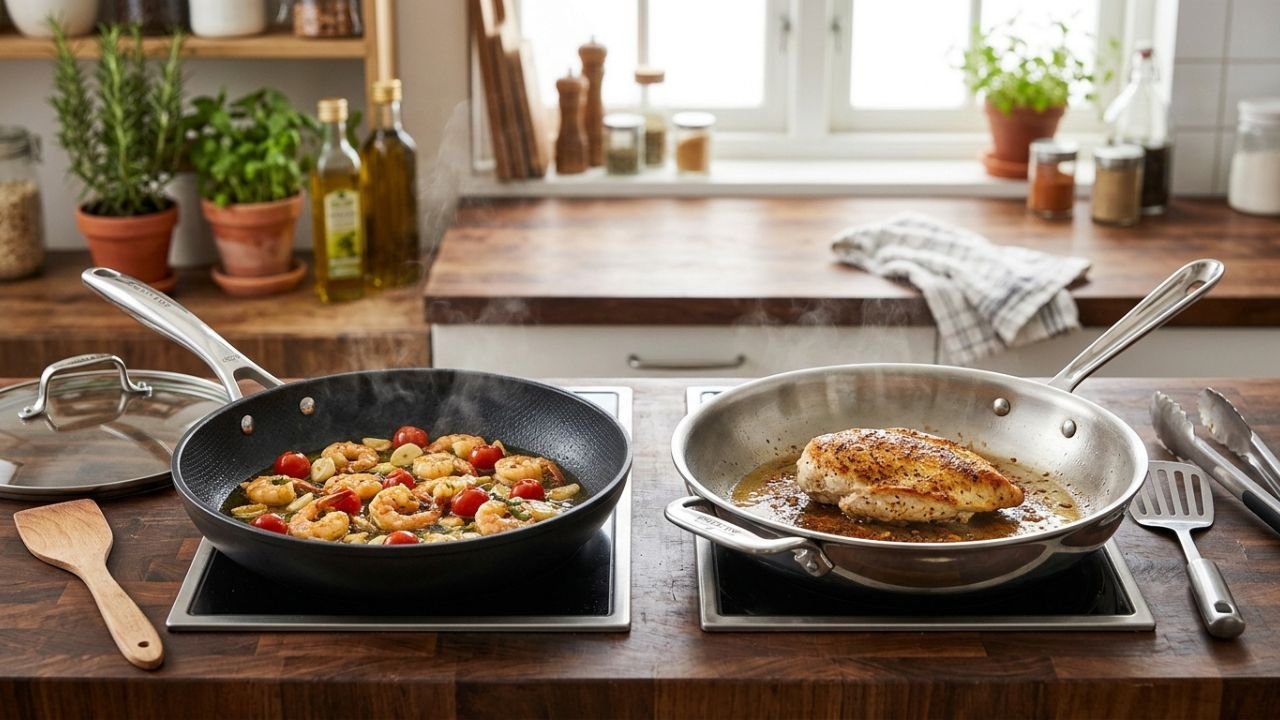
I once cooked the same steak side by side. The All-Clad D3 gave me that deep brown crust I chase. The Scanpan nonstick released the meat clean but didn’t brown quite as hard. Different tools for different jobs.
Key construction points:
- Scanpan: Thick cast aluminum or 5-ply clad + STRATANIUM coating
- All-Clad: Fully clad 3-ply, 5-ply, or copper core stainless
- Both induction compatible on most models
- Scanpan oven limit usually 500°F
- All-Clad stainless goes to 600°F
Heat Performance: How They Actually Cook
All-Clad shines here for control. The clad layers push heat evenly across the whole pan. No hot spots that burn one side of your chicken while the other stays pale. You turn the burner down and the pan responds fast. Great for sauces that need precision.
Scanpan heats evenly too, thanks to that thick aluminum. It holds heat well once it gets going. Perfect for steady cooking. The textured STRATANIUM+ surface lets you get decent browning without the food welding itself to the pan. Still, pure stainless from All-Clad beats it for high-heat searing.
I make eggs almost every morning. In a Scanpan pan I slide them out with almost zero oil. In All-Clad stainless I need a good slick of fat and a hot pan or they stick. Neither is wrong. One just makes mornings easier.
Rhetorical question time: Do you cook more delicate stuff like fish and eggs, or do you blast high heat for steaks and stir-fries? Your answer points to the better brand for you.
Durability and Real-World Lifespan
Here’s where the difference hits hard. All-Clad stainless pans can last 20 years or more with basic care. The metal doesn’t wear out. Handles stay solid. They laugh at dishwashers (though hand washing keeps them prettier). I’ve got friends who still use All-Clad pieces their parents bought in the 90s.
Scanpan nonstick lasts longer than cheap big-box pans. Users often get 4–7 years of solid performance before the coating slows down. The metal-utensil-safe claim helps, but I still go gentle with wood or silicone most days. High heat and metal tools shorten any nonstick life. The base itself stays strong.
Both offer limited lifetime warranties against manufacturing defects. Neither covers normal wear on the nonstick surface. Fair enough.
I dropped a Scanpan pan once (don’t ask). The coating survived. The handle stayed tight. Still, I treat my All-Clad stainless like kitchen heirlooms. They feel indestructible.
Nonstick Showdown: Scanpan’s Strength
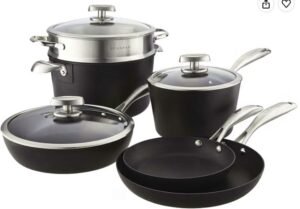
Scanpan owns this category for most home cooks. Their STRATANIUM coating uses titanium particles and ceramic elements over PTFE. It’s PFOA and PFOS free. The surface resists scratches better than standard nonstick. You can flip eggs with a metal spatula if you’re careful. Food releases clean.
All-Clad makes nonstick too—HA1 and similar lines. Hard-anodized aluminum with PTFE layers. They work fine for eggs and pancakes. But the coating doesn’t hold up as long as Scanpan’s in heavy use. All-Clad seems more focused on their stainless lines anyway.
If nonstick is your main need, Scanpan wins on durability and performance. IMO, their HaptIQ or CS+ lines give the best mix of searing ability and easy release.
Price and Value: What You Actually Pay
Neither brand is cheap. A good Scanpan 10-piece set often lands between $600–$1,000 depending on the line. Single fry pans run $80–$150. You’re paying for Danish manufacturing and that coating tech.
All-Clad stainless costs more up front. A D3 10-piece set can hit $700–$1,000+. D5 and Copper Core climb higher. Their nonstick lines sit lower, closer to Scanpan territory or a bit under.
Value depends on how long you keep them. All-Clad stainless spreads the cost over decades. Scanpan nonstick spreads it over several solid years of easy cooking. Buy once, cry once works better for All-Clad stainless. For pure convenience, Scanpan often feels smarter day to day.
I’ve spent money on both. No regrets on the All-Clad D3 pieces I use weekly. Same for the Scanpan fry pan that handles my scrambled eggs without drama.
Who Should Buy Scanpan?
Go Scanpan if:
- You want reliable nonstick that lasts longer than average
- Metal utensils matter to you (within reason)
- Eco-friendly recycled aluminum appeals
- Everyday cooking like eggs, veggies, and quick sautés fills most of your time
- You prefer lighter weight than full stainless clad
Their Classic, Professional, HaptIQ, and CS+ lines cover most needs. The textured + coatings help with browning better than smooth nonstick.
Who Should Buy All-Clad?
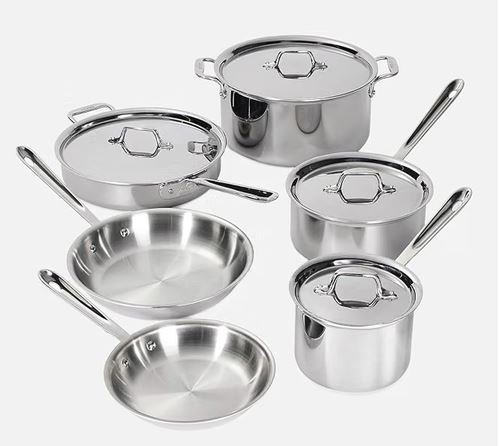
Pick All-Clad if:
- You want pans that last a lifetime
- High-heat searing and browning matter
- You cook a lot of sauces or need precise temperature control
- Made-in-USA stainless steel feels important
- You’re ready to learn stainless technique (or already know it)
Start with D3 for the best balance of performance and price. Step up to D5 if you want slightly more even heat and a brushed option. Copper Core for the heat freaks.
My Personal Kitchen Setup
I keep both. All-Clad D3 skillet and saucepan for steaks, reductions, and anything that needs real browning. Scanpan fry pan for eggs, fish, and sticky stuff. The combo covers almost everything without frustration.
One time I tried going pure stainless. Breakfast became a chore. Pure nonstick limited my searing. Mixing them fixed both problems. Your kitchen might need the same balance.
Ever wonder why restaurants lean stainless while home cooks love nonstick? Different priorities. Home life demands easy cleanup more often.
Care Tips That Actually Matter
For Scanpan:
- Avoid extreme high heat for long stretches
- Hand wash when you can
- Use medium heat mostly
- Soft tools extend the coating life
For All-Clad stainless:
- Preheat properly
- Use enough fat
- Deglaze for easy cleanup
- Occasional Bar Keepers Friend keeps them shiny
Both handle dishwashers, but hand washing treats them better long term.
Scanpan vs All Clad Comparison Table
| Feature | Scanpan | All-Clad |
|---|---|---|
| Best Known For | Durable nonstick | Fully clad stainless steel |
| Main Construction | Cast aluminum or 5-ply + coating | 3-ply, 5-ply, or copper core |
| Nonstick Coating | STRATANIUM / STRATANIUM+ | PTFE on HA1 lines (not primary) |
| Oven Safe | Up to 500°F | Up to 600°F (stainless) |
| Induction | Most models yes | Most models yes |
| Made In | Denmark | USA (stainless lines) |
| Warranty | Limited lifetime | Limited lifetime |
| Typical Lifespan | 4–7 years (nonstick) | 15–20+ years (stainless) |
| Price Level | Mid to high for nonstick | Premium |
| Best For | Easy everyday cooking | Searing, sauces, long-term use |
Final Thoughts: Which One Wins Your Money?
No single winner. Scanpan delivers better everyday nonstick performance and durability in that category. All-Clad delivers lifetime stainless steel performance that pure nonstick can’t match.
If nonstick convenience drives most of your cooking, buy Scanpan and enjoy the easy life. If you want pans that outlast trends and deliver pro-level results, All-Clad stainless is the move. Many people end up with both, and that works great.
The real test is your stove and your habits. Think about what you cook most. Then spend the money once instead of replacing cheap pans every year. Your future self will thank you.
Still on the fence? Grab one solid fry pan from each and see which one you reach for first. That’s the honest way to decide.
FAQs
Is Scanpan better than All-Clad for nonstick?
Yes for most people. The STRATANIUM coating holds up longer and handles more abuse than All-Clad’s nonstick lines.
Does All-Clad stainless stick food?
It can if you don’t preheat right or use enough fat. Technique matters more than with nonstick.
Can I use metal utensils on Scanpan?
They market it as metal-safe. I still prefer silicone or wood to stretch the life.
Which is more expensive long term?
All-Clad stainless costs more upfront but lasts much longer. Scanpan nonstick needs eventual replacement.
Are both PFOA-free?
Yes. Scanpan and All-Clad nonstick lines avoid PFOA and PFOS.
Should I buy a full set or open stock?
Start with a fry pan and saucepan. Add pieces as you learn what you actually use.
That’s the real talk on Scanpan vs All-Clad. Pick the one that matches how you cook, not the one with the fanciest ads. Your kitchen will feel better for it.