
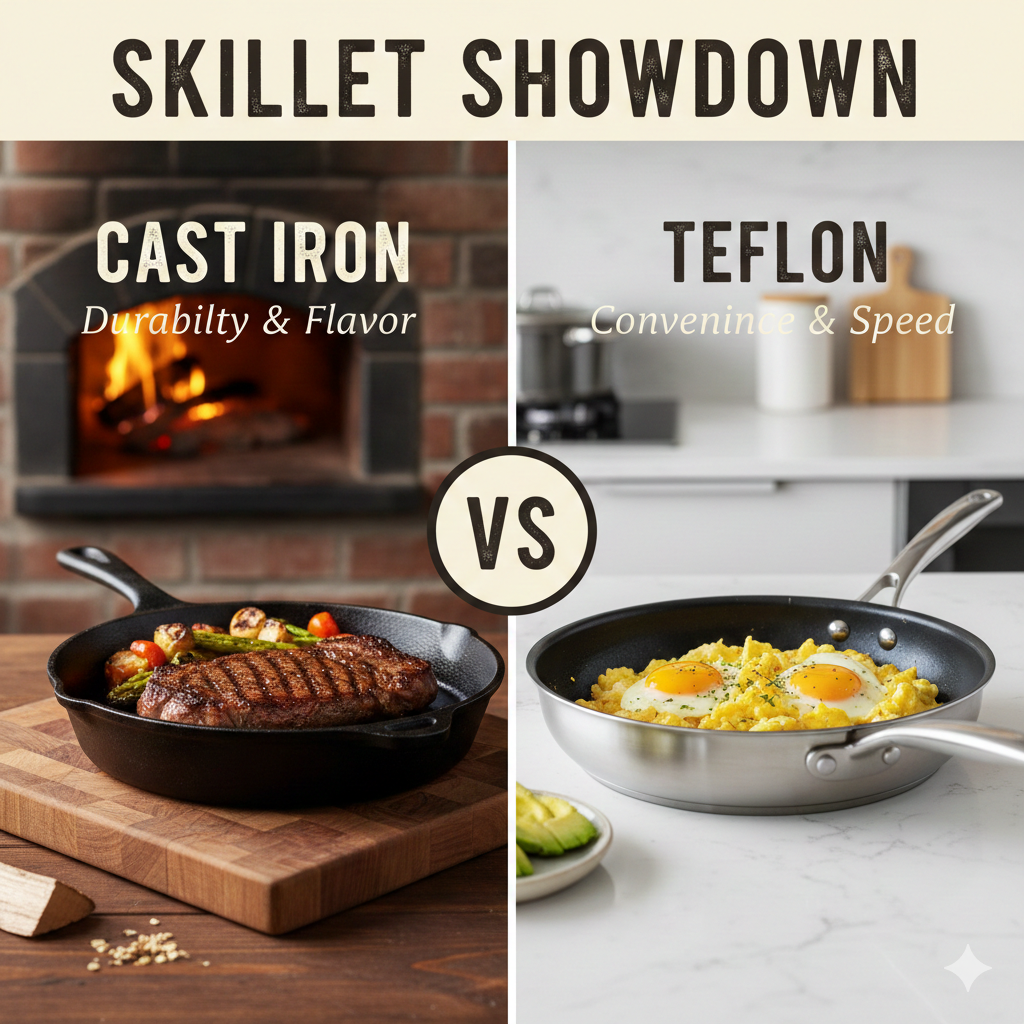
Hey, fellow kitchen lover! You stand in the cookware aisle, staring at that shiny Teflon non-stick skillet next to the rugged cast iron one. You wonder which deserves a spot in your cabinet. I totally get it—I’ve been there too many times.
I’ve flipped eggs in both, seared steaks until smoke filled the kitchen, and cleaned up the messes afterward. Cast iron feels like an old reliable friend that gets better with time, while Teflon acts like that effortless buddy who makes mornings easy. But which one wins for you?
Let’s chat through this side-by-side. I’ll keep it real, share some laughs (because who hasn’t scratched a non-stick pan and felt instant regret?), and help you decide. Ready? Grab a coffee—we’ve got a lot to cover.
What Makes Cast Iron and Teflon Skillets Different?
First things first: these two couldn’t come from more opposite worlds.
Cast iron starts as pure iron melted and poured into molds. It’s heavy, tough, and plain—no fancy coatings. You build its magic yourself through seasoning, which creates a natural non-stick layer from baked-on oil.
Teflon skillets (or PTFE-coated non-stick) usually feature lightweight aluminum with a synthetic coating sprayed on. That coating makes food slide off like it’s on ice. Super convenient, right?
Ever wonder why your grandma swore by cast iron while your mom grabbed the non-stick? Times change, but both have their fans for good reasons. IMO, owning both rocks, but let’s break it down.
Heat Conductivity and Retention: Who Heats Up Better?
Heat is where cast iron shines like a champ.
Cast iron takes longer to warm up, but once hot, it holds that heat forever. You get killer sears on steaks, crispy cornbread edges, or even heat for frying. I once seared a ribeye in my cast iron—the crust was perfection. It goes from stovetop to oven without blinking.
Teflon heats quickly and evenly, great for everyday stuff like pancakes or sautéing veggies. But push it too high, and the coating suffers. Most max out around 500°F, and overheating risks fumes (more on safety later).
Want that perfect steak sear? Cast iron wins hands down.
Quick Heat Comparison
- Cast Iron Pros: Superior retention, even cooking for high-heat tasks, oven-safe forever.
- Cast Iron Cons: Slow to heat, heavy to maneuver when screaming hot.
- Teflon Pros: Fast and even heating, lightweight.
- Teflon Cons: No extreme high heat, not great for searing.
Non-Stick Performance: Eggs Without the Drama?
This is the big showdown everyone asks about.
Brand-new Teflon makes eggs slide off effortlessly—no oil needed. It’s magic for delicate foods like fish or crepes. But that coating wears down over time, especially with metal utensils or high heat.
Well-seasoned cast iron gets almost as slick. My Lodge slides eggs beautifully now, but it took time and use. The beauty? It improves—the more you cook fatty foods, the better it gets.
Ever tried flipping an omelet in cast iron too soon? Yeah, me too. Disaster. But with practice, it’s rewarding.
Non-Stick Winners by Task
- Delicate eggs or low-oil cooking: Teflon takes the crown.
- Everything else (steaks, veggies, baking): Seasoned cast iron matches or beats it.
Durability and Longevity: Will It Last Forever?
Cast iron laughs at “lifespan.” With care, it lasts generations. Mine from a thrift store is over 50 years old and cooks like new. Drop it? It might chip your floor, but the pan survives.
Teflon? It’s more like a 3-5 year relationship. The coating scratches, flakes, or loses slickness. Then it’s time for a new one. Sarcasm alert: nothing says “sustainable” like buying a new pan every few years, right? :/
- Cast Iron: Basically indestructible. Heirloom material.
- Teflon: Convenient but temporary.
Ease of Cleaning and Maintenance
Teflon wins the lazy cleanup award. Wipe with a sponge, done. Dishwasher-safe too (though hand-washing prolongs life).
Cast iron demands more love. No soap usually (mild is okay now), no soaking, dry immediately to avoid rust, light oil after. Sounds fussy, but it takes 2 minutes once routine.
I messed up early and got rust spots. A quick scrub and re-season fixed it. Now it’s second nature.
How to Season Cast Iron (Quick Guide)
You’ll hear this a lot with cast iron, so here’s my easy method:
- Clean the pan thoroughly (soap okay for this step).
- Dry completely.
- Rub a thin layer of neutral oil (like grapeseed) all over.
- Bake upside down at 450-500°F for an hour.
- Cool in oven. Repeat 3-5 times for a solid base.
After that, just cook! It builds seasoning naturally.
Health and Safety Concerns
Let’s talk the serious stuff.
Modern Teflon (post-2013) is PFOA-free, so no major leaching worries at normal temps. But overheating can release fumes—bad for birds, flu-like for humans. Scratched coatings? Debated, but many switch for peace of mind.
Cast iron is 100% natural. It even adds a bit of dietary iron (great unless you have hemochromatosis). No chemicals, no off-gassing.
FYI, many folks ditch Teflon for health reasons and never look back.
- Teflon: Safe when used properly, but avoid high heat and scratches.
- Cast Iron: As clean as it gets.
Weight and Ease of Use
Cast iron is heavy—10-inch weighs 5-7 pounds. Great for stability, tough on wrists.
Teflon is light as a feather. Easy flipping, no gym required.
If arthritis or strength is an issue, Teflon feels kinder.
Versatility in the Kitchen
Cast iron goes everywhere: stovetop, oven, grill, campfire. Bake cornbread? Yes. Sear then braise? Absolutely.
Teflon stays on the stovetop mostly. Oven-safe to a point, but not for broiling or super high temps.
Cast iron handles acidic foods better once seasoned (though build seasoning first).
Cost Comparison
Basic Lodge cast iron runs $20-40 and lasts forever. Amazing value.
Good Teflon skillets cost $30-100, but you replace them.
Over 10 years? Cast iron saves money big time.
Popular Recommendations (2025 Picks)
- Best Budget Cast Iron: Lodge 10.25-inch—pre-seasoned, reliable, affordable.
- Premium Cast Iron: Lancaster or Field Company for smoother finish.
- Best Teflon/Non-Stick: Oxo or Caraway ceramic-coated (PTFE-free options gaining popularity).
Environmental Impact
Cast iron wins here too. Made to last, minimal waste.
Teflon involves PFAS chemicals in production, contributing to “forever chemicals” pollution.
More folks choose cast iron for eco reasons.
So, Which One Should You Choose?
It depends on your cooking style, friend.
Love high-heat searing, baking, and building kitchen heirlooms? Go cast iron. It rewards patience with unbeatable flavor and durability.
Need quick, low-fuss meals with perfect eggs and easy cleanup? Teflon delivers convenience.
Honestly? Get both if you can. Use Teflon (or better, ceramic non-stick) for eggs and delicate stuff. Save cast iron for steaks, roasts, and everything flavorful.
I leaned cast iron years ago and rarely touch non-stick now. That first perfect sear hooked me. But no judgment—your kitchen, your rules!
What do you think? Already team cast iron or Teflon? Drop your experiences below—I love hearing war stories. Happy cooking! 🙂