
Let’s be real for a second. You’ve probably stood in the cookware aisle, staring at the shiny walls of pots and pans, feeling totally overwhelmed. I know I have. On one side, you’ve got these slick, black nonstick pans promising you’ll never scrub again. On the other, you’ve got the heavy-duty, gleaming stainless steel ones that look like they belong in a professional kitchen. The confusion is real.
But here’s the thing you need to know right off the bat: there is no single “best” pan. It’s all about the right tool for the right job. Trying to sear a steak in a nonstick pan is like using a sports car to haul furniture—it might work, but it’s a disaster waiting to happen. Meanwhile, trying to cook a delicate omelet in stainless steel is a recipe for a stuck-on mess.
This guide is your no-nonsense, side-by-side comparison. We’re going to ditch the confusing jargon, cut through the marketing hype, and get down to the nitty-gritty of what these pans actually do. I’ll share my own kitchen wins and fails, give you the honest truth, and by the end, you’ll know exactly what to buy. So, grab a coffee, get comfortable, and let’s settle the debate.
FYI, there’s a good chance you’ll end up wanting both by the time we’re done. 😉
Low Price Deals for Nonstick and Stainless Steel Cookware Sets
Best Nonstick Cookware Set 44 Pieces: Low Price Offer!
Best Stainless Steel Cookware Set: Discounted offer!
Nonstick Vs. Stainless Steel Cookware Comparison Table
| Feature | Stainless Steel | Nonstick |
|---|---|---|
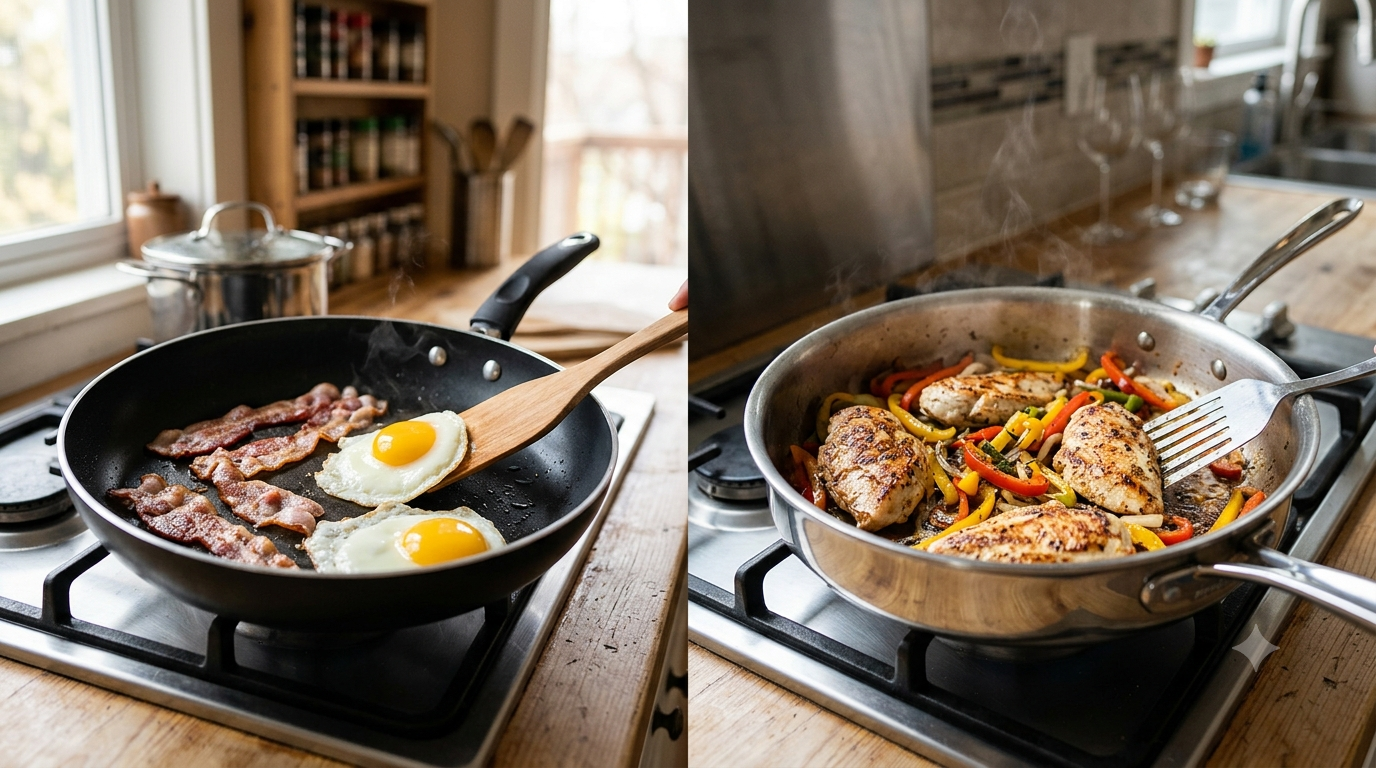
| Best For | Searing, browning, deglazing, building pan sauces, cooking with acidic ingredients | Eggs, pancakes, delicate fish, cheese, sticky foods, low-fat cooking |
| Heat Tolerance | Excellent. Can handle very high heat and is usually oven-safe | Low to medium heat only. High heat damages the coating |
| Durability | Lasts a lifetime. Resists rust, scratches, and warping | Short lifespan. Lasts 2–5 years before coating wears out |
| Maintenance | More forgiving. Can use metal utensils. Often dishwasher safe | Easy to clean, but requires gentle care. Hand wash only, use soft sponges and wood/silicone utensils |
| Food Release | Food sticks without proper technique (needs preheating & oil) | Exceptional. Food releases effortlessly with minimal oil |
| Safety | Non-reactive and completely safe for all foods | Safe when used correctly. Avoid overheating (over 500°F) and don’t use if scratched or peeling |
| Flavor Development | Excellent. Creates fond for deep, rich flavor | Poor. Does not brown well, so you miss out on complex flavors |
What Exactly Are We Dealing With Here?
Before we start the comparison, let’s get clear on what makes these two heavyweights tick. They aren’t just different colors; they are fundamentally different beasts.
The Lowdown on Stainless Steel
Think of stainless steel as the workhorse of the kitchen. It’s the pan your grandparents probably used, and the one you see chefs swinging around on TV. True stainless steel cookware isn’t just a single sheet of metal. High-quality versions are built with a “clad” construction, which is a fancy way of saying they layer a few different metals together . You typically get an aluminum or copper core sandwiched between layers of stainless steel. This is huge because while stainless steel is durable and non-reactive, it’s a terrible heat conductor on its own. That aluminum core is the secret sauce that gives you even heating and helps prevent hot spots .
The real magic of stainless steel, though, is its reactivity—or rather, its lack thereof. It doesn’t react with acidic foods. You can dump a whole can of tomatoes or a splash of wine in there without worrying about a metallic taste ruining your dinner . It’s also incredibly durable. A good stainless steel pan can literally last a lifetime . It’s the kind of pan you’ll hand down to your kids.
The Lowdown on Nonstick
Nonstick cookware is the modern convenience hero. Its main claim to fame is its coating. Usually, this is a synthetic chemical (the most famous being PTFE, often known by the brand name Teflon), but it can also be a ceramic-based coating . This coating is what creates that slick, frictionless surface we all love.
The whole point of nonstick is to make cooking and cleanup stupidly easy. You can fry an egg with barely a spritz of oil and have it slide right out of the pan . This makes it perfect for delicate foods and a godsend for quick weekday meals when you don’t want to spend a ton of time scrubbing.
However, there’s a trade-off. This convenience comes at a cost. The coating is delicate. It doesn’t like high heat, and it sure doesn’t like metal utensils . Unlike its stainless steel cousin, it has a short, predetermined lifespan. Consider nonstick a consumable item. You will have to replace it .
The Big Showdown: Head-to-Head Comparison
Alright, enough about the basics. Let’s put them side-by-side and see how they perform in the real world.
1. Performance & Heat: Searing vs. Simmering
This is where the rubber meets the road, and the differences are stark.
Stainless Steel: This pan loves high heat. It’s absolutely brilliant for searing. Want that crispy, golden-brown crust on a steak? Stainless steel is your go-to . The pan’s surface encourages a process called the Maillard reaction, which creates a deep, savory flavor. It also creates those glorious browned bits stuck to the bottom of the pan. We call that “fond,” and it’s pure gold for making pan sauces . The heat retention is excellent, meaning it won’t drop temperature drastically when you add cold food.
Nonstick: This pan prefers a low-to-medium heat relationship. Crank up the heat too high, and you risk damaging the coating, which can cause it to release fumes or just stop being nonstick . Because of this, you won’t get a great sear. You’ll get a pale, steamed-looking piece of meat instead of a beautifully browned one.
The Verdict: If you want to sear, brown, and build flavor, stainless steel wins, hands down. If you’re cooking something gentle that just needs to heat through, nonstick works fine.
2. The Sticking Point (Literally)
This is the million-dollar question, right? “Does food stick?”
Stainless Steel: Here’s the honest truth: food will absolutely stick to stainless steel if you don’t know what you’re doing . I’ve made more than my share of scrambled egg disasters. However, you can make it practically nonstick with the right technique. The secret is the Leidenfrost effect. It’s a science-y term, but here’s what it means: heat your pan over medium heat for a few minutes. Then, flick a few drops of water onto the surface. If the water forms into a ball and dances around the pan (instead of just sizzling and evaporating), your pan is hot enough. Add your oil, give it a swirl, and then add your food. It will release naturally once it’s seared .
Nonstick: This is the pan’s superpower. Things just don’t stick. This makes it a lifesaver for delicate items like eggs, pancakes, and fish fillets. It’s also great for sticky foods like cheese. You can use way less oil, which is a bonus for your waistline .
The Verdict: For ease and forgiveness, nonstick wins. For a pan that takes a bit more skill but is incredibly rewarding, go with stainless.
3. Durability & Lifespan: A Short Flirt vs. A Lifetime Commitment
When it comes to how long the pan will last, there’s no contest.
Stainless Steel: This is the cockroach of the cookware world. It will survive nuclear winter. It’s resistant to rust, scratches, and warping . You can use metal utensils on it. You can scrub it like it owes you money (though we’ll talk about cleaning nicely later). A quality stainless steel pan will last for decades, and if it gets a bit discolored, a special cleaner can make it look like new .
Nonstick: It has a built-in expiration date. Even with perfect care, the coating wears down over time. The chemicals degrade. It starts to scratch. Eventually, it will just stop being nonstick. This process usually takes about 2 to 5 years, depending on how often you use it and the quality of the pan . It’s a cyclical relationship—you buy, you use, you replace.
The Verdict: If you want a one-time investment that you’ll have forever, it’s stainless steel all the way. If you’re okay with replacing your pan every few years in exchange for convenience, nonstick is still a solid choice.
4. Maintenance & Cleaning
How much time do you want to spend at the sink?
Stainless Steel: It’s forgiving. You can soak it, scrub it with a sponge or even steel wool to get off stubborn bits, and it’s often dishwasher safe . For a truly sparkling finish, you can use a stainless steel cleaner. However, because food sticks to it, it can sometimes be a little more work to get clean after a heavy-duty cooking session.
Nonstick: Cleaning is a breeze. Since nothing sticks to the surface, a quick wipe-down with a soft sponge and soapy water is usually all it takes . But be careful! This is where it’s fussy. You must let the pan cool down before washing to avoid thermal shock and warping. You also can’t use abrasive scrubbers or put it in the dishwasher, as the harsh detergents will destroy the coating .
The Verdict: Nonstick is easier to get clean, but requires a lot more “rules.” Stainless steel is more rugged and you can be rougher with it, even if it sometimes requires a bit of elbow grease.
5. Safety & Health: What’s Really in Your Food?
This is a topic that makes a lot of people worried. Let’s clear it up.
Stainless Steel: This is a known safe option. It’s non-reactive, so it won’t leach harmful chemicals into your food, no matter what you cook . It’s the safest choice for cooking acidic foods like tomato sauce or wine-based sauces. If you’re concerned about toxins, stainless steel is the most naturally non-toxic cookware material .
Nonstick: The old fears were about PFOA, a chemical phased out in the U.S. over a decade ago. So, if you buy a new pan, it’s almost certainly PFOA-free . However, the primary nonstick coating, PTFE (Teflon), is still used. The danger here isn’t the coating itself, but the conditions you expose it to. If you overheat a nonstick pan past about 500°F (260°C), the coating can start to break down and release fumes that can make you feel sick (sometimes called “Teflon flu”) . Also, if the pan is damaged or scratched, the coating can flake off into your food. You’d probably eat it and pass it without an issue, but it’s not something you want to do daily .
The Verdict: Both are safe when used correctly. Stainless steel is the worry-free option with no rules. Nonstick requires you to be vigilant about temperature and damage.
When to Use Which Pan: A Practical Guide
So, your kitchen is a mix of both. Here’s how I decide which pan to grab:
Reach for the Stainless Steel when you want to:
-
Sear a steak, chop, or tuna: Get that beautiful crust.
-
Make a pan sauce: You need that fond.
-
Cook with acidic ingredients: Tomato sauce, wine, citrus.
-
Use high heat: Stir-frying, high-temperature roasting.
-
Use metal utensils: You can whisk, flip, and scrape without fear.
Reach for the Nonstick when you’re cooking:
-
Eggs: Scrambled, fried, or an omelet. It’s the only way to fly.
-
Pancakes and crepes: Effortless flipping without tearing.
-
Delicate fish: Fragile fillets won’t stick or break apart.
-
Sticky dishes: Stir-fries with sugary sauces or any dish prone to sticking.
-
When you want an easy cleanup: It’s a weeknight, and you don’t have the energy to scrub.
The Final Verdict (and My Recommendation)
So, after all that, which one should you buy?
If I had to choose only one pan to survive in my kitchen, it would be stainless steel. It’s the all-around MVP. It’s durable, versatile, and you can cook almost anything in it once you learn the technique . It’s a lifetime investment.
But let’s be honest. The “only one” scenario is a fantasy. IMO, the best kitchen has both. It’s not about one being “better” than the other; it’s about using the right tool for the job .
Here’s my simple, no-nonsense advice for building your collection:
-
Invest your money in a high-quality stainless steel skillet and a stainless steel saucepan. This is your foundation. It’s where you’ll sear, make sauces, and cook most of your meals. It’ll last forever, so get the best you can afford. Look for a fully clad, multi-ply construction for the best heat distribution .
-
Get a decent, but not crazy expensive, nonstick frying pan. Use it for your eggs, your pancakes, and those quick weeknight dinners. I usually buy a mid-range option and replace it every couple of years when the coating inevitably gives out . There’s no point buying a $200 nonstick pan that you’ll have to throw away in 3 years.
-
NEVER use metal utensils on nonstick.
-
NEVER put nonstick in the dishwasher.
-
NEVER blast nonstick on high heat.
Master those simple rules, and you’ll have a dream team of pans that will make cooking a joy instead of a chore. Now, get out there and cook something amazing! 😀
Frequently Asked Questions (FAQs)
1. Is it easier to cook with nonstick or stainless steel?
Nonstick is significantly easier for beginners because it’s so forgiving. Food doesn’t stick, so you’re less likely to ruin your meal. Stainless steel requires a little more technique, specifically learning how to preheat the pan properly to prevent sticking .
2. Can I put my nonstick pan in the dishwasher?
Technically, some manufacturers say “yes,” but you really shouldn’t. The harsh detergents and high heat of the dishwasher will break down the nonstick coating much faster, shortening its lifespan. Always hand wash your nonstick pans with a soft sponge and mild soap .
3. Why do chefs use stainless steel instead of nonstick?
Professional chefs prefer stainless steel for a few key reasons. First, it gives you a superior sear and lets you build flavor by creating fond, which is essential for making great pan sauces. Second, it’s incredibly durable and can withstand the high heat and rigorous use of a commercial kitchen .
4. Is stainless steel or nonstick healthier?
Both are healthy options when used correctly. Stainless steel is a non-reactive metal, meaning it won’t leach anything into your food regardless of temperature . Modern nonstick pans are safe at low to medium heat but can release fumes if overheated. If you’re concerned about chemicals, stainless steel is the worry-free choice .
5. Can you use oil with nonstick pans?
Yes! While you don’t need much oil, using a small amount can improve the cooking experience. It helps with browning and flavor and also protects the coating itself. Even with nonstick, a little butter or oil makes everything taste better and ensures your pan lasts longer.
6. Which cookware lasts a lifetime?
Stainless steel is the only one of these two that can genuinely last a lifetime. A good quality, fully clad stainless steel pan is an heirloom piece. In contrast, even the best nonstick pan has a limited lifespan and will need to be replaced after a few years .