
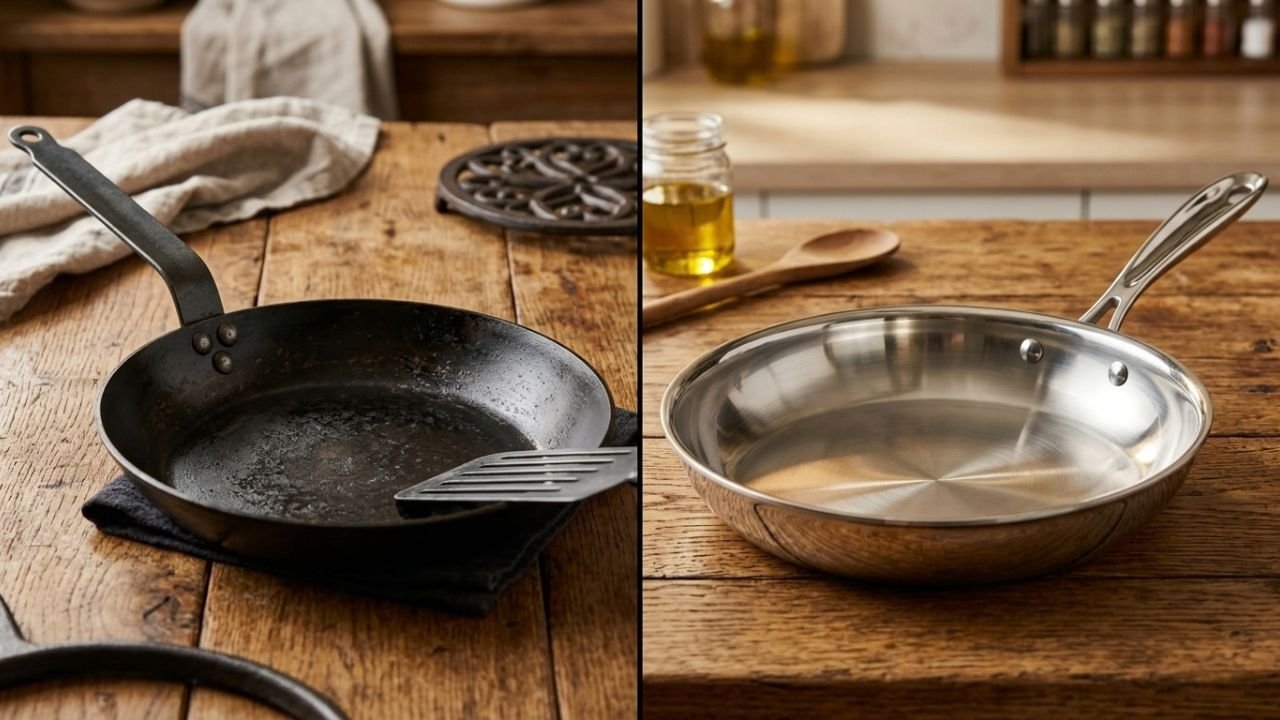
Okay. You’re standing there looking at pans and wondering which one is actually stronger and better. Carbon steel or stainless? I’ve been exactly where you are. More than once.
I bought my first carbon steel pan on a random Tuesday because some guy on a cooking forum wouldn’t shut up about it. I thought it looked ugly. Dark. Kind of industrial. Then I used it for a week and yeah… I got it.
Stainless always felt safer. Shiny. Easy. No weird rituals. But after years of cooking on both, I have opinions. Strong ones. Let’s just talk about it like we’re hanging out in the kitchen.
Carbon Steel Pans vs Stainless Steel Side-by-Side Comparison
| Thing | Carbon Steel | Stainless Steel |
|---|---|---|
| Raw toughness | Harder metal, better warp resistance | Solid, but cheaper ones can warp |
| How fast it heats | Super fast | Slower, more even with good cladding |
| Nonstick feel | Excellent after seasoning | Depends on your technique and oil |
| Care level | Dry it + light oil | Almost zero special care |
| Rust chance | Yes if you leave it wet | Basically none |
| Acidic food | Not ideal | No problem |
| Weight | Medium, easy to handle | Can get heavy |
| Usual price | More affordable | Higher for the good multi-ply stuff |
| Lifespan | Forever if you don’t abuse it | Forever if you don’t abuse it |
| Best everyday use | Searing, eggs, stir-fry | Sauces, soups, low-effort days |
First, What Are We Even Comparing?
Carbon steel is mostly iron with a little carbon mixed in. That’s the whole recipe. Simple. Tough. It reacts to heat like it’s alive. Gets hot fast. Cools down when you want it to. And if you treat it right, it builds this slick black surface that makes food slide.
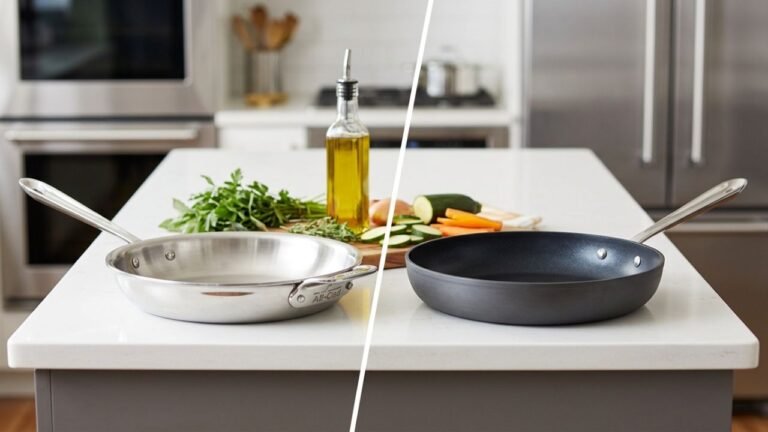
Stainless is different. It’s iron plus chromium (and usually some nickel). The chromium is what keeps it from rusting. Most good stainless pans these days are layered — stainless on the outside, aluminum or copper in the middle so heat spreads better. Fancy, right?
I keep both in my kitchen. Not because I’m fancy. Because they do different jobs and I’m too stubborn to pick just one.
So… Which One Is Stronger?
This is the part everyone argues about.
Carbon steel is harder. Straight up. The metal itself is tougher. I’ve dropped mine more times than I want to admit. It dents a little sometimes, but it doesn’t warp the way cheaper stainless pans do when you crank the heat too high too fast.
Stainless can be strong too — the good multi-ply stuff is no joke. But thinner stainless? I’ve seen those pans go wavy after a few months of high heat. Not cute.
Here’s the thing though. Strength isn’t just about not bending. Carbon steel can rust if you leave it wet. Stainless almost never does. So if “strong” means “survives my lazy days,” stainless has a point.
I still think carbon steel feels stronger in your hand. More solid. Like it means business.
Heat — Where Things Get Interesting
You ever put a pan on the burner and wait forever for it to get hot? Annoying.
Carbon steel heats up ridiculously fast. Like, almost too fast if you’re not paying attention. I love it for steaks. Throw a thick one on there and you get that crust in no time. Same with stir-fry. The pan keeps up with you.
Stainless takes longer. Especially the heavy clad ones. But once it’s hot, it stays more even. Fewer hot spots. I notice this most when I’m cooking something that needs gentle heat — like a big batch of onions or a sauce that wants to stick.
I did a little side-by-side one night with two identical chicken breasts. Carbon steel gave me better color faster. Stainless cooked more evenly edge to edge. Both tasted good. Just different vibes.
The Seasoning Thing (Yeah, We Have to Talk About It)
This is where people either fall in love with carbon steel or run away.
Carbon steel needs seasoning. You put thin layers of oil on it and heat it until the oil basically turns into a plastic-like coating. Sounds weird. Works great. After a few good seasons, eggs don’t stick. Pancakes flip clean. It’s kind of addictive once it happens.
Stainless? No seasoning needed. Ever. You can scrub it with steel wool if you’re feeling aggressive. Food still sticks sometimes though — especially if the pan isn’t hot enough or you didn’t use enough oil. Technique matters more with stainless.
I’ll be honest. The first month with my carbon steel pan was messy. I under-seasoned it. Stuff stuck. I got frustrated. Then I watched a five-minute video, did it right, and suddenly it was my favorite pan. Worth the learning curve for me. Maybe not for everyone.
Daily Care — The Real Deal Breaker for a Lot of People
Carbon steel is not hard to take care of. But it is different.
Wash it. Dry it right away. Wipe a tiny bit of oil on it. Done. If you leave it wet, it can rust. Not dramatic orange rust like cast iron sometimes gets — more like little spots. You scrub them off and re-season. Annoying, not the end of the world.
Stainless you can basically ignore. Dishwasher? Fine. Leave it in the sink overnight? Still fine. Acidic tomato sauce sitting in it for hours? No problem.
I travel sometimes. When I’m gone a week, I don’t stress about the stainless pans. The carbon steel ones I make sure are dry and oiled before I leave. Small extra step. Some people hate any extra step. I get it.
Weight and How They Feel
Carbon steel is usually lighter than cast iron but still has some heft. Feels good when you’re flipping food. Not so heavy that your wrist complains after ten minutes.
Some stainless pans (especially the thick multi-ply ones) get heavy. I have one that feels like a workout just to pour from. Great for stability. Less great when you’re tired.
Personal preference thing. I reach for carbon steel more on busy weeknights because I can move it around easily.
Money Talk
You can get a solid carbon steel pan for less money than a comparable stainless one. Like, noticeably less. And if you take care of it, that cheap carbon steel can outlast expensive stainless that warps or loses its coating (wait — stainless doesn’t have coating, but you know what I mean).
I’ve got carbon steel pans that cost less than takeout and still perform better than pans that cost three times as much. Feels good every time I use them.
When I Actually Use Each One
Carbon steel is my everyday workhorse for:
- Steaks and chops
- Stir-fries
- Eggs and pancakes (once seasoned)
- Anything that needs high heat and a hard sear
- Camping or outdoor cooking — it’s tough and not crazy heavy
Stainless is what I grab for:
- Tomato sauces or anything acidic
- Big pots of soup or stock
- Days when I just don’t want to think about drying and oiling
- When I want the pan to look clean and shiny on the stove
Most weeks I use carbon steel more. But I would miss stainless if it disappeared.
Stuff People Get Wrong
People say carbon steel is “just like cast iron.” Not really. It’s thinner. Heats faster. Responds quicker when you turn the burner down. Cast iron holds heat longer. Different tools.
People say stainless never sticks. Ha. It sticks if you mess up the heat or the oil. I’ve scraped stuck chicken off stainless more times than I care to remember.
People act like seasoning carbon steel is some ancient complicated ritual. It’s not. Thin oil. Heat until it smokes a little. Wipe. Repeat a few times. That’s the basic version. You’re not performing surgery.
My Honest Bottom Line After Years of This
If I had to keep only one type? Carbon steel. It’s more fun to cook on once it’s broken in. The heat response is better for the way I cook. And that seasoned surface is hard to beat.
But “better” depends on you. If the idea of drying a pan and wiping oil on it makes you want to throw it out the window, just buy good stainless and be happy. Life’s too short.
Strength-wise, carbon steel usually wins on pure toughness and warp resistance. Stainless wins on low-maintenance durability. Pick your fighter.
I’ve burned food on both. I’ve made great meals on both. The pan doesn’t make you a better cook by itself — but the right one for your style sure helps.
Quick Answers to Stuff People Always Ask
Is carbon steel actually stronger?
Most of the time, yes — the metal itself is harder and fights warping better. Stainless fights rust better.
Can I use metal spatulas on carbon steel?
Yep. Once it’s seasoned well, metal tools are fine. Don’t go full attack mode, but normal cooking is no problem.
Does stainless need any seasoning?
Nope. Some folks try anyway. It doesn’t really take the same way.
Which one should a beginner buy?
Stainless if you want zero learning curve on care. Carbon steel if you’re okay learning a little and want better high-heat performance.
Can carbon steel go in the dishwasher?
You can, but please don’t. It strips the seasoning and invites rust. Hand wash and dry. Takes thirty seconds.
Do I need both?
Not at first. Start with one that matches how you cook most days. Add the other later if you feel the gap.
Which lasts longer?
Both can last decades. Carbon steel just needs you to not leave it wet. Stainless is more forgiving of neglect.
Look, there’s no perfect pan for everyone. Carbon steel and stainless steel both have strengths. One isn’t automatically better. It depends on what you cook, how much effort you want to put in, and what feels good in your hand.
I started this whole thing thinking I’d pick a clear winner. Years later I still use both and I’m fine with that. Try the one that sounds more like your style. Use it for a month. You’ll know pretty quick if it clicks.
Now go make dinner. And if you end up with carbon steel, just remember — dry it and give it a quick oil wipe. That’s the whole secret. You’ve got this.