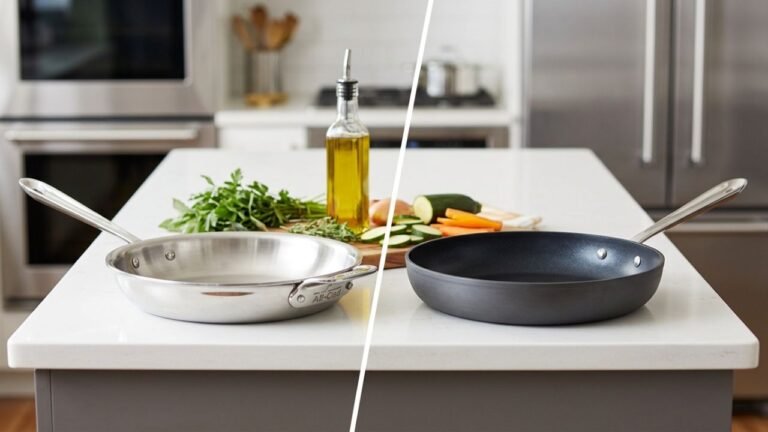

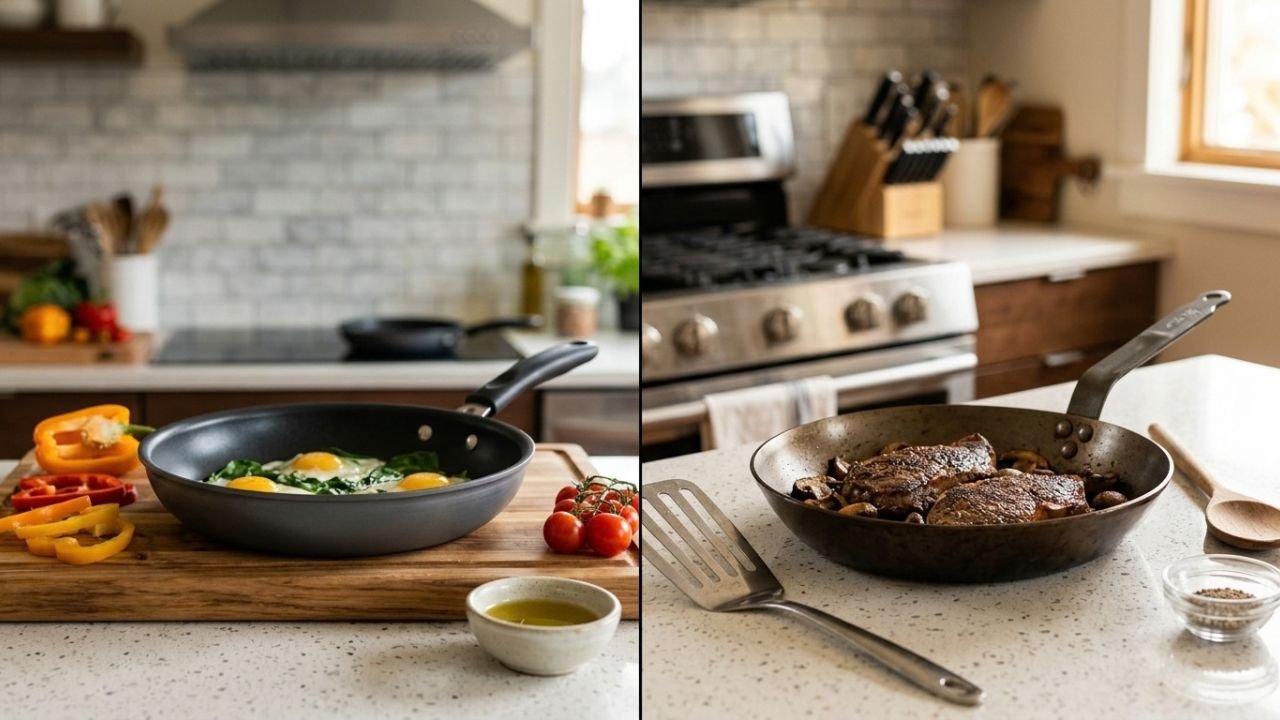
Alright. You’re standing there looking at pans again, aren’t you? One side says “nothing sticks, ever” and the other side looks like it came straight out of a restaurant and somehow needs oil and heat and patience. Nonstick or carbon steel. I’ve been stuck in that exact decision more times than I want to admit.
I went hard on nonstick for a while. Loved how eggs just slid off. Felt like I’d unlocked some secret level of adulting. Then the coating started dying on me, one pan after another. Got frustrated. Bought a carbon steel skillet on a random recommendation and almost returned it the first week because everything stuck. Kept using it anyway. Now both types live in my kitchen and I have feelings about them.
Let’s just talk through this like normal people who cook and don’t want to keep buying the same thing over and over.
Why This Choice Actually Bugs People
Your pans decide half the mood of dinner. Bad nonstick turns into a sticky mess that makes you scrub longer than you cooked. Carbon steel can feel high-maintenance at first and then suddenly becomes the pan you reach for without thinking. Ever had a beautiful piece of fish destroy itself because the pan wouldn’t let go? Or tried to get a real crust on a steak and watched it just kind of steam instead? Yeah. That’s the stuff that pushes people to switch.
I used to think I was fine with whatever was on sale. Then I spent a whole Sunday morning scraping rubbery eggs off a dying nonstick surface and decided I was done guessing.
Nonstick vs Carbon Steel
Let’s Talk About Nonstick Cookware First

Most nonstick pans are aluminum underneath with some kind of slick coating on top. Classic ones use that PTFE stuff everyone still calls Teflon. Newer ones push ceramic coatings. The whole idea is simple — food lets go easy and you don’t need much oil.
I remember the first time I made eggs in a decent nonstick pan. They just moved around like they were floating. I stood there grinning like an idiot. Cleanup took maybe twenty seconds. Felt like the future.
What Nonstick Actually Gets Right
- Food releases with almost no fight. Eggs, pancakes, fish fillets, the works.
- Cleanup is usually quick. Soft sponge, a little soap, done.
- You can get away with less oil or butter.
- They’re light. Easy to flip or move around.
- Almost zero learning curve. You can cook in one the same day you bring it home.
That easy-release feeling is hard to argue with when you’re tired and just want food on a plate.
Where Nonstick Starts Annoying You
The coating doesn’t last. High heat, metal tools, dishwasher cycles, even just time — it all wears it down. Eventually the surface gets dull and sticky and you’re right back where you started. Most of them also hate serious heat. Push them too hard and you risk damaging the coating or getting weird smells.
Metal spatulas are basically banned. One good scrape and you’ve shortened the life of the pan. Cheaper ones also heat unevenly because the metal underneath is thin.
I went through three nonstick skillets in about four years. Each one started strong and ended up making me mutter under my breath while scrubbing. That’s when I started looking around for something tougher.
Now Carbon Steel Cookware
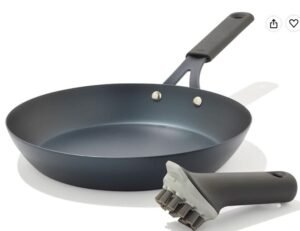
Carbon steel is mostly iron with a bit of carbon. It’s close to cast iron but usually thinner and a little lighter. The surface starts out raw. You season it by getting oil hot enough that it bonds and turns into a natural nonstick layer. Over time that surface gets darker and slicker.
I bought my first one after seeing too many people online swear by them. It showed up looking plain and kind of boring. I seasoned it, burned a few things, almost gave up, then kept going. Now it’s the pan I grab without thinking for a lot of meals.
What Carbon Steel Does Really Well
- High heat is no problem. You can actually sear things.
- The surface gets better the more you use it, not worse.
- It’s tough. Metal tools don’t scare it.
- Heats up fast and reacts when you turn the burner up or down.
- Lighter than most cast iron so you can actually toss food around.
- Excellent for anything that needs browning or a good crust.
The first time I got a proper crust on a steak in carbon steel I just stood there staring at it. My old nonstick never came close.
The Parts That Take Getting Used To
It needs seasoning. Skip that and food sticks like it’s glued on. It can rust if you leave it wet. You’re not supposed to soak it or throw it in the dishwasher. There’s a short learning period where you figure out heat and fat amounts.
Acidic stuff like tomato sauce can mess with the seasoning if you leave it in there too long. And no, it’s not naturally nonstick the second you take it out of the box. You build that through cooking.
Some people hate the extra steps. I get it. I almost returned mine during week one. Glad I didn’t.
Direct Comparison Without the Fluff
Nonstick feel
Brand new nonstick wins easy. Everything slides. Carbon steel starts stickier and slowly gets better. After a few months of regular use a well-seasoned carbon steel pan handles most foods really well. Eggs still take a little more attention than on fresh nonstick, but steak and vegetables work great.
Heat and browning
Carbon steel wins this one clear. You can get real color and fond. Nonstick starts complaining and can get damaged if you push the temperature.
How long they last
Good carbon steel can go for decades if you treat it basically right. Nonstick has a shelf life. Even careful people usually replace them every few years when the coating gives up.
Cleaning
Nonstick is easier most days. Wipe and done. Carbon steel needs a quick clean, full dry, and sometimes a light wipe of oil. It becomes automatic after a while but it’s still an extra step.
Weight and feel
Both can be pretty manageable. Carbon steel often feels more solid and balanced once you’re used to it. Nonstick is usually the lightest.
Safety stuff
Quality nonstick is fine if you don’t overheat it and you replace it when the coating is damaged. Carbon steel is just iron. No coating to break down. I stopped worrying about either once I started using them the way they’re meant to be used.
Who Nonstick Makes Sense For
Get nonstick if you cook a lot of eggs or delicate fish, if easy cleanup is the main thing you care about, if you want something that works great immediately, and if high-heat searing isn’t a big part of how you cook. Also fine if you’re okay buying a new one every few years.
I still keep one around exactly for lazy breakfast situations.
Who Should Look at Carbon Steel
Go carbon steel if you like real browning and high heat, if you want a pan that lasts a long time and actually improves, if you don’t mind a short break-in period, and if you use metal tools or cook kind of aggressively. Also good if you want something closer to what a lot of restaurant cooks use.
This is where I ended up for most of my regular cooking.
You’re Allowed to Own Both
Serious question — why does everyone act like you have to pick one forever? Keep a decent nonstick for eggs and sticky stuff. Keep a carbon steel skillet for searing and anything that needs real heat. That’s what I do. No loyalty tests required.
A Few Myths That Need to Stop
People say carbon steel is just cast iron with better marketing. Not really. It’s thinner, heats faster, and reacts quicker when you change the temperature.
People act like all nonstick is automatically dangerous. Current guidance says quality nonstick is fine when you stay under the recommended heat and don’t cook on scratched-up surfaces.
Some folks treat seasoning carbon steel like some sacred complicated ritual. It’s not. You put on thin layers of oil, heat them, and then just cook. Mess it up? You can strip it and start over.
And no, the second your nonstick starts sticking a little doesn’t always mean it’s dead. Sometimes a good clean helps. When it’s truly gone though, just replace it.
Stuff That Actually Helps Day to Day
With nonstick I stay around medium heat most of the time, stick to silicone or wood tools, skip the aerosol sprays that leave gunk, and hand wash when I can. When food starts sticking no matter what, I stop fighting it and get a new one.
With carbon steel I make sure it’s seasoned when new, preheat before adding fat, clean with hot water and a brush, dry it completely, and give it a light oil wipe while it’s still warm. I don’t soak it. I don’t leave it wet in the sink. That’s pretty much the whole routine.
Where I Landed After Using Both for a While
If I could only keep one pan, I’d keep the carbon steel. The way it sears, the way the surface keeps getting better, and the fact that it just takes a beating win for how I cook most nights. I like crust. I like fond. I like not worrying that the surface is slowly dying.
But I still won’t get rid of my nonstick skillet. Some mornings I want eggs that behave with zero effort and I don’t feel like managing heat and fat. Both have a real job in my kitchen.
The better pan is the one that matches what you actually cook and how much fuss you’re willing to deal with. If scrubbing and sticking make you miserable, nonstick solves that fast. If you want better browning and something that lasts, carbon steel is worth the short adjustment period.
Nonstick vs Carbon Steel Comparison Table
| Feature | Nonstick | Carbon Steel |
|---|---|---|
| Nonstick Ability | Excellent when new | Builds over time with use |
| High Heat | Limited | Handles it well |
| Durability | Coating wears out | Can last decades |
| Cleaning | Usually easiest | Needs drying and light oil |
| Learning Curve | Almost none | Short but real |
| Metal Tools | Bad idea | Fine |
| Best Uses | Eggs, fish, easy meals | Searing, stir-fry, high heat |
| Lifespan | A few years typical | Very long with basic care |
| Maintenance Level | Low | Medium |
FAQs
Is carbon steel the same thing as cast iron?
No. It’s related but thinner and usually more responsive to temperature changes. Cast iron holds heat longer.
How do you season carbon steel without making a mess?
Wash and dry it, rub on a super thin layer of oil that can take heat, then heat it until it smokes. Do that a few times. Cooking with it also builds the surface.
Why does brand new carbon steel stick so bad?
It needs more seasoning and some regular use. Keep going with enough fat and it gets better.
Can you use a little soap on carbon steel?
Once the seasoning is solid, mild soap is usually fine. Just don’t soak it and dry it right away.
Is nonstick actually safe?
Quality ones used at normal temperatures are considered fine by current health guidance. Don’t overheat them and don’t cook on damaged coatings.
Which one is better for eggs?
Fresh nonstick is easier. Seasoned carbon steel can do a good job too but needs more attention to heat and fat.
Can carbon steel go in the dishwasher?
Nope. It’ll rust and wreck the seasoning. Hand wash only.
How long should a nonstick pan last?
Often a few years with careful use. When it starts sticking no matter what you do, it’s time.
Do I need special tools for carbon steel?
No. Regular metal spatulas work. A brush or chainmail scrubber helps with stuck bits sometimes.
Wrapping This Up
Nonstick gives you easy release and simple cleanup right out of the gate. Carbon steel gives you real heat performance and a surface that improves the more you cook with it. Neither is perfect for every single job.
Think about what actually bothers you when you cook. If you hate scrubbing and just want food to let go, nonstick is the faster path to happiness. If you want better browning and a pan that can stick around for years, carbon steel is worth learning.
Or just keep one of each like I do. Use the nonstick when you want zero drama. Use the carbon steel when you want the food to actually brown. Stop forcing one pan to be everything.
Now go cook something. And if your first few tries with carbon steel stick a little, that’s normal. The pan’s just waiting for you to keep going.